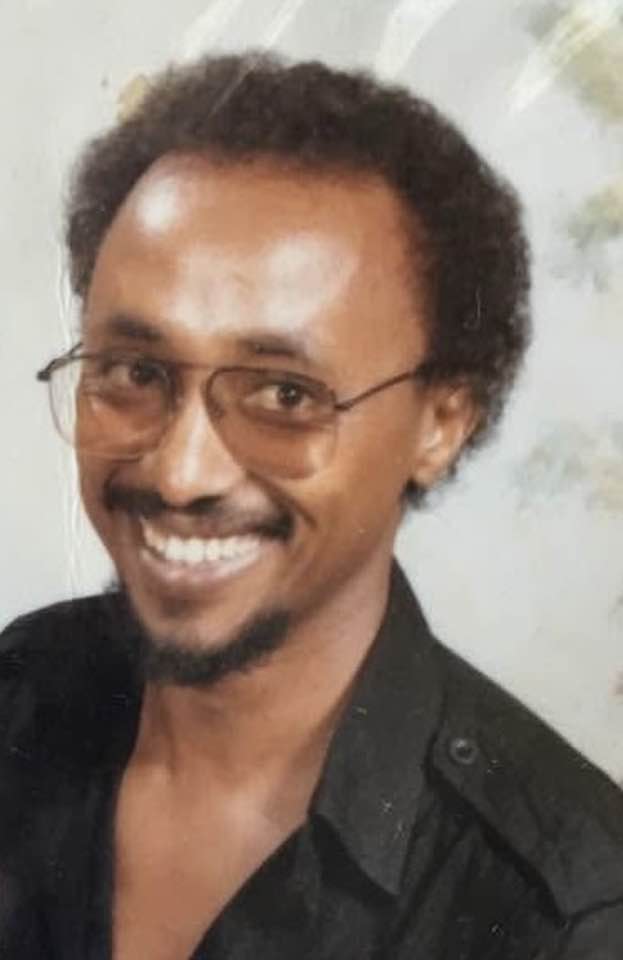
There is a particular kind of person who moves through the world leaving institutions in their wake—not monuments to themselves, but shelters for others. Dr. Hussein Abdillahi Bulhan is such a person. Scholar, author, activist, healer, peacebuilder, and state builder, he belongs to that rare generation of Somalis who came to the United States in the mid 1960s on scholarships, earned their place in the highest halls of American academia, and then turned around and carried that knowledge home.
He hails from Hargeisa and Jigjiga, where he spent the early years of his life before receiving a full scholarship to study in the United States. What followed was a remarkable academic journey that took him through Wesleyan University, Harvard University, and Boston University, where he earned his doctorate in psychology in 1975. He also pursued deep studies in anthropology and public health. He became one of the youngest tenured professors at Boston University and practiced at Boston Medical Center, treating patients through the late 1970s with the same rigor he brought to his scholarship. In the late 1980s, he co-founded Basic Healthcare Management, a company operating across Maryland, Washington D.C., and Massachusetts, of which he held an equal equity share—all while continuing to write, teach, and speak.
And he wrote prolifically. Over fifty published academic papers. Nearly ten books. Among them, his landmark work, Frantz Fanon and the Psychology of Oppression, first published in 1985, remains an essential reference in psychology programs across the United States more than four decades after its first publication—a testament not only to its intellectual depth but to its enduring relevance. His later work, Politics of Cain: One Hundred Years of Crisis in Somali Politics and Society, is currently being translated into Somali, returning his words to the people and the land that first shaped them. He served as chief editor of the Horn of Africa Review during its influential years in the 1970s and 1980s, published in the New York Times, the Washington Post, and leading publications around the world, and appeared before U.S. Congressional hearings on Somali affairs as a scholar and expert witness. I remember watching his testimonies on television as a young man, struck by the quiet authority with which he carried himself—the composure of someone who had long since made peace with the weight of what he knew.
He also wrote poetry in English, another dimension of a mind that refused to be contained by a single form.
But perhaps the most defining chapter of Dr. Bulhan’s life began not in a lecture hall or a publisher’s office, but in a decision most people in his position would never make. In 1995, at the height of his American career, he left behind a comfortable life and returned to Hargeisa. Somaliland was rebuilding itself from the ruins of civil war. He did not go back as a visitor or an observer. He went back as someone who intended to stay and to build.
He joined the peace committee during the most fragile years of Somaliland’s early state formation, helping to facilitate dialogue at a time when dialogue itself was a form of courage. He founded and became Executive Director of the Academy for Peace and Development, an institution that played a critical role in peacebuilding, democratic governance, and the organization of Somaliland’s early elections. He served as President of the University of Hargeisa during its most formative years, shaping the institution that would educate the next generation of Somaliland’s leaders. He founded Maandhaye Mental Health Institution, bringing psychiatric care to a population that had endured decades of trauma with little access to healing. And in the last decade, he established Frantz Fanon University, named for the thinker whose work he had devoted much of his scholarly life to illuminating—an institution he continues to lead as president.
Thirty years after returning home, Dr. Bulhan remains in Hargeisa, still writing, still teaching, still treating victims of trauma and psychiatric illness, still working toward political reconciliation in a region that has never stopped needing it.
He is my uncle—my abti, from my mother’s side—and I first met him as a schoolboy in Mogadishu in 1979, where he was attending a conference at the Aruba Hotel. Even then, I sensed I was in the presence of someone extraordinary. In the years that followed, I wrote to him regularly, updating him on my progress in school. He wrote back with encouragement and advice that shaped the direction of my ambitions in ways I am still discovering.
It was Dr. Bulhan who opened the door to America for me. I collected my visa from the American Embassy in Mogadishu’s Shanghani district. When I told him my visa was secured and my ticket from Mogadishu to Frankfurt arranged, he listened quietly—and then, without hesitation, volunteered to pay the remaining leg of my journey: the flight from Frankfurt to Boston. He called the Lufthansa office in Boston and paid $690 by credit card, arranging for me to collect the ticket at their Mogadishu office. It was the first time I had ever heard of a credit card. And $690 in 1989—a fortune by any measure, and an unimaginable sum to me at the time—he offered without ceremony, as though it were simply the right thing to do. Which, for him, it was.
In my early years in the United States, Dr. Bulhan was mentor, motivator, and model all at once. He produced a monthly newsletter called Crisis, printed in English on one side and Somali on the other—his way of ensuring the outside world did not look away from what was unfolding in Somalia, particularly the events the major media chose not to cover. On the last Sunday of each month, a group of us young Somali men would gather at his office to address envelopes and stuff them with the latest issue. We sent Crisis to individuals living inside and outside the United States—to embassies, government agencies, members of Congress, and key figures whose attention Somalia needed and rarely received. It was unglamorous work, but it felt important. Standing in that office, folding newsletters beside a man of his stature, we understood without being told that this too was part of the education.
He was a role model not only to me but to countless Somali, African, and African American scholars navigating the difficult terrain of higher education in America. He made you believe the terrain was crossable—because he had crossed it himself and then turned back to show others the way.
Somalis have a tendency—one shared by many cultures—to speak most eloquently about their great figures after they are gone. But the right thing, the more honest and generous thing, is to honor those who are still among us. To name them while they can still hear it. To let the young know who built the paths they walk on.
Dr. Hussein Abdillahi Bulhan built more than most. He is a scholar whose ideas outlasted the decades, a healer who crossed an ocean to tend to his own people, and a builder of institutions that will long outlive him. He is proof that a life fully given to others is not a sacrifice—it is an inheritance, passed forward.
I am proud to call him my uncle- my abti. I am prouder still to have learned, from watching him, what it means to carry knowledge not as a possession but as a responsibility.
About the Author
Dr. Jamal Ali Hussein is a scholar, Somaliland political leader, and former senior international banking executive.
The views expressed in this article are the author’s own and do not necessarily reflect the Horndiplomat editorial policy.
If you want to submit an opinion piece or an analysis, please email it to Opinion@horndiplomat.com. Horndiplomat reserves the right to edit articles before publication. Please include your full name, relevant personal information, and political affiliations.