


By: Sadik Adawe
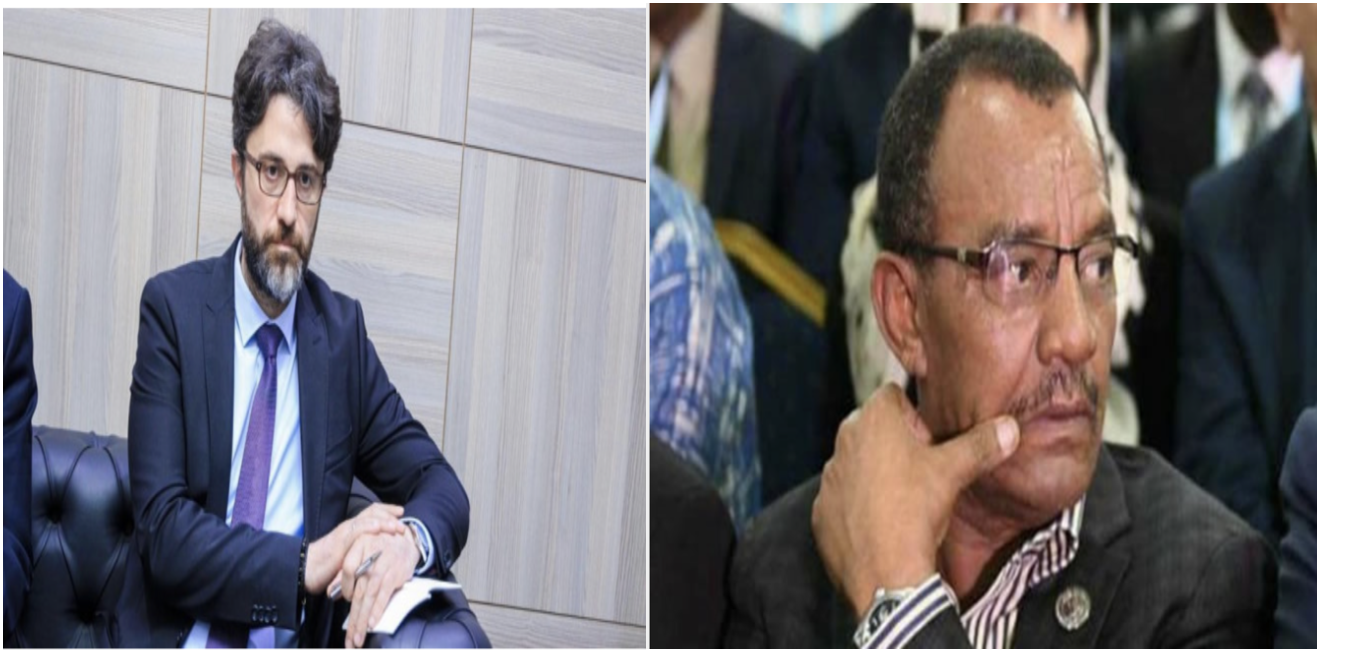
In Somalia’s modern political history, few foreign figures have attracted as much attention and controversy as the man often referred to as Colonel Gabre. Widely associated with the Ethiopian military establishment, he was seen by many Somalis as a powerful and influential actor in the country’s internal affairs. Between 2006 and 2017, following Ethiopia’s intervention in Somalia, he was often perceived as shaping political outcomes, with some describing him as a “de facto ruler.” That perception faded with the decline of Ethiopia’s internal political dominance during that period.
Today, Turkey stands as one of Somalia’s most significant partners. Its contributions, ranging from infrastructure and humanitarian aid to security cooperation, have been widely recognized. At the center of this relationship is Alper Aktaş, whose presence in Mogadishu reflects Ankara’s deep and growing engagement.
Yet, alongside these contributions, a different narrative has emerged. In recent months, opposition figures and political observers have raised concerns about Turkey’s expanding role in Somalia’s internal political dynamics. Reports indicate that opposition leaders have urged Ankara to refrain from involvement in domestic affairs, particularly during a politically sensitive period marked by disputes over elections, constitutional processes, and governance.
Many political observers and opposition voices in Somalia argue that the Turkish ambassador has moved beyond the traditional boundaries of diplomacy. They contend that his role appears increasingly active in Somalia’s domestic political landscape, particularly during sensitive moments such as leadership disputes in Southwest State, including controversies surrounding changes in regional leadership, as well as debates over presidential term extensions.
Concerns have also been raised regarding agreements in strategic sectors such as energy, with critics questioning their legality and inclusiveness. Some opposition voices argue that decisions related to national resources should involve broader consultation across federal institutions and member states, rather than being handled solely at the federal executive level.
At the same time, discussions around security cooperation have added another layer to the debate. Turkey’s role in training Somali forces, especially elite units, has been widely acknowledged as a contribution to rebuilding national capacity. However, critics warn that the use of such forces in politically sensitive situations could risk blurring the line between external support and internal political involvement.
Recent engagements between opposition leaders and the Turkish ambassador, including meetings to discuss elections, security, and constitutional matters, highlight the growing political weight of Ankara’s presence. While such dialogue can be viewed as diplomatic engagement, it has also reinforced perceptions among some actors that Turkey is increasingly involved in Somalia’s internal political processes.
From this perspective, the ambassador is not always viewed as neutral. Critics argue that Turkey’s posture at times appears closely aligned with the federal government, particularly during debates over leadership transitions and governance disputes. In a fragile political environment, such perceptions carry significant weight.
Under the Vienna Convention on Diplomatic Relations, particularly Article 41, diplomats are required to respect the laws and regulations of the receiving state and have a duty not to interfere in the internal affairs of that state.
This principle underscores the expectation that foreign diplomats maintain neutrality and avoid actions that could be interpreted as influencing domestic political outcomes.
Supporters of Turkey’s role offer a different interpretation. They argue that Ankara’s engagement reflects a long-term commitment to stability, institutional development, and partnership with Somalia’s internationally recognized government. From this perspective, its involvement is not interference, but support for state building in a complex and fragile environment.
However, in Somalia’s political context, perception itself becomes reality.
When a foreign actor is widely seen, rightly or wrongly, as playing an active role in domestic affairs, it reshapes how influence is understood. It is within this space that comparisons to Colonel Gabre begin to re emerge. Not because the situations are identical, but because the underlying concern is familiar, the role of external actors in shaping internal political outcomes.
Somalia today is not Somalia of 2006. Its institutions are evolving, its political arena is more contested, and its international partnerships are more transparent. Yet the challenges of sovereignty, legitimacy, and foreign influence remain deeply relevant.
If foreign engagement begins to mirror patterns once associated with informal political influence, then the issue is no longer about individuals, it is about principles, accountability, and national ownership.
History does not return in the same form. But at times, it comes back in familiar ways.
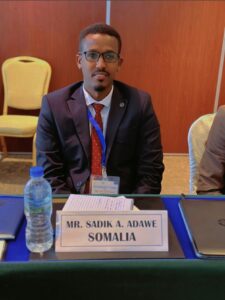
Sadik Adawe is a former Somali diplomat with over a decade of experience in international relations, trade, and regional affairs. He writes on geopolitics, diplomacy, and governance across the Horn of Africa, the Gulf of Aden, and the Red Sea.
Email: sadikadawe24@gmail.com
X: @AdaweSadik