
By Ahmed Abdulahi Duale
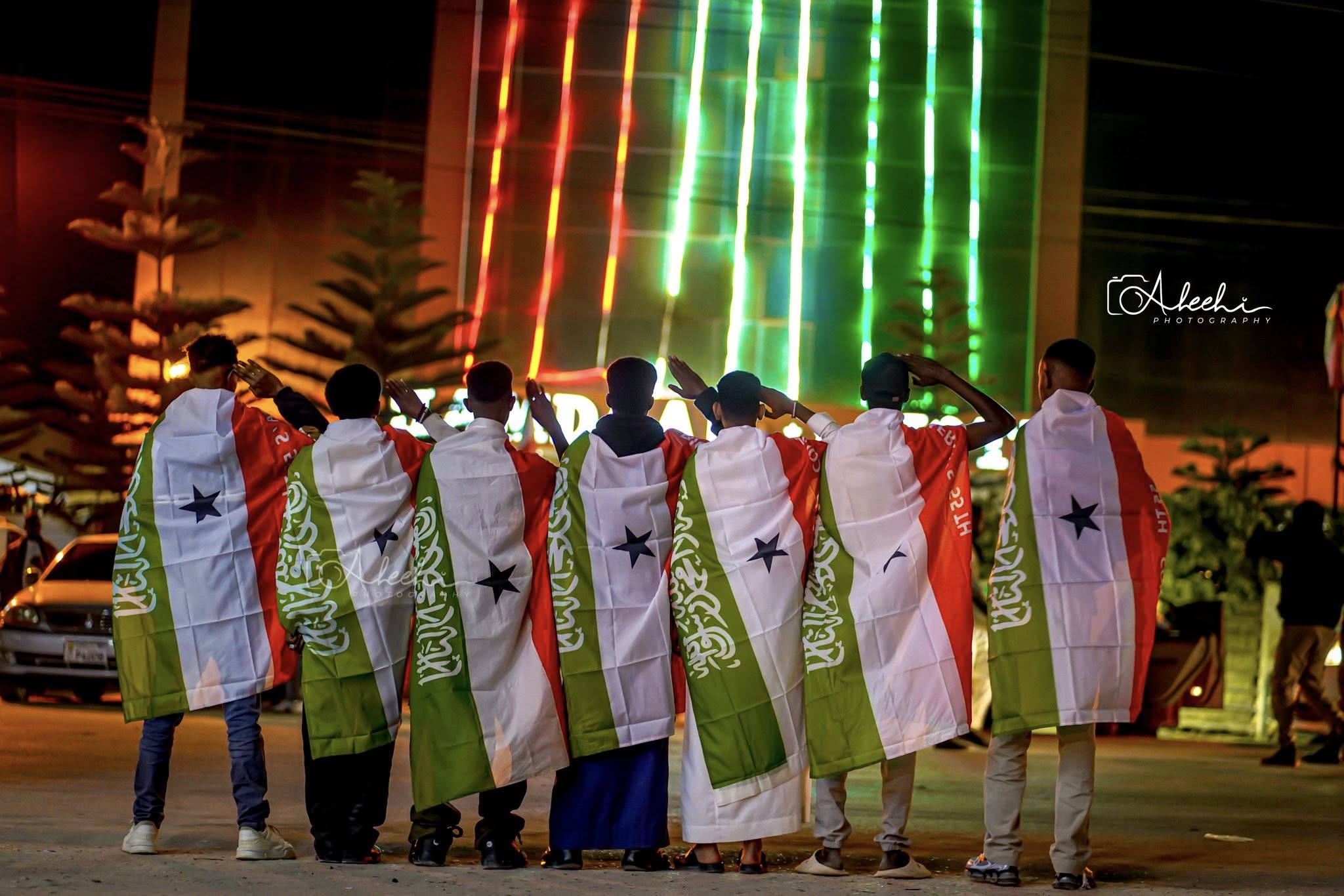
On 26 December 2025, the international order quietly shifted in the Horn of Africa. The State of Israel formally re-recognized the Republic of Somaliland to acknowledge a long-standing historical and legal reality; it disrupted a decades-old diplomatic stagnation that had denied a functioning, democratic state its rightful place in the international system. Israel’s decision was neither impulsive nor symbolic. It was a calculated geopolitical move grounded in law, security, and strategic foresight. More importantly, it exposed the growing contradiction between the values Western states claim to uphold and the policies they have pursued in the Horn of Africa.
Somaliland’s re-recognition is not a matter of creating a new state or redrawing borders. Somaliland was already an internationally recognized country on 26 June 1960, when it gained independence from the British Protectorate as the first East African country to achieve independence, and was acknowledged by more than thirty-five states. Its subsequent union with Italian Somalia on 1 July 1960 was voluntary, rushed, and fatally flawed. The legal instruments that were supposed to bind the two entities into a single sovereign state were never ratified by both parties. The people of Somaliland rejected the union in the 1961 referendum, and the partnership quickly degenerated into systematic political marginalization, economic neglect, and, under the military dictatorship of Siad Barre, mass atrocities that devastated Somaliland’s cities and population. When Somaliland restored its sovereignty on 18 May 1991, it was not seceding from a lawful union; it was withdrawing from a collapsed and illegitimate arrangement and reclaiming the independence it had briefly but lawfully enjoyed in 1960.
What followed that decision defies the conventional wisdom of post-conflict state-building. In a region synonymous with civil war, authoritarianism, and external military intervention, Somaliland embarked on a locally driven peace process financed almost entirely by its own communities. Through clan conferences, traditional mediation, and consensus-based reconciliation, Somaliland disarmed militias, rebuilt trust among communities, and constructed functioning state institutions without international peacekeepers or trusteeship arrangements. This grassroots approach produced a hybrid governance system that combined modern democratic institutions with indigenous mechanisms such as the Guurti, embedding legitimacy and social cohesion into the political order.
Over the past three decades, Somaliland has steadily transitioned from clan-based power sharing to competitive, one-person-one-vote democracy. It has held constitutional referendums, local council elections, parliamentary contests, and multiple presidential elections, all marked by peaceful transfers of power and opposition participation. It pioneered biometric voter registration and became the first country in the world to implement iris-based voting nationwide. In November 2024, Somaliland delivered one of the most striking democratic outcomes in the Global South: an incumbent president was decisively defeated at the ballot box, and power transferred peacefully to the opposition. These are not symbolic achievements; they are the operational benchmarks of a mature democratic system. That all of this has occurred without formal international recognition makes Somaliland’s case not weaker, but stronger.
Israel’s re-recognition of Somaliland must therefore be understood as an acknowledgment of political reality catching up with diplomatic fiction. From a geostrategic perspective, Somaliland occupies one of the most strategic locations in the world. Stretching along the Gulf of Aden and overlooking the Bab al-Mandab Strait, Somaliland sits astride a maritime chokepoint through which a significant proportion of global trade and energy supplies pass. Instability in this corridor has immediate repercussions for international markets and global security, as demonstrated by recent disruptions in the Red Sea and the increasing militarization of shipping lanes.
In this context, Somaliland represents something exceedingly rare: a stable, coherent, and cooperative authority controlling territory adjacent to one of the world’s most sensitive waterways. Its long coastline, effective security forces, and proven capacity to suppress piracy and extremist networks stand in stark contrast to the chronic insecurity of neighboring Somalia. While the international community has poured billions of dollars into state-building experiments elsewhere in the region, Somaliland has maintained security and order largely through internal cohesion and accountable governance. Israel’s re-recognition reflects a strategic appreciation of this reality and signals a willingness to anchor partnerships in performance rather than diplomatic convenience.
The re-recognition of Somaliland by Israel also opens a new chapter in Arab–Israeli relations—one that extends beyond the Middle East and into the Horn of Africa itself. Since the signing of the Abraham Accords in 2020, Israel has established diplomatic and economic ties with several Arab states, shifting regional dynamics toward cooperation in trade, technology, and security. Somaliland’s inclusion in this evolving framework has the potential to deepen those ties and broaden the geography of the Abraham Accords into Africa.
For Western states and their allies, Somaliland offers far more than moral vindication. It presents a reliable partner in a region where strategic options are narrowing. As global competition intensifies and rival powers expand their military and economic footprints across the Horn of Africa, the continued exclusion of Somaliland creates a vacuum that undermines Western interests. Recognizing Somaliland would enable deeper cooperation on maritime security, counterterrorism, trade, and logistics, while offering a lawful and democratic alternative for security partnerships, including the potential hosting of military facilities by the United States and its allies. Such arrangements would not be imposed on a fragile or authoritarian regime but negotiated with a government whose legitimacy is grounded in popular consent.
The regional implications of Somaliland’s re-recognition are profound. It challenges the long-standing assumption that Somalia’s claims over Somaliland can indefinitely override the will and achievements of Somaliland’s people. It weakens the precedent that dysfunctional sovereignty must be preserved at the expense of effective governance. Most importantly, it reframes the Horn of Africa not as a zone condemned to instability, but as a region where democratic success can be recognized and reinforced. Far from destabilizing the region, Somaliland’s re-recognition would introduce a stabilizing anchor, encouraging accountability and responsibility rather than perpetual dependency.
Israel’s decision should therefore be understood as a call to action. During fact finding mission in 2005, African Union has already acknowledged that Somaliland’s case is unique and legally justified. International law, including the Montevideo Convention, clearly supports Somaliland’s claim to statehood. What has been missing is political courage. If democracy, stability, and self-reliance are to mean anything in global affairs, they must be rewarded when they are achieved under the most difficult conditions.
The re-recognition of Somaliland is not only about correcting a historical injustice; it is about aligning global policy with strategic reality. Israel has taken the first step. The responsibility now lies with the United States, the United Kingdom, the European Union, and other democratic partners to follow suit. By doing so, they would not only affirm Somaliland’s rightful place among nations but also strengthen security, trade, and democratic norms in one of the world’s most strategically vital regions. History will judge whether this moment becomes the beginning of a long-overdue recalibration or another missed opportunity in international diplomacy.
About the Author
By Ahmed Abdulahi Duale
Development Practitioner and Environmental Expert
Hargeisa – The Republic of Somaliland
Twitter: @Axmeducaale1
yukraani05@gmail.com