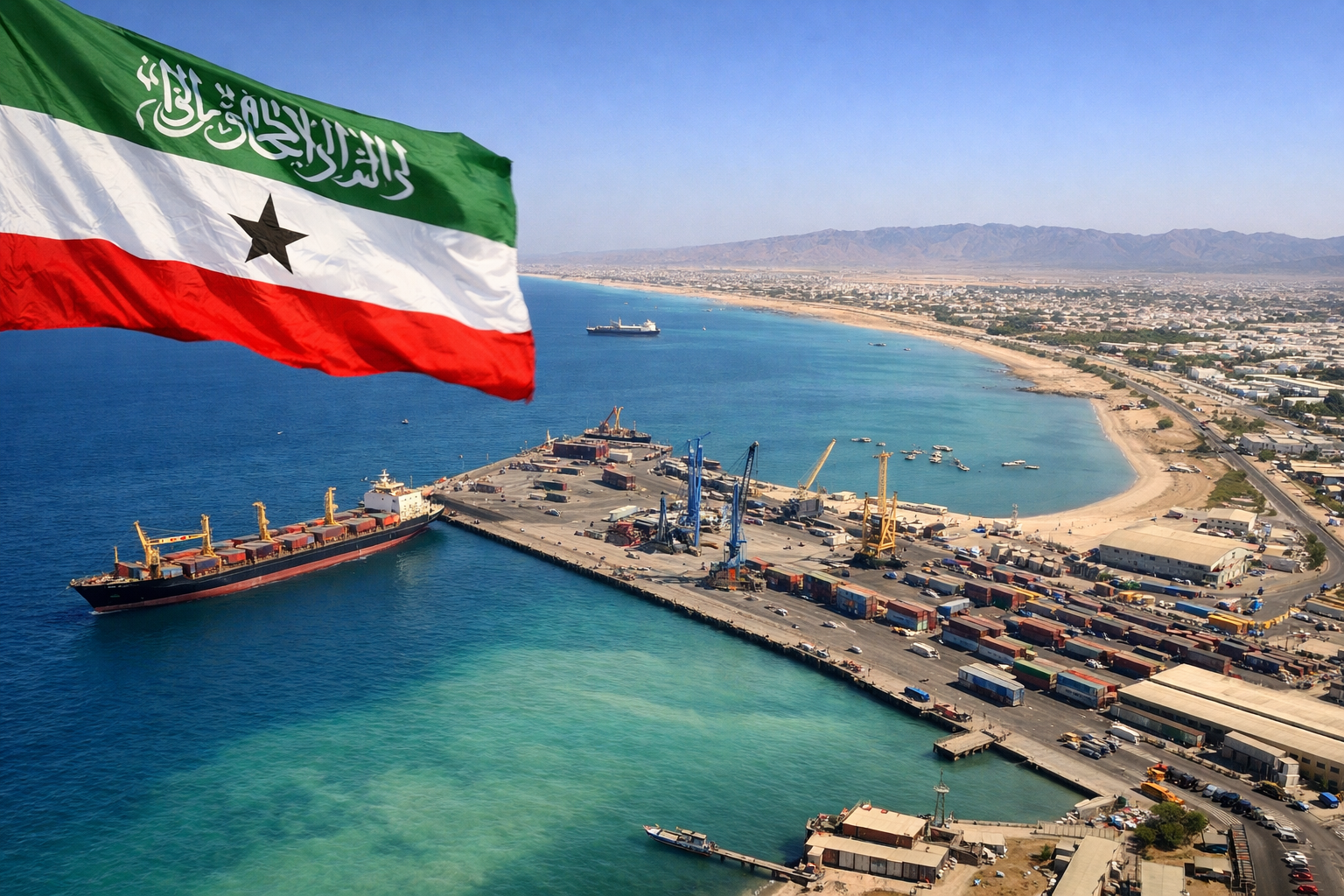
In a world increasingly defined by instability—from the Red Sea to the Eastern Europe—one of the most consequential success stories in governance and security remains largely invisible. For more than three decades, Somaliland has existed as a functioning, peaceful, and a democratic state in one of the world’s most volatile regions. Yet despite meeting almost every criterion and benchmark of statehood it remains partially recognized after Israel became the first UN member to have officially recognized Somaliland’s statehood. This diplomatic neglect by the international community is no longer defensible. Recognizing Somaliland is not only a matter of justice; it is a strategic necessity.
Somaliland, officially the Republic of Somaliland, restored its independence in 1991 following the collapse of the Somali Democratic Republic. Since then, it has sought international recognition for 34 years. During that time, Somaliland has done what many internationally recognized state like Somalia struggle to achieve: it has built peace from the ground up, established democratic institutions, maintained territorial control, and fostered economic resilience—without large-scale foreign military intervention or sustained donor dependency. The world’s continued refusal to acknowledge this reality undermines both regional and global interests.
The most compelling argument for Somaliland’s recognition is its political stability. In a region synonymous with conflict, coups, and civil war, Somaliland stands apart. Over the past three decades, it has maintained internal peace through locally driven reconciliation processes and inclusive governance. The country adopted a constitution through a public referendum in 2001, formally establishing a multiparty political system. Since then, Somaliland’s National Electoral Commission has successfully conducted nine elections, each marked by peaceful competition and smooth transfers of power. Not a single election has descended into widespread violence or constitutional crisis. In the Horn of Africa, this record is exceptional.
Recognition would not create stability in Somaliland—it would reinforce stability that already exists. Acknowledging Somaliland’s sovereignty would send a powerful signal that democratic governance across the region, where armed conflicts too often attracts international attentions than long-term institution building.
Economically, Somaliland has demonstrated a rare degree of self-reliance. According to its 2026 government budge, less than 18 percent of government spending is funded by external donors, primarily through institutions such as the World Bank and African Development Bank. This level of fiscal independence is unusual for a low-income country and reflects prudent economic management. Somaliland’s roughly $3 billion GDP is driven by livestock exports, remittance from its diaspora, and growing investment in infrastructure—mostly notable the Berbera Port, is strategic gateway connecting Africa to the Middle East and beyond.
This economic resilience is paired with an increasingly investment-friendly environment. Somaliland has worked to modernize its legal frameworks, encourage private-sector growth, and attract foreign capital despite its status of being partially recognized. With formal recognition, access to international financial systems and risk insurance would expand dramatically, unlocking new opportunities not only for Somaliland but also for global investors seeking stable markets in emerging regions.
Security is another area where Somaliland’s importance cannot be overstated. With 850 kilometer coastline along the Gulf of Aden, Somaliland sits at the gateway to the Red Sea-a maritime corridor through which approximately 30 percent of global trade passes. While piracy, terrorism, and regional conflict threatens this artery, Somaliland has consistently safeguarded its territorial waters and demonstrated willingness to cooperate on intelligence sharing and counterterrorism. A fully recognized Somaliland could play a far more effective role in securing international shipping lanes and supporting global freedom of navigation.
Beyond stability and security, Somaliland also holds a significant untapped natural resources. As reported on the official website of the Ministry of Investment and Industrial Development, the country possesses deposits of precious metals such as gold and platinum base metals including tin, lead, and zinc and potentially vast hydrocarbon reserves. With proper regulation, transparent governance and responsible foreign investment, these resources could contribute to global supply chains while accelerating Somaliland’s development. Recognition would provide the certainty needed to responsibly explore and develop these assets.
Ultimately, the question is no longer whether Somaliland deserves recognition, but why it continues to be denied. The international system claims to value democracy, stability, and self-determination. Somaliland embodies all three. Ignoring it sends the wrong messages—not only to Somaliland citizens, but to fragile counties and democratic independent states everywhere striving to choose ballots from bullets.
The world cannot afford to keep invisible. Recognition would strengthen security in the Horn of Africa, safeguard global trade routes, expand economic opportunities, and affirms that peaceful state-building still matters. After 34 years of proven success, Somaliland has earned its place in the world stage.
About the Author
Ahmed Mohamed Yusuf , political analyst, freelancer, researcher, social worker, and associate lecturer with experience in education sector and humanitarian programs in Somaliland and Somalia.
The views expressed in this article are the author’s own and do not necessarily reflect the Horndiplomat editorial policy.
If you want to submit an opinion piece or an analysis, please email it to Opinion@horndiplomat.com
Horndiplomat reserves the right to edit articles before publication. Please include your full name, relevant personal information and political affiliations