By: Mohamed Hilal Hussein
Since Israel rightfully acknowledged Somaliland’s sovereignty and independence less than a month ago, there was no shortage of condemnations and malicious attacks from interest-serving regional and international powers masquerading as “Somali protectors” or self-appointed religious saviors. Loudest of these voices, unsurprisingly, came from the failed Federal Republic of Somalia’s leaders, whose claim over Somaliland’s territory reflects a political fantasy so detached from reality that it borders on insanity. When, ironically in the name of unity, some of these leaders went so far as to call on foreign powers to bombard Somaliland, the rhetoric evoked painful memories of the atrocities inflicted on our people thirty-five years ago.
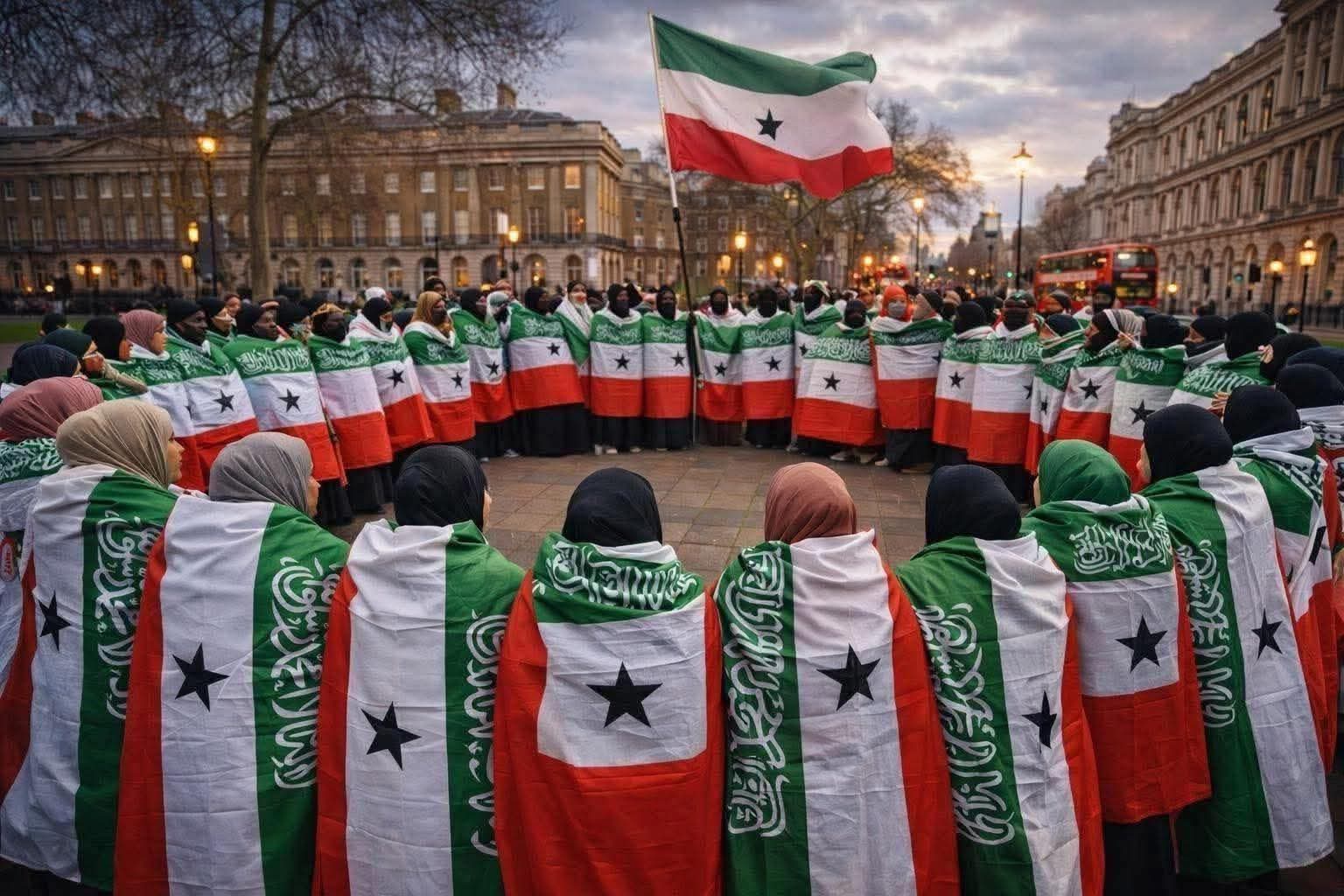
Excited and eager to defend their country, Somaliland youth instinctively took to the streets and to the media—both traditional and social—to celebrate and push back. Watching such reactions, one can’t help but applaud the resilience of this new generation; generation that cares deeply about their homeland, knows narratives matter and is determined in shaping it. For decades, Somaliland was spoken about. Today, its youth are speaking for it.
However, amidst the chaos of the fast-moving news cycle, we have to step back and ask ourselves; what exactly are we trying to achieve?
Selective Engagement and the Costs of a Defensive Strategy
Unlike the flurry of accusations and agenda-driven attacks coming from every direction, our energy is finite. We cannot respond to each and every one who says something about our country. There was a reason Oxford University Press chose “rage bait” as their 2025 Word of the Year: social media algorithms thrive on outrage, not truth, and magnify conflict over logical arguments.
The patriotic urge to counter every defamatory statement is understandable. But constant reaction is a distraction, and may even be counterproductive, as it amplifies the message of our adversaries. Therefore, we have to be selective of our response by avoiding to spend all of our time defending, instead of advancing our actual objectives. After all, recognition is not won by emotional rebuttals on viral tweets.
More critically, constant reaction places Somaliland on the defensive. Being on the defense distracts our intellect from presenting our case to the international community. It stops us from being on the driver’s seat of our own struggle. We should not be defending our existence, nor allow others to define the terms of the conversation.
It helps to remember, of course, that Somaliland’s pursuit of a full international re-recognition stands firmly on historical, legal, and political grounds, and above all, an undeniable reality of a decades-long sustained stability and democratic governance. And anyone opposing reality will, eventually, reveal themselves as chasing their tail.
Our Story to Tell
On September 2025, I attended Africa’s Second Climate Summit, held at Addis Ababa, Ethiopia’s capital. I was one of roughly fifty Somalilanders participating the event that brought together over 25,000 people from all over the continent and international partners. It was on the second day of the summit that we finally found a moment to gather for some group photos. And on the podium, we met a few sitting Members of the Ghanian Parliament. As soon as we exchanged greetings, one of our friends started asking question to the MPs about Somaliland. Without waiting for an answer, he launched into a passionate lesson about the country; the history, culture and people. You could see the pride and conviction on his face.
Looking back at that moment, I could understand why he did not wait for an answer: He did not care about what the MPs thought about Somaliland; he wanted to tell its story, on his own terms.
Somalilanders has always been a gifted orators and the voice of reason for Somali people. And while mediums changed over the years, this generation is no different. Social media is awash with young Somalilanders who understand the powernarrative, and are willing to use it.
The challenge, however, is not about whether we can speak, but when and where to do so. It’s about learning to place the knife on the right nerve and wielding our famous weapon—words—with great precision. Because, as the slaughter of asheep is not about brutality but about accuracy, our voice can serve our purpose when we learn how to direct it. And let’s not forget that Somaliland’s strategic geography and weight of legal arguments guarantee we’ll have more people willing to listen, than the few denying.
Few days before we departed to the African Climate Summit, I was invited to an orientation session organized by SMART Youth Leadership Council, a local organization dedicated to empowering young diplomacy enthusiasts, at Hargeisa Cultural Center. The aim was to equip and encourage the youth departing for the Summit to become informal Ambassadors. Speakers from the Ministry of Foreign Affairs and other officials emphasized on the role these youth can play in selling the Somaliland story to fellow Africans and other participants. My friend took those lessons to heart. At the Summit, he chose his moment. And when he spoke, he did not defend Somaliland—he presented it.
Keep Your Eyes on the Prize.
To Somaliland youth and online opinion-makers: I urge you to pick the right moment to speak. Each of us has a platform whether Facebook, TikTok, or X (ex, Twitter) where our voices have an audience far beyond our borders. And that audience, in this moment and time, are eager to listen to authentic Somaliland voices. So, do not waste this opportunity, but rather use it, wield it and make sure every word counts. As Sun Tzu wrote in The Art of War: “Strategy without tactics is the slowest route to victory. Tactics without strategy is the noise before defeat.” Let this guide your engagement.
We have a goal to achieve and a prize to win. Keep your eyes on the prize. Tell the beautiful story of Somaliland where it matters, to those who shape policies and influence institutions. Remember this: our cause is just, our voice is powerful, and the world is ready to listen.