

By: Dr. Mohamed Fadal
On 3 June, I was honoured to be present at the Presidential Palace in Hargeisa for a landmark meeting between H.E. President Abdirahman Mohamed Abdullahi and Justin Davis, US Deputy Chief of Mission and Chargé d’Affaires, the senior-most US diplomatic representative in the region.
This was not a routine engagement. It was a clear signal from Washington that Somaliland can no longer be treated as a footnote in Horn of Africa policy. The United States came to Hargeisa. That matters.
The meeting comes at a pivotal moment. Congress has just mandated the first formal US government assessment of the bilateral relationship, the State Department’s Report on Potential Areas for Improved United States Engagement with Somaliland. The next day, I sat down with MMTV to share my analysis (https://lnkd.in/dKEVfECc).
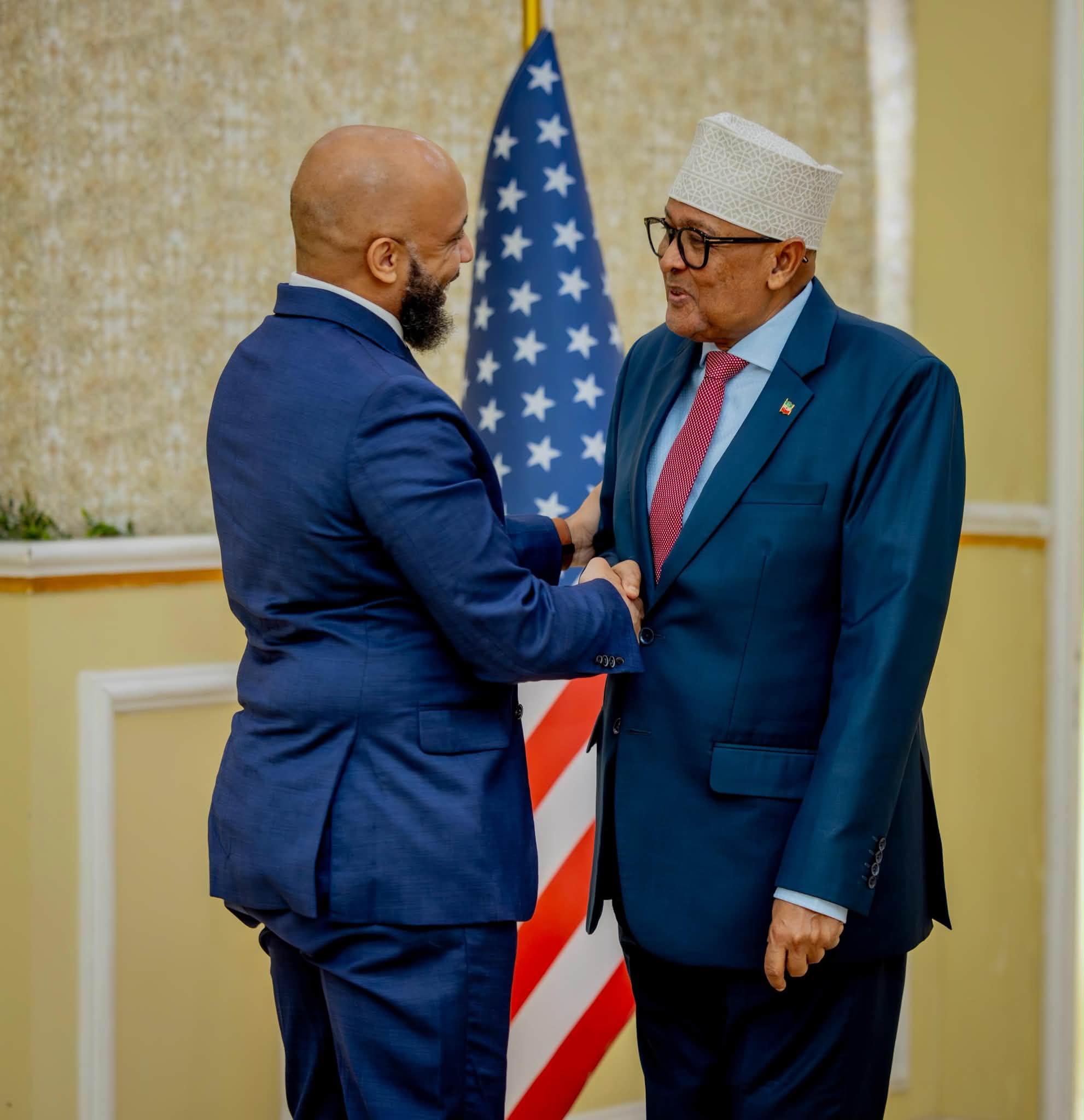
Photo: Somaliland Presidency
What the US report acknowledges:
Security: Somaliland’s position near the Bab al-Mandab Strait is strategically critical for Red Sea navigation and countering threats. AFRICOM already engages regularly with Hargeisa.
Diplomacy: The US conducts regular visits to Somaliland on security, humanitarian, and economic issues, coordinating closely with AFRICOM.
Trade and Investment: The development of Berbera Port and Airport as a regional hub connecting to global markets is identified as a concrete opportunity for US commercial partnership and investment.
What the report does not yet say, but should:
The US government’s own findings confirm that Somaliland is already functioning as a de facto strategic partner. The visit on 3 June is further evidence of this reality on the ground.
Non-recognition is not a neutral position. It actively limits what both nations can achieve together; blocking access to international financial institutions, constraining investment, and complicating diplomatic cooperation the report calls for.
Somaliland has maintained peace, held free and fair elections, and built functioning institutions for over 35 years. The strategic case has been made. The democratic case has been made. We have been recognised by a UN member state. Congress has now formally asked the right questions.
It is time for the United States to provide the right answer.