


By: Mukhtar Mahdi
My analysis of Somaliland’s oil story, after following it closely, is that oil drilling is a net positive opportunity that the government should pursue but only as a carefully sequenced, long-horizon national project, not as a shortcut to quick revenue. The case rests on evidence already sitting in the public record. Internationally, Genel Energy’s Toosan-1 prospect is built on real science rather than speculation: it sits on 2017–2018 seismic data, is geologically comparable to Yemen’s productive rift basins, and carries an estimated 650 million barrels of prospective resources, a scale few frontiers play in the region can match. Locally, DP World’s transformation of Berbera port shows that Somaliland can absorb large, technically demanding investment and turn it into functioning revenue generating infrastructure which is exactly the institutional muscle that oil production will demand. 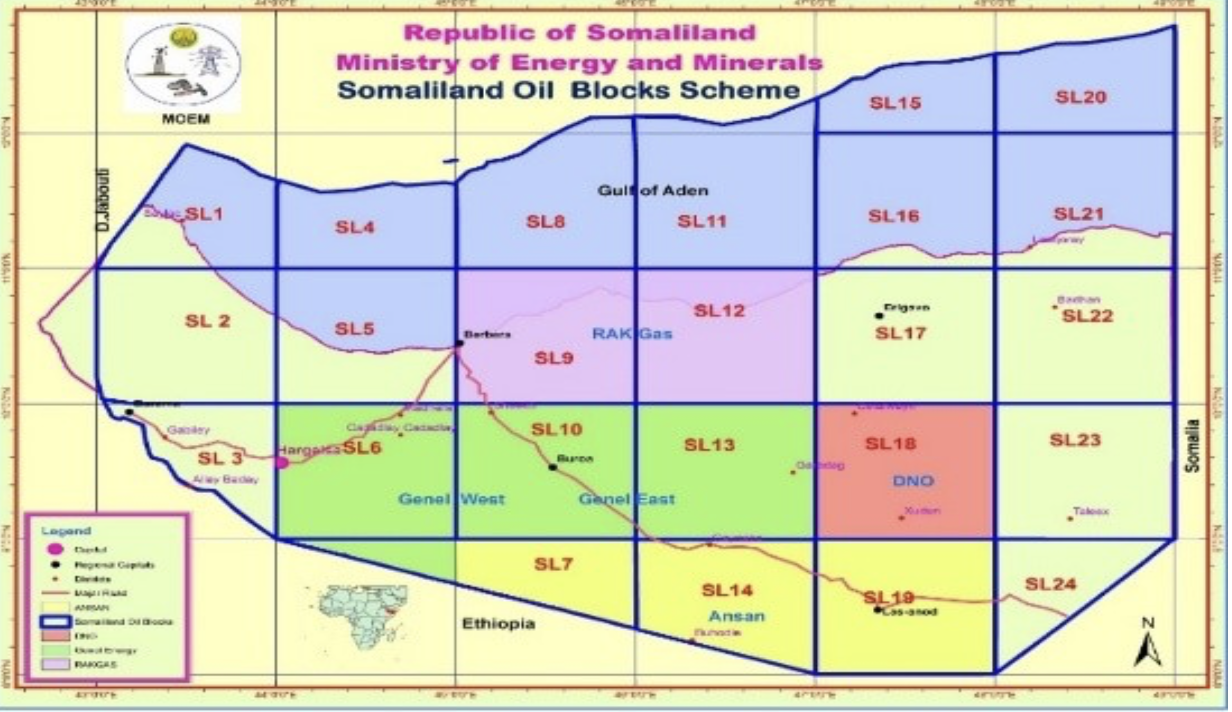
Genel Energy’s interests in Somaliland extend beyond SL10B/13, with a 50% stake in the Oodweyne license (SL6, SL7A, and SL10A), alongside Afentra (34%) and Petrosoma (16%). Seismic surveys and basin studies have identified potential drilling opportunities. Further east, RAK Gas operates Blocks SL9 and SL12, holding a 75% interest alongside IECC (25%). Oil money moves faster than institutions do. A revenue-management law takes years to draft and pass. A production-sharing agreement can be signed in months. If Somaliland lets drilling outrun legislation, the money arrives first, and it arrives at the only channels that already exist: the ministries and agencies controlling the license at that moment. That’s where Somaliland’s specific vulnerability shows up. This isn’t a generic resource-curse warning. Somaliland’s exploration blocks cut across contested administrative lines and a clan-balance system that has been held together for three decades through careful, continuous negotiation, not through formal institutions strong enough to absorb a shock this size. Oil revenue arriving without a binding sharing formula doesn’t sit neutrally on top of that balance. It gets read by every region and clan as a signal of who the state favors. Regions near the blocks that see jobs and infrastructure will be resented by regions that don’t. Regions that see nothing will conclude, correctly, that the settlement excluded them.
The consequence isn’t hypothetical instability years out. It’s immediate and specific: the same recognition campaign Somaliland is running on Berbera, rare minerals, and basing rights depends on the government presenting a unified, credible negotiating position. A government visibly fighting over oil rents at home is a much weaker partner for investors and superpowers like Washington or Jerusalem than one that has never struck oil at all. Not only does quick cash run the risk of causing internal conflict, but it also runs the risk of giving Somalia and dubious foreign ministries a real-life example of the governance failure they already claim Somaliland would have as a recognized state.
Three points stand out for me. First, Somaliland’s resource case has grown more concrete, with Genel now attaching a specific figure roughly 650 million barrels to the Toosan-1 prospect and keeping the license active through drought relief and seismic work even as it defers actual drilling. Second, timing has slipped from 2026 to a working 2027 target, driven less by conditions inside Somaliland than by spillover from wider Middle East instability, which has already paused Genel’s activity elsewhere. Third, and most significantly in my assessment, Somaliland has moved from passive bystander to active dealmaker, trading port access, mineral rights, and basing rights for the recognition it has sought since 1991. This remains the single biggest variable in Somaliland’s hydrocarbon file. Contracts signed by an unrecognized government carry financing and insurance uncertainty that a recognized state simply does not carry, and any wave of recognition, even a partial one, would immediately reshape how lenders and oil companies’ prices risk for better or worse. 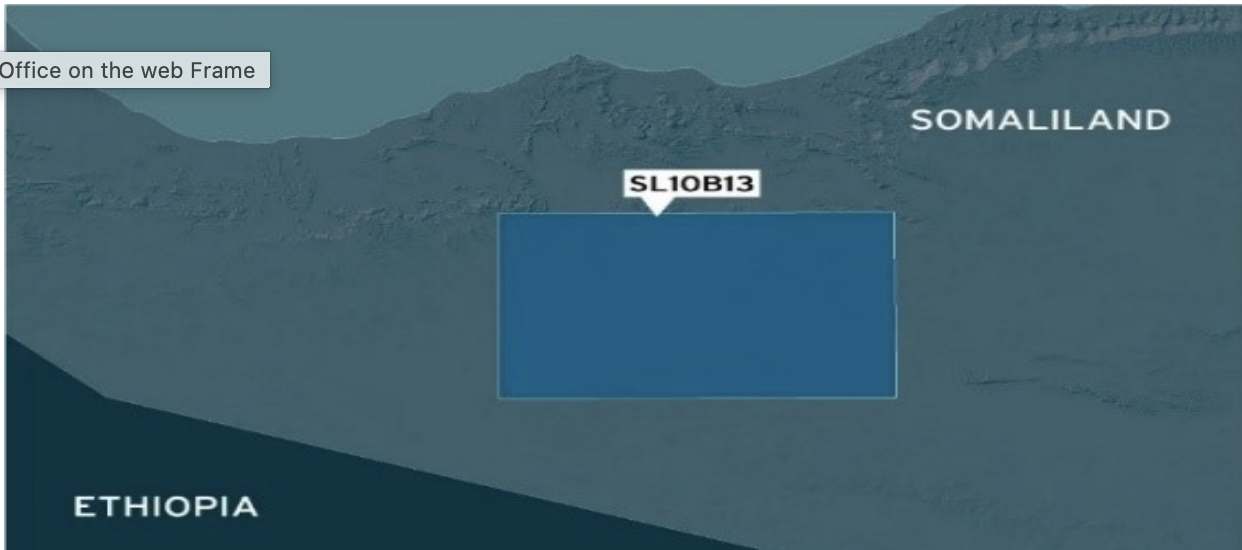
Berbera’s location gives Somaliland a rare double advantage. Sitting directly on the Gulf of Aden at the southern gateway to the Red Sea/Suez corridor, the port already occupies one of the world’s busiest shipping lanes, and DP World’s investment there has positioned Somaliland as a credible alternative logistics gateway to Djibouti, a role made more valuable by regional instability such as Houthi attacks on shipping and recurring Suez disruptions.
I want to be direct about economics, because this is where I think Somaliland’s decision-makers most need clarity rather than optimism. Completed successfully, oil is the single fastest route Somaliland has to genuine economic transformation. A confirmed millions of barrels of resources, exported through a port Somaliland already controls and DP World has already modernized, would generate government revenue at a scale that education, health, roads, and public-sector wages currently cannot approach through customs receipts and donor support alone. It would also strengthen Somaliland’s position in regional and international negotiations. Countries such as Ethiopia, the Gulf states, and the USA are likely to place greater strategic value on a nation that produces energy than one known only for hosting a port. That is the development case, and I believe it is real. But I do not think it is honest to describe this as a safe bet, and the same file that makes the development case also makes the collapse case.
To maximize the benefits of its oil resources, Somaliland should prioritize three actions. First, establish a transparent revenue management framework and an independent oversight body before commercial production begins. Second, pursue international recognition and investment agreements simultaneously to strengthen both political legitimacy and investor confidence. Third, ensure equitable benefit-sharing by guaranteeing local communities’ fair access to jobs, compensation, and infrastructure. Managed with transparency and inclusion, Somaliland’s oil resources could accelerate its journey toward long-term economic self-reliance and international recognition. Poor governance, however, risks turning this opportunity into a source of instability.
If the greatest risk lies in the sequence where resource wealth arrives before the institutions needed to manage it, then the solution must also follow a deliberate sequence. Somaliland should prioritize building strong governance before generating oil revenues. The following three critical steps should be completed before the first commercial barrel is exported;
-
Legislate the rules before the revenue exists to fight over: Pass the revenue-management law now, while there is no money yet to make it politically contested. Establish an independent oversight body as an early-stage sovereign wealth fund with real audit power, not an advisory committee before the first commercial barrel is produced. The test isn’t whether Somaliland writes a law eventually. It’s whether the law exists before anyone has an incentive to weaken it. Genel’s own drift from 2026 to 2027 is unearned time; the government doesn’t get credit for using it, only penalized for wasting it.
-
Negotiate recognition and contracts as one instrument, not two: Somaliland’s diplomatic window is Israeli recognition, active US basing talks, and a live House bill won’t stay this open indefinitely. Use it to lock in production-sharing terms that are internationally bankable now, rather than terms negotiated later from a weaker position after regional attention moves elsewhere. Recognition raises the credibility of any contract signed; a transparent contract raises the credibility of the recognition case. Sequencing them together, in the same negotiating track, means Somaliland isn’t trading away leverage twice for the same outcome.
-
Write clan and local benefit-sharing into law, not into goodwill: Somaliland faces important internal challenges. Its clan-based political balance could come under pressure if oil revenues are not managed fairly. Disputes over resource ownership, local benefits, and contested territories could undermine national unity. A transparent, legally binding revenue-sharing framework that ensures affected communities receive equitable benefits is therefore essential. Without it, petroleum development risks fueling internal divisions rather than strengthening Somaliland’s position on the international stage.
None of the above moves require slowing down the geology. Genel’s timeline has already slipped to 2027 for external reasons. That gap is the opportunity: legislate, negotiate, and formalize benefit-sharing on a track that finishes before the wells do, not after. Managed in that order, Somaliland converts a resource windfall into the foundation for the recognized state it’s been building since 1991. Handled out of order, the sequence itself becomes the risk, not the oil and not the geopolitics, but simply the ones that came first.
Reference:
-
Genel Energy. (2026). Trading & operations update: Somaliland blocks. Genel Energy PLC.
-
Ministry of Energy and Minerals. (2024). Somaliland petroleum sector operations. Government of Somaliland.
-
Ministry of Energy and Minerals. (2023). Somaliland oil & gas sector overview. Government of Somaliland.
-
Ministry of Energy and Minerals. (2023). Somaliland hydrocarbon potential report. Government of Somaliland.
-
Genel Energy PLC. (2026). 2026 annual investor meeting: CEO Paul Weir update on Somaliland [meeting presentation]. Genel Energy PLC.
A very timely and important analysis of Somaliland’s petroleum opportunity.
Having worked in Somaliland’s oil & gas sector, I strongly agree with the central message: the opportunity is significant, but the country must prepare its institutions at the same pace as it develops its petroleum resources.
One point I would add from an industry perspective is the importance of distinguishing prospective resources from commercial reserves. The approximately 650 million barrels associated with the Toosan-1 prospect represent prospective resources across multiple reservoir objectives—not discovered or proven reserves. Genel continues to work toward drilling Toosan-1, which remains an exploration well.
This distinction matters because Somaliland’s petroleum story is still at the exploration and de-risking stage. The pathway from seismic interpretation to exploration drilling, discovery, appraisal, commerciality, development and ultimately first oil is long and capital-intensive. A successful exploration well would be a major milestone, but it would not by itself guarantee commercial production.
At the same time, this period of exploration provides Somaliland with a valuable opportunity. Before significant petroleum revenues arrive, the country should strengthen petroleum governance, environmental regulation, revenue management, transparency, local-content frameworks, community engagement and institutional capacity.
I also believe Somaliland should prepare for both outcomes: a commercial discovery and the possibility that exploration does not result in commercially recoverable hydrocarbons. A responsible national strategy should not build future government expenditure around expected oil revenues before those revenues actually exist.
Ultimately, the objective should not simply be to find oil. The objective should be to build the institutions, technical capacity and economic framework capable of converting a successful discovery—if and when it occurs—into sustainable national development.
Somaliland has a genuine petroleum opportunity. The challenge now is to manage the opportunity with technical realism, institutional preparedness and long-term national interest.
One additional point from an industry perspective concerns the map accompanying the article.
The petroleum block map appears to reflect an earlier configuration of Somaliland’s oil and gas acreage. The Ministry of Energy & Minerals has since published updated petroleum-sector information and a current Map of Blocks through its official channels.
For an article dealing specifically with the current status and strategic future of Somaliland’s petroleum sector, I believe it would be important to use the latest official Ministry map, or at least clearly identify the date/source of the map being used.
This may appear to be a minor editorial issue, but in petroleum it is actually important. Block boundaries, licensing status and participating interests are fundamental to understanding the exploration landscape. An outdated map can unintentionally give investors, policymakers and the public an inaccurate picture of the current sector.
I would therefore encourage the author and publisher to cross-check the map against the latest information issued by the Ministry of Energy & Minerals.
More broadly, the article raises some very important questions about Somaliland’s petroleum future. Keeping the geological, licensing and institutional information equally current will make that discussion even stronger and more useful to investors and policymakers.