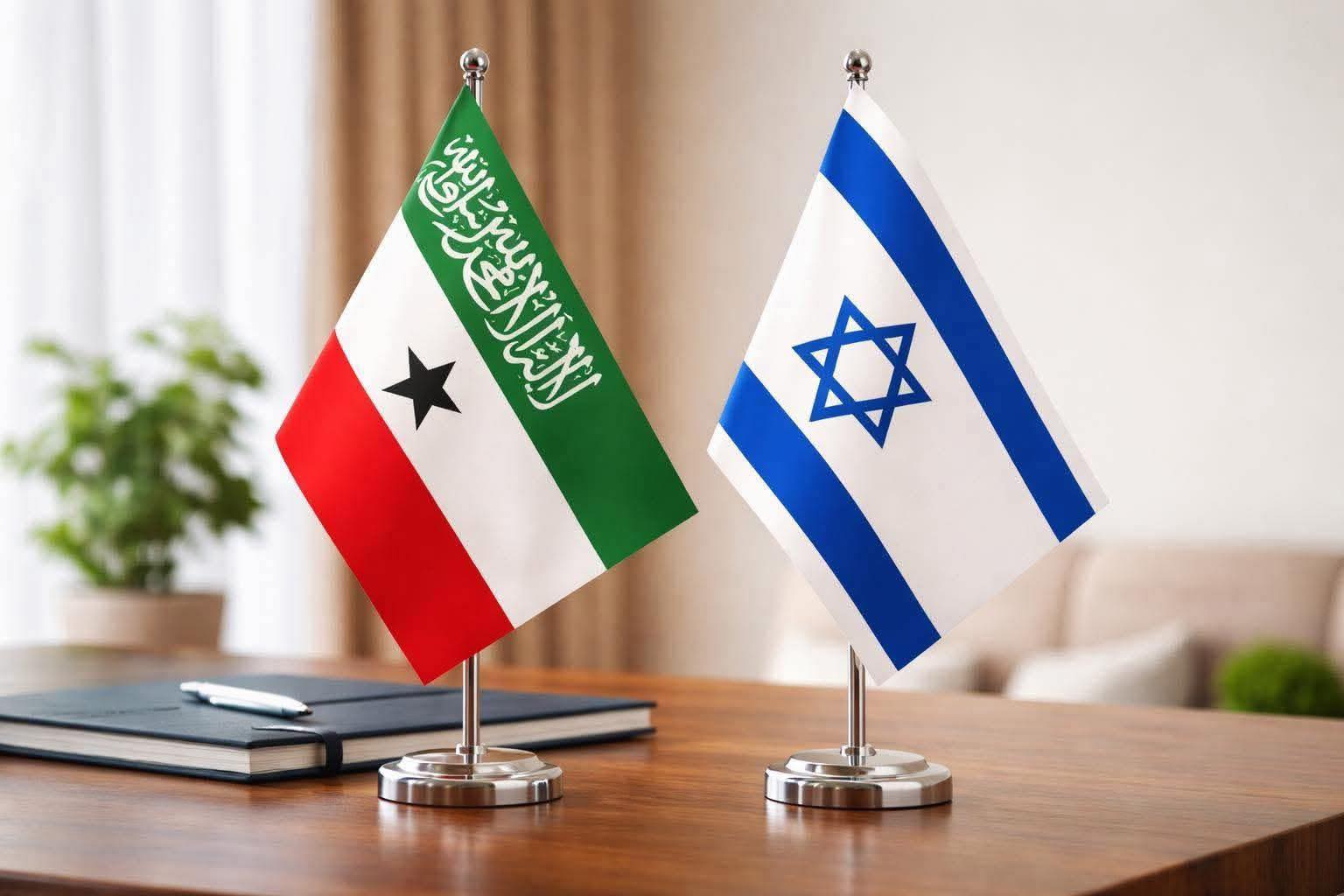
The question of international recognition lies at the heart of Somaliland’s political project. Since declaring the restoration of its sovereignty in 1991, following the collapse of the Somali Democratic Republic, Somaliland has functioned as a de facto independent state with its own constitution, government, security forces, and democratic institutions. However, it remains unrecognized by any member of the United Nations. In this context, any claim or discussion of recognition by a state such as Israel carries profound political, strategic, and symbolic meaning for Somaliland.
If Somaliland were to state that it has received recognition from Israel, this would not merely be a diplomatic development; it would represent a major shift in its long-standing quest for international legitimacy and acceptance.
2. Recognition as a Breakthrough in International Legitimacy
For Somaliland, recognition by Israel would primarily mean validation of its statehood claim. Recognition by an established UN member state particularly one with strong diplomatic influence would serve as evidence that Somaliland’s claim to sovereignty is legally and politically credible. It would demonstrate that the principle of territorial integrity does not automatically override Somaliland’s argument that it is reclaiming the independence it briefly held in 1960 before voluntarily uniting with Somalia.
Such recognition would likely be framed by Somaliland as a precedent-setting moment, potentially encouraging other states to reconsider their long-standing policy of deferring to Somalia’s territorial unity. Even recognition by a single country can weaken the diplomatic taboo surrounding Somaliland’s status and introduce the issue more forcefully into international discourse.
3. Strategic and Geopolitical Significance
Israel’s recognition would have particular geopolitical weight. Israel is a technologically advanced state with significant diplomatic, intelligence, and security networks, especially in the Middle East, Africa, and Western capitals. Somaliland would likely interpret recognition as an opportunity to enter strategic partnerships in areas such as security cooperation, counterterrorism, intelligence sharing, agriculture, water management, and technology.
From Somaliland’s perspective, this would also signal its strategic relevance in the Red Sea Gulf of Aden corridor, a region of growing global importance due to maritime trade routes, regional conflicts, and great-power competition. Recognition by Israel would reinforce Somaliland’s argument that it is not merely a local political project but a strategically valuable and responsible actor in regional security.
4. Economic and Development Implications
Recognition would also be understood in economic terms. Somaliland could argue that Israeli recognition opens the door to investment, trade, and development cooperation. Israel’s experience in arid agriculture, renewable energy, and technological innovation aligns closely with Somaliland’s development needs.
More importantly, recognition could have a multiplier effect. Even if immediate economic benefits were limited, Somaliland would present recognition as a signal to international investors and donors that engagement with Somaliland carries reduced political risk. It would strengthen Somaliland’s claim that continued non-recognition unfairly penalizes a peaceful and democratic society.
5. Diplomatic and Political Messaging
Domestically, Somaliland would likely use Israeli recognition as a nation-building narrative. It would reinforce public confidence in the government’s long-term strategy and validate decades of political compromise, reconciliation, and institution-building. Recognition would be portrayed as proof that Somaliland’s patience, stability, and democratic credentials are being rewarded.
Internationally, Somaliland would emphasize that recognition supports principles such as:
•Self-determination
•Democratic governance
•Peaceful state formation
•Regional stability
This messaging would be aimed particularly at Western democracies and African states, urging them to reconsider their positions.
6. Regional and International Repercussions
At the same time, Somaliland would be aware that recognition by Israel could generate regional sensitivities. Somalia would almost certainly reject the recognition and lobby against its acceptance. Some Arab and Muslim-majority countries might view the move through the lens of Middle Eastern geopolitics rather than African self-determination.
As a result, Somaliland would likely frame Israeli recognition carefully, stressing that it is not aligned against any state, nor is it abandoning its cultural, religious, or regional identity. Instead, it would emphasize pragmatic diplomacy and sovereign equality—the right of Somaliland to establish relations with any country it chooses.
7. Limitations of Recognition by a Single State
Despite its significance, Somaliland would also recognize the limits of such recognition. Recognition by Israel alone would not grant UN membership, widespread diplomatic recognition, or full access to international financial institutions. Somaliland’s leadership would still need to pursue broader acceptance, particularly within Africa and the African Union.
Therefore, Israeli recognition would be seen as a starting point rather than an endpoint a symbolic and strategic gain that strengthens Somaliland’s position but does not resolve its international status outright.
8. Conclusion
In essence, when Somaliland speaks of recognition from Israel, it means far more than bilateral diplomatic relations. It signifies validation of Somaliland’s claim to statehood, a breakthrough in its struggle against diplomatic isolation, and an opportunity to reposition itself strategically, economically, and politically on the global stage. While recognition by a single state would not automatically transform Somaliland’s international status, it would represent a powerful symbol of legitimacy and a potential catalyst for wider international engagement.
Ultimately, such recognition would be interpreted by Somaliland as confirmation that its long experiment in peace, democracy, and self-governance has not gone unnoticed and that its claim to sovereign equality deserves serious consideration by the international community.
About the Author
Abdillahi Mohamed Bile, Security, Peace and Strategic Analyst in the Horn of Africa
Email: ambile292@gmail.com
Whats App: +252-63-4437634
The views expressed in this article are the author’s own and do not necessarily reflect the Horndiplomat editorial policy.
If you want to submit an opinion piece or an analysis, please email it to Opinion@horndiplomat.com. Horndiplomat reserves the right to edit articles before publication. Please include your full name, relevant personal information, and political affiliations.