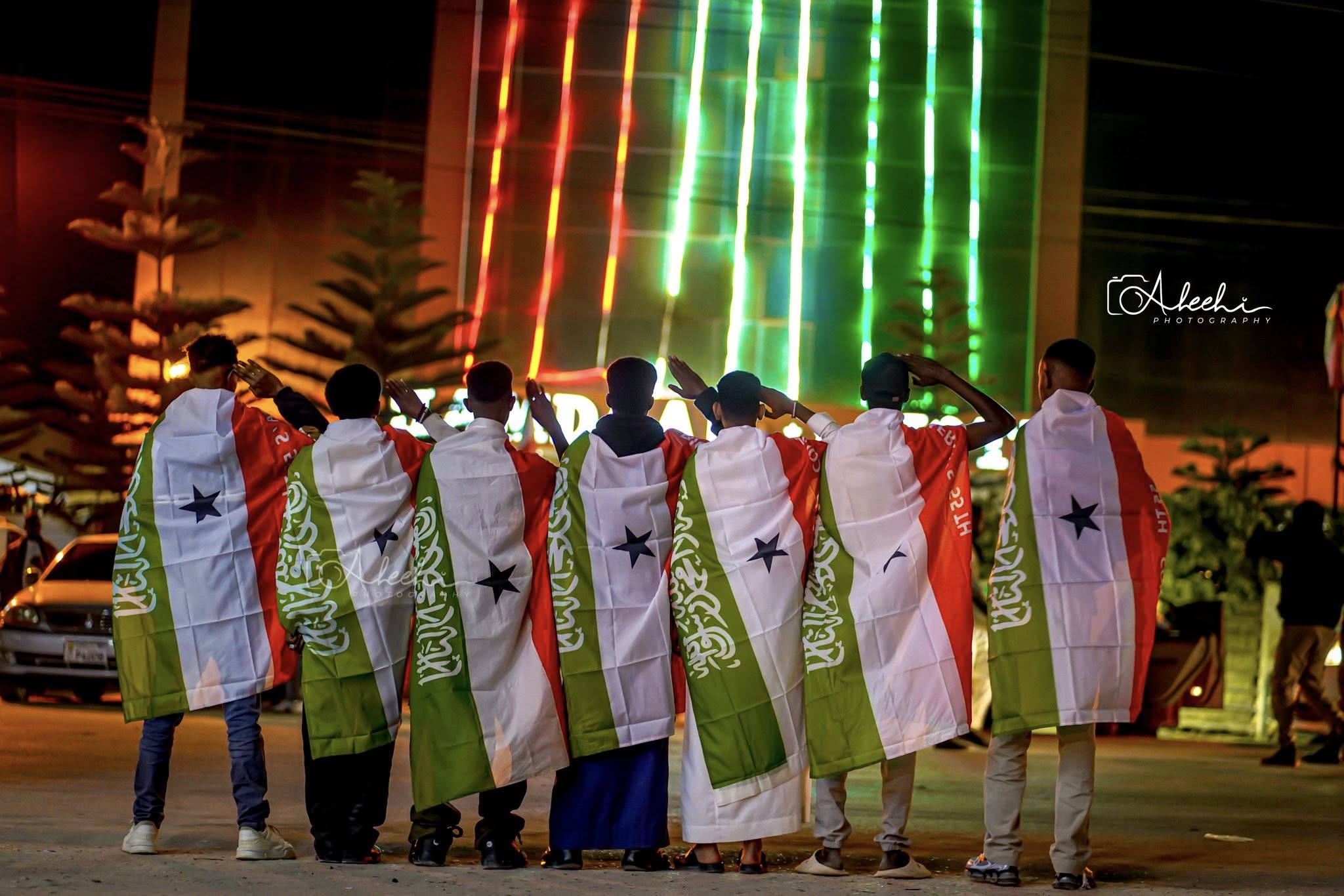
On December 26, 2025, Israel formally recognized Somaliland as an independent state. That decision should prompt a long-overdue reassessment in Washington and London. Both the United States and the United Kingdom should now recognize Somaliland as well.
Israel’s move was not an act of defiance or diplomatic theater. It was an acceptance of political reality—one that Western governments have avoided for more than three decades. Since 1991, Somaliland has functioned as a self-governing state, maintaining peace, holding competitive elections, and exercising effective control over its territory in one of the most volatile regions of the world. Continuing to treat it as a legal abstraction tied to Somalia no longer serves Western strategic or moral interests.
History offers a useful parallel. In the early 1970s, U.S. senators urged President Richard Nixon to recognize Bangladesh, arguing that American policy could no longer deny facts on the ground. More than fifty years later, a similar moment has arrived. In August 2025, Senator Ted Cruz publicly called on the U.S. president to recognize Somaliland, reflecting growing bipartisan recognition that policy toward the Horn of Africa must adapt—particularly as China and Russia expand their influence across the region.
For too long, Somaliland has been conflated with Somalia. The comparison obscures critical differences. Despite decades of international aid, military interventions, and diplomatic engagement, Somalia remains plagued by corruption, political paralysis, and violent extremism. Al-Shabaab continues to control territory, and state institutions remain fragile. Somaliland has followed a different trajectory—building order from the ground up, largely without foreign assistance.
The historical distinction is clear. Somaliland was a British protectorate that gained independence in June 1960 and was recognized by more than 30 countries, including the United States, Israel and the United Kingdom. Days later, it voluntarily united with Italian Somalia to form the Somali Republic. That union proved deeply unequal and ultimately disastrous. Under the Siad Barre dictatorship, Somaliland suffered systematic repression, culminating in mass atrocities and the destruction of Hargeisa. When the Somali state collapsed in 1991, Somaliland reclaimed its sovereignty and began the slow work of reconstruction.
Since then, it has governed itself as an independent polity, with its own constitution, judiciary, currency, and security forces. This is not a symbolic claim—it is an operational reality.
Recognition is not only about legality; it is about strategy. Somaliland sits along the Gulf of Aden and the Red Sea, a corridor essential to global trade and energy flows. Instability in this region directly affects international commerce and maritime security. Somaliland has demonstrated that it can be a reliable partner in safeguarding these interests.
Its port at Berbera, upgraded through international investment, occupies a position of exceptional strategic value. During the Cold War, the port was contested by global powers. Today, as Beijing expands its economic and military footprint across Africa and the Red Sea basin, Somaliland offers the West a stable and cooperative foothold in a highly contested environment.
Recognition is also a test of values. Somaliland rebuilt after civil war without international trusteeship, peacekeeping missions, or massive foreign aid. Instead, it relied on locally driven reconciliation and a hybrid political system combining traditional authority with democratic governance. The result is imperfect but genuine: multiple competitive elections, peaceful transfers of power, and institutions funded primarily through domestic revenues. In a region marked by authoritarianism and state collapse, this achievement is rare.
Critics argue that recognizing Somaliland would destabilize Somalia. This misunderstands the problem. Somalia has been unstable for more than three decades, regardless of Somaliland’s status. Denying Somaliland recognition has not strengthened Somalia’s sovereignty, nor has it advanced peace. Continuing to ignore Somaliland’s existence only perpetuates a diplomatic fiction.
There is precedent for recognizing states born of political reality. Eritrea became independent in 1993; South Sudan in 2011. In both cases, Western governments acknowledged outcomes shaped by history and popular will. Refusing Somaliland the same consideration weakens Western claims to support democracy and self-determination.
Momentum is building. In the United States, bipartisan voices in Congress are calling for a policy reset, and pending legislation—such as the Somaliland Independence Act—reflects growing dissatisfaction with the status quo.Recognition would not be an act of charity—it would be a strategic investment in a dependable partner.
Israel has taken the first step. The United States and the United Kingdom now face a familiar choice: cling to outdated assumptions or acknowledge a reality that has long been established. Somaliland is not Somalia. Recognizing that truth would strengthen Western credibility and influence in a region where both are increasingly contested.
Recognition is overdue.
About the Author
Dr. Jamal Ali Hussein is a scholar, Somaliland political leader, and former senior international banking executive.
The views expressed in this article are the author’s own and do not necessarily reflect the Horndiplomat editorial policy.
If you want to submit an opinion piece or an analysis, please email it to Opinion@horndiplomat.com. Horndiplomat reserves the right to edit articles before publication. Please include your full name, relevant personal information, and political affiliations.