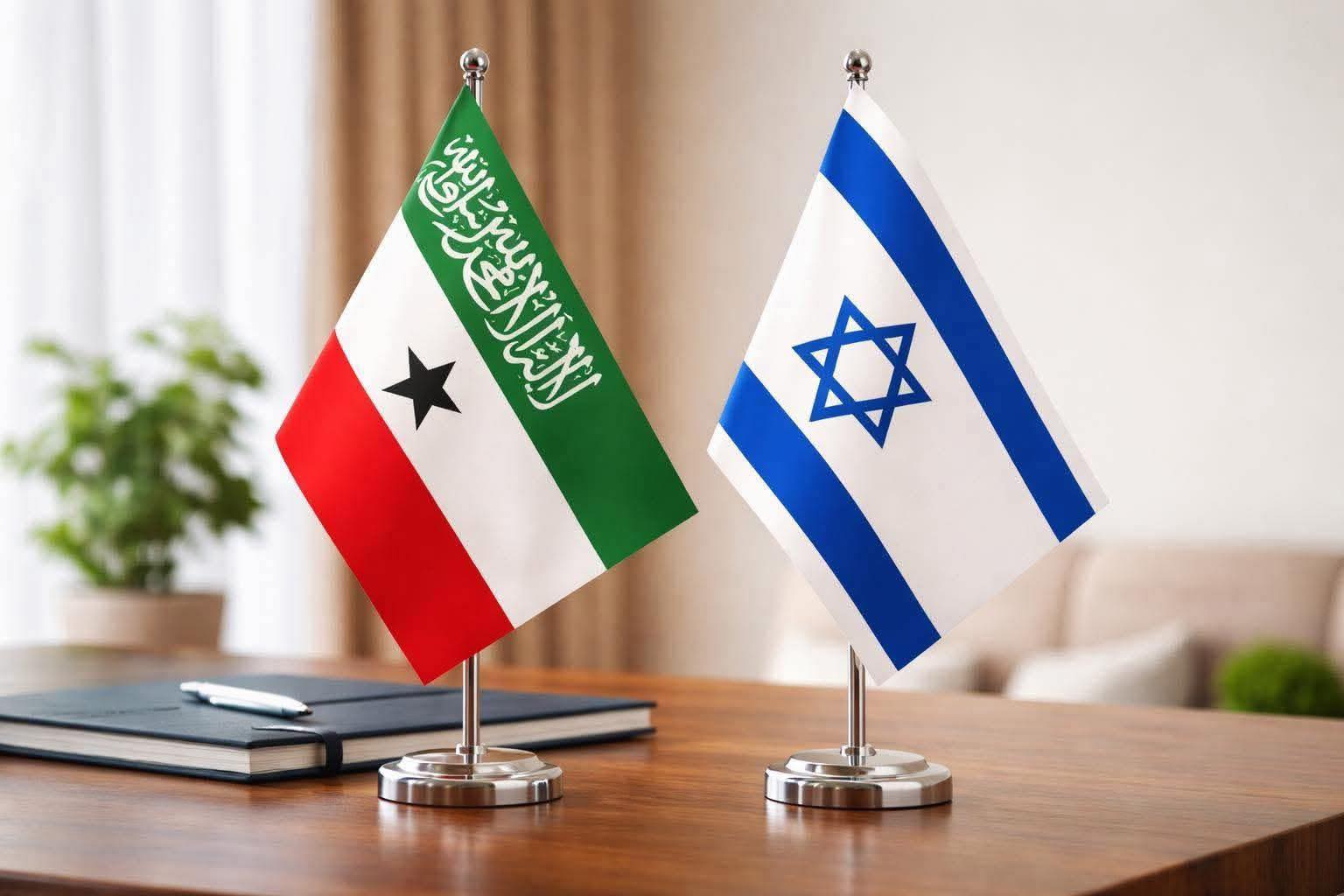
The Horn of Africa has long been a strategic crossroads where African, Middle Eastern, and global interests intersect. In recent years, renewed discussions surrounding Israel’s possible re-recognition of Somaliland have generated debate about shifting alliances, regional security architectures, and evolving norms of statehood recognition. This essay examines the geopolitical implications of such a development, situating it within the historical context of Somaliland’s quest for recognition, Israel’s strategic interests in the Red Sea corridor, and the broader realignment of regional and extra-regional actors in the Horn of Africa. It argues that even the prospect of Israeli re-recognition reflects deeper structural changes in regional geopolitics, marked by pragmatism, security-driven diplomacy, and the gradual erosion of traditional diplomatic orthodoxies.
1. Introduction
The Horn of Africa occupies a pivotal position in global geopolitics due to its proximity to the Red Sea, the Gulf of Aden, and critical maritime chokepoints linking Europe, the Middle East, and Asia. Historically shaped by colonial legacies, Cold War rivalries, and post–Cold War interventions, the region continues to experience political fragmentation alongside growing strategic attention from external powers.
Within this context, Somaliland represents a unique political entity: a de facto state with defined borders, a functioning government, and relative stability, yet lacking formal international recognition.
Israel’s engagement with the Horn of Africa has traditionally been cautious but strategic, driven by security considerations, maritime interests, and concerns over hostile actors’ influence near its periphery. Discussions surrounding Israel’s potential re-recognition of Somaliland—recalling limited historical ties during the early post-colonial period—have therefore attracted attention not merely as a bilateral issue, but as a possible catalyst for wider geopolitical realignment in the region.
2. Historical Background: Somaliland and the Politics of Recognition
Somaliland reclaimed its sovereignty in 1991 following the collapse of the Somalia Siad Barre regime. Unlike Somalia, it embarked on a locally driven peace-building process that produced relative stability, regular elections, and institutional continuity. Despite meeting many empirical criteria of statehood as defined in the Montevideo Convention, Somaliland has remained unrecognized due to the African Union’s normative commitment to the territorial integrity of post-colonial states.
Recognition has thus been less a question of governance capacity than a reflection of regional and international political calculations. For external actors, engagement with Somaliland has often occurred through informal channels, technical cooperation, or economic agreements that stop short of formal diplomatic recognition. Israel’s potential re-recognition must be understood against this backdrop of selective engagement and strategic ambiguity.
3. Israel’s Strategic Interests in the Horn of Africa
Israel’s foreign policy in Africa has historically oscillated between periods of engagement and retrenchment. In the contemporary era, its interests in the Horn of Africa are shaped by three interrelated factors.
First, maritime security is central. The Bab el-Mandeb Strait is a critical chokepoint for Israeli trade and energy routes. Instability or hostile control in this area poses direct risks to Israel’s economic and security interests.
Second, Israel is concerned about the influence of rival regional actors, including Iran, Turkey, and their allied non-state groups, along the Red Sea corridor. Expanding diplomatic and security partnerships in the Horn of Africa offers Israel opportunities to counterbalance such influence through intelligence cooperation and strategic access.
Third, Israel’s recent normalization agreements with several Arab states have encouraged a more pragmatic, interest-based diplomacy. In this context, engagement with Somaliland can be seen as part of a broader strategy that prioritizes functional partnerships over strict adherence to traditional diplomatic constraints.
4. Somaliland as a Strategic Partner
From Somaliland’s perspective, Israeli re-recognition would represent a major diplomatic breakthrough, potentially opening the door to further bilateral recognitions and deeper international engagement. Somaliland offers strategic assets that align with Israeli interests, including access to ports along the Gulf of Aden, relative political stability, and leadership eager to pursue security and development partnerships.
For Israel, Somaliland presents a low-cost, high-reward partnership. Unlike fragile states in the region, Somaliland has demonstrated an ability to maintain internal order and cooperate effectively with external actors. Such cooperation could extend to maritime surveillance, counterterrorism, and technological exchange, reinforcing Israel’s strategic depth without requiring large-scale military commitments.
5. Regional Implications in the Horn of Africa
A reconfiguration of relations between Israel and Somaliland would reverberate across the Horn of Africa. Ethiopia, Djibouti, and Eritrea would likely recalibrate their positions. Ethiopia, a landlocked state with significant interests in Red Sea access, may view enhanced Somaliland partnerships as both an opportunity and a challenge, depending on how port access and security arrangements evolve. Djibouti, which hosts multiple foreign military bases, could face increased competition as strategic attention diversifies along the Gulf of Berbera.
At a broader level, Israeli engagement with Somaliland could contribute to the gradual normalization of pragmatic recognition practices, where stability and governance capacity increasingly outweigh strict adherence to inherited borders. Such a shift would mark a subtle but significant evolution in African diplomatic norms.
6. Middle Eastern and Global Dimensions
Beyond Africa, Israel’s potential re-recognition of Somaliland intersects with wider Middle Eastern geopolitics. Gulf states, particularly those already aligned with Israel through normalization agreements, have invested heavily in Horn of Africa ports and infrastructure. An Israeli–Somaliland alignment could complement these investments, creating a network of aligned actors spanning the Red Sea corridor.
Global powers such as the United States, China, and the European Union would also take note. While cautious about formal recognition, these actors may quietly welcome arrangements that enhance maritime security and reduce the space for transnational threats. At the same time, concerns about precedent and regional instability would likely temper overt support.
7. Conclusion
The prospect of Israel’s re-recognition of Somaliland illustrates the evolving geopolitics of the Horn of Africa, where pragmatism, security imperatives, and shifting alliances increasingly shape diplomatic behavior. Whether or not formal recognition materializes, the very discussion signals a departure from rigid norms toward more flexible, interest-driven engagement.
In this sense, Israel and Somaliland serve as case studies in a broader transformation of regional order—one in which de facto realities, strategic geography, and mutual benefit challenge long-standing assumptions about sovereignty and recognition. The Horn of Africa, long viewed as a peripheral theater, thus emerges as a central arena in the reconfiguration of twenty-first-century geopolitics.
Author: Abdillahi Mohamed Bile Position: Security, Peace, and Strategic Analyst in the Horn of Africa Email: ambile292@gmail.com WhatsApp: +252-63-4437634
The views expressed in this article are the author’s own and do not necessarily reflect the Horndiplomat editorial policy.
If you want to submit an opinion piece or an analysis, please email it to Opinion@horndiplomat.com
Horndiplomat reserves the right to edit articles before publication. Please include your full name, relevant personal information and political affiliations