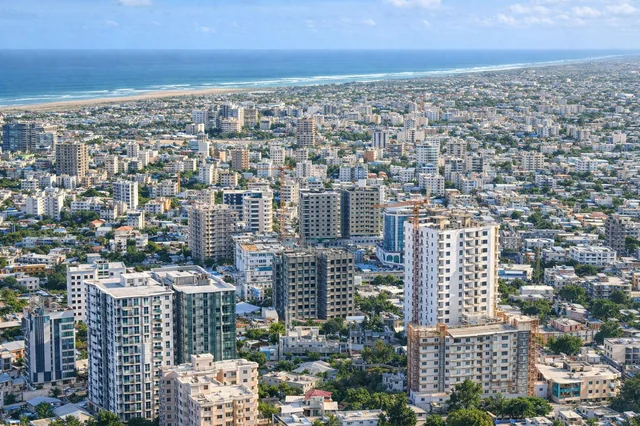
History, when ignored, has a habit of repeating itself. Today, Somalia risks being drawn back toward the chaos of 1992, as leaders appear to disregard the hard lessons of the past.
In January 1993, I traveled to Mogadishu as part of a fact-finding mission dispatched by an international organization to assess Operation Restore Hope—a military intervention ordered by George H. W. Bush to support a United Nations humanitarian effort. At the time, Mogadishu was a shattered city. Rival warlords and their militias carved it into hostile enclaves, while famine ravaged the population. Between three and five million people faced starvation in Somalia, even as humanitarian aid was routinely looted.
My colleagues, Juan Méndez, later the UN Special Rapporteur on Torture and Ben Panglase, now an Associate Professor at Loyola University, wrote a detailed report for Human Rights Watch titled Somalia: Beyond the Warlords. That report offered more than documentation—it provided a warning. It highlighted how misplaced political priorities, particularly an overemphasis on power-sharing among elites, ignored the plight of civilians trapped in violence and the imperative of good governance in rebuilding the broken nation of Somalia.
The Collapse of the State
The roots of Somalia’s state collapse lie in two decades of dictatorial rule which fell in January 1991 under pressure from multiple armed opposition movements and civilian uprising. The Somali National Movement controlled much of the north, while the United Somali Congress (USC) and the Somali Patriotic Movement (SPM) advanced toward Mogadishu.
As USC fighters entered the capital on 24 January 1991, prominent figures proposed a ceasefire and an interim government. Their expressed aim was to prevent further bloodshed and plan an orderly transition. However, General Mohamed Farah Aideed, the leader of the USC, considering himself the rightful victor, rejected these overtures, and fighting continued. Within days, Siyad Barre fled Mogadishu, though conflict persisted for months.
Soon after on 28 January, Ali Mahdi Mohamed, a wealthy hotelier supported by his subclan and the Manifesto Group, unilaterally declared himself president, without consulting other opposition factions. The fragile opposition alliance fractured. The SNM declared independence in the north (now the Republic of Somaliland), while Aideed’s forces moved into Mogadishu to challenge Ali Mahdi’s authority. The Somali state, once among the strongest militaries in Africa, disintegrated with alarming speed.
International Intervention and Its Limits
By 1992–1993, Somalia had become the testing ground for an ambitious new model of humanitarian intervention. Under the leadership of Boutros Boutros-Ghali, the United Nations sought to combine peacekeeping with enforcement.
The result was a massive deployment: nearly 37,000 troops from 24 countries, including 27,000 from the United States, under the Unified Task Force (UNITAF). Mogadishu was effectively partitioned, with rival militias controlling different sectors. A heavily fortified international enclave—Camp Halane—emerged near the airport, physically and symbolically separating the international community from the Somali public.
Despite initial successes in securing humanitarian corridors, ceasefires brokered by international actors were repeatedly violated. Armed factions showed little commitment to negotiated agreements. The situation deteriorated further after the events dramatized in Battle of Mogadishu, prompting the withdrawal of U.S. forces in 1993. General Aideed was killed in the sectarian violence, while Ali Mahdi would keep clinking to a façade of the presidency until 2000 when the Arta conference in Djibouti formed the Transitional National Government (TNG). The TNG was replaced by a Transitional Federal Government (TFG) formed at another 2-year long conference in Eldoret, Kenya (2002-04). Another conference, again in Djibouti, resolved a dispute between the TFG and an opposing Alliance for the Re-liberation of Somalia (ARS) and moved Somalia from a transitional to a permanent form of federal system of 5 autonomous member States.
The creation of a federal system with autonomous regional governments was predicated on a bottom-up approach, largely based on clan makeup, considered at time most viable for rebuilding trust in a fragmented society. Unfortunately, two subsequent flaws marred the federal system. First, security was entirely centralized, which weakened the member states. Second, the international bilateral and multilateral arrangements were channeled through the Federal government. The result is a strong central government based in the capital and weak, dependent regional governments. In addition, the central government, under the current leadership of President Hassan Sheikh Mohamoud has forged strong security alliance with foreign governments, especially Türkiye and Egypt willing to support his rule for their own strategic interests.
President Hassan Sheikh Mohamoud’s tenure is expiring on 15 May, and Somalia faces another impasse not unlike the leadership intransigence of 1992. The president has already forced changes in the national constitution that favors him for re-election. Two of the 5 member states are from his own clan. The President, through the FG armed forces, has also forcibly removed the leader of the South West member state of the Federal Government and installed his own supporter. The two remaining member states are under pressure as well. Two years ago, the FG armed forces unsuccessfully tried to overthrow the Jubbaland administration. The Puntland leadership of President Dani is being challenged from within Puntland by FG ministers or military commanders appointed by the FG. President Dani is in a weakened position in Garowe as he himself may have overplayed his hand during his re-election. which critics complain broke an unwritten understanding for a rotating term between the major subclans of Puntland.
A United Somali Emirate after 2030?
It’s widely believed that Hassan Sheikh Mahamud wants to extend his tenure beyond 2030 in the hope that Türkiye’s current exploration of oil will be completed. By then oil wealth may flow. The Minster of Defense of the FG, an ardent supporter of the President, is already dangling a “shared wealth” concept where oil revenues controlled by the central government could be dolled to the member states in an Emirati style hegemonic clan subordination. The international community has already allowed the FG in Mogadishu to act as a gatekeeper of all international assistance and serves as a blueprint for this “shared wealth” distribution.
President Hassan Sheikh and his supporters are confident in their position. Even if formal bilateral and multilateral assistance is halted, Hassan Sheikh Mahmoud will continue to have the financial support of Qatar and Saudi Arabia in addition to the military support of Egypt and Türkiye.
Echoes in the Present
This is not merely history—it is a warning.
Today, Somalia faces a troubling convergence of familiar risks. Three decades later, Camp Halane still exists—housing foreign embassies, international organizations, and rotating personnel—an enduring reminder of intervention, failure and isolation.
Deadlocked leadership unwilling to compromise, fragmented clan rivalry magnified by leaders using clan identity to ascend to power often prioritizing power-sharing arrangements over effective governance. Armed threats, including Al-Shabaab, continue to expand their influence. Reports of looted humanitarian aid—one of the very triggers for the 1992 intervention—have resurfaced.
Meanwhile, foreign involvement persists, though in altered form. Regional and international actors, including Türkiye, Egypt, and Ethiopia, are increasingly engaged, often with competing strategic interests. Unlike the earlier UN-led mission, these interventions are more fragmented and overtly partisan.
The result is a dangerous pattern: external support without unified direction, domestic leadership without consensus, and a population once again caught in between.
A Lesson Still Unlearned
The tragedy of Somalia is not simply that the state collapsed—it is that the lessons of that collapse remain insufficiently learned.
In the early 1990s, the international community focused heavily on elite negotiations while neglecting the broader foundations of governance: rule of law, accountable institutions, and public trust. That imbalance persists today.
If Somalia is to avoid repeating 1992, its leaders—and their international partners—must shift priorities. Power-sharing alone cannot stabilize a nation. Durable peace requires governance that serves citizens rather than factions, and institutions that transcend clan, personal, and external interests. President Hassan Sheikh Mohamoud, at least for the moment, is intransigent. To avoid a repeat of 1992, his opponents must refrain from an armed confrontation. The age-old Somali reconciliation through pastoral democracy must be finally applied the same way Somaliland did three decades ago.
History does not have to repeat itself. But those who ignore its lessons are condemned to see it replay.
About the Author
Ahmed Hussein Esa, PhD is the President of ATU, bringing extensive experience in leadership, policy, and international engagement. He has played a significant role in advancing institutional development and fostering strategic partnerships across sectors.
In addition to his executive leadership, Dr. Esa has contributed to global policy discussions and human rights advocacy. In January 1993, he served as a member of the International Advisory Board of Human Rights Watch, Arms Project, reflecting his long-standing commitment to issues of governance, accountability, and international cooperation.
The views expressed in this article are the author’s own and do not necessarily reflect the Horndiplomat editorial policy.
If you want to submit an opinion piece or an analysis, please email it to Opinion@horndiplomat.com. Horndiplomat reserves the right to edit articles before publication. Please include your full name, relevant personal information, and political affiliations.