

Editorial: Al-Alamein Summit Could Push Ethiopia, Somaliland Closer

0
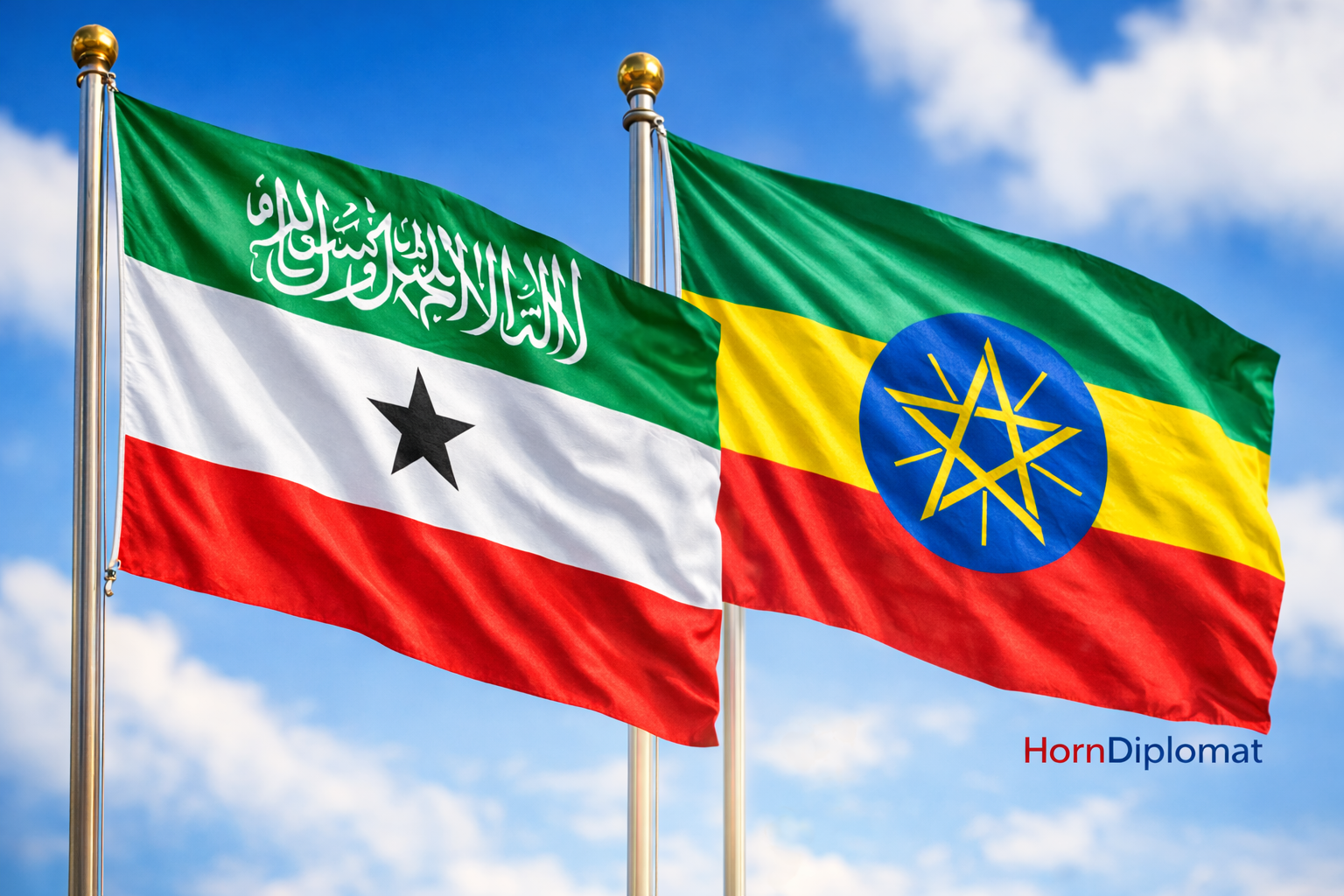
Ethiopia and Somaliland flag

By— Horndiplomat Editorial

The meeting in Egypt’s New Al-Alamein City on October 4 deserves close attention in the Horn of Africa.

Egypt, Eritrea, Sudan and Somalia did not announce a new alliance. But their joint statement showed a remarkable degree of agreement on issues that touch directly on Ethiopia’s strategic interests and Somaliland’s diplomatic future.

The four leaders backed Somalia’s territorial claims over Somaliland and rejected recognition of Somaliland. They declared that governance of the Red Sea should remain the exclusive responsibility of coastal states. On the Nile, they rejected unilateral actions that could harm the water interests of downstream countries.

Ethiopia was not named in those passages, but there is little ambiguity about their regional context.

Cairo and Addis Ababa have spent years at odds over the Nile and the Grand Ethiopian Renaissance Dam. Relations between Ethiopia and Eritrea have again deteriorated. Ethiopia’s search for reliable access to the sea has also become one of the defining political questions in the Horn.
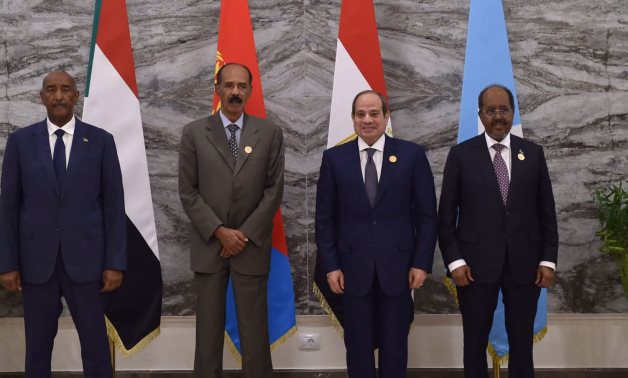
The leaders of Sudan, Eritrea, Egypt, Somalia

Somalia has its own dispute with Ethiopia over Somaliland.

Seen separately, these are different disputes. Al-Alamein showed how closely they are beginning to overlap.

For Somaliland, the most important part of the statement was explicit. Egypt, Eritrea, Sudan and Somalia rejected “any recognition or support” for Somaliland.

That comes less than a year after Israel became the first UN member state to formally recognise Somaliland.

Mogadishu will naturally regard the Al-Alamein language as a diplomatic success. Yet there is another side to it.

The stronger the regional effort to isolate Somaliland diplomatically, the greater the incentive for Hargeisa to deepen relations with governments whose strategic interests do not necessarily align with Mogadishu, Cairo or Asmara.

Ethiopia is the obvious country to watch.

Addis Ababa has not recognised Somaliland, and there is no basis for suggesting that recognition is imminent. But Ethiopia’s need for dependable access to the sea has not disappeared simply because the issue is politically difficult.

The Al-Alamein statement may actually sharpen that problem.

By declaring Red Sea governance the exclusive responsibility of coastal states while also backing Somalia’s claim over Somaliland, the four governments are effectively narrowing the political space available to Ethiopia.

But geography cannot be changed by declarations.

Ethiopia remains the region’s largest landlocked country. Somaliland sits on the Gulf of Aden, close to one of the world’s most important shipping routes. Berbera already offers Ethiopia an alternative commercial corridor, and Somaliland has made clear that it supports negotiated Ethiopian access to the sea.

This is where Al-Alamein may produce an outcome its participants did not intend.

Pressure on Ethiopia over the Red Sea and pressure on Somaliland over recognition could give Addis Ababa and Hargeisa more reason to look towards each other.

Their interests are not identical. Their relationship has had its own difficulties, and Ethiopia continues to have important interests in Somalia. It would therefore be premature to speak of an Ethiopia-Somaliland alliance.

But states usually cooperate because circumstances give them reasons to do so.

Somaliland needs diplomatic partners, investment and governments prepared to deal directly with Hargeisa. Ethiopia needs diversified trade corridors and a long-term answer to the strategic vulnerability created by being landlocked.

Those interests existed before Al-Alamein. The summit has simply made them harder to overlook.

Israel’s recognition of Somaliland has also changed the environment. The question of Somaliland recognition is no longer entirely theoretical. One UN member state has already crossed that line.

The Al-Alamein countries are trying to prevent others from following.

Whether that strategy succeeds will depend less on declarations defending Somalia’s territorial integrity and more on how other governments judge their own national interests.

The same applies to Ethiopia.

If Addis Ababa increasingly sees Egypt, Eritrea, Sudan and Somalia coordinating around positions that constrain Ethiopian interests on the Nile, the Red Sea and Somaliland, its own calculations are likely to change.

None of this means the Horn is dividing neatly into two camps. Regional politics is rarely that simple.

Sudan has its war. Egypt has the Nile at the centre of its calculations. Eritrea has its own security concerns. Somalia is focused heavily on Somaliland and its internal security challenges. Ethiopia has relationships with all of them that extend far beyond the disagreements highlighted at Al-Alamein.

But the direction of travel matters.

Four countries have now created a mechanism for continued consultation after adopting common positions on some of the most contentious questions facing the region.

That is significant.

Somaliland should read the development carefully, but not defensively. Al-Alamein demonstrates that its recognition campaign has become part of a much larger geopolitical contest. That brings pressure, but it also gives Somaliland greater strategic relevance.

Ethiopia should read it just as carefully.

The message from Al-Alamein was meant to reinforce existing borders, restrict outside involvement in Red Sea affairs and close the door on Somaliland recognition.

It may achieve some of those objectives.

But regional politics often produces unintended consequences.

By placing Ethiopia’s maritime ambitions and Somaliland’s diplomatic ambitions under greater pressure at the same time, Al-Alamein may have given Addis Ababa and Hargeisa one more reason to find common ground.

— Horndiplomat Editorial Board

Leave a Reply