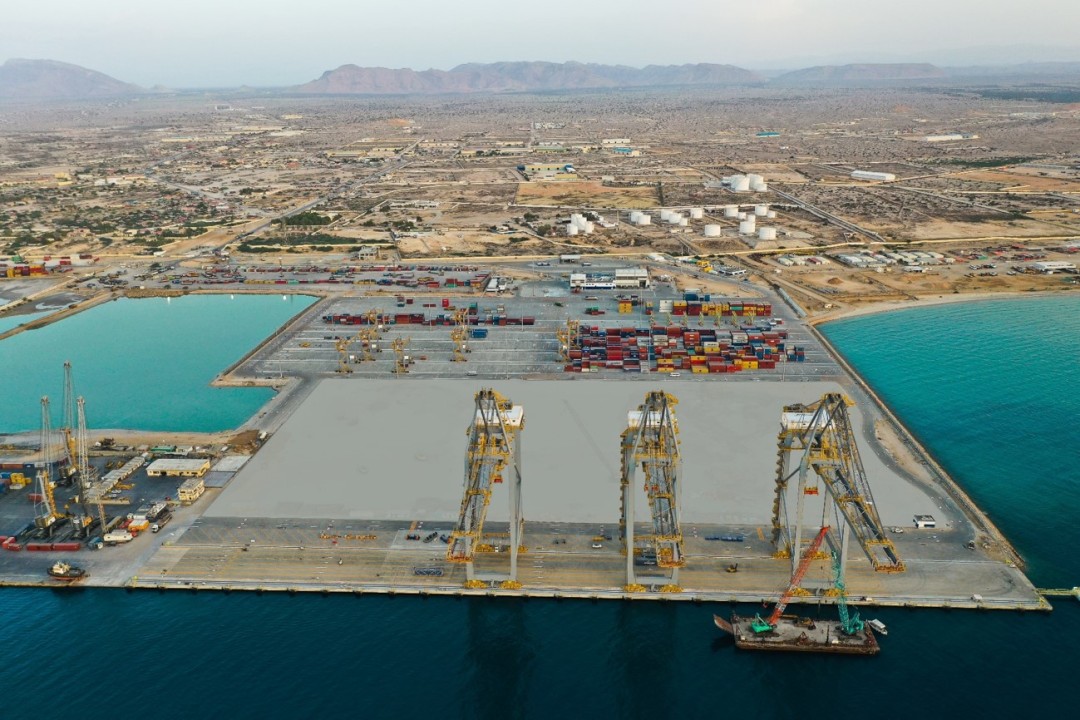
Transforming Berbera into a world-class centre of trade
By: Amb. Bashe Awil Omar
Global trade depends on a handful of narrow maritime routes. One of the most important is the Strait of Hormuz. Around a quarter of the world’s crude oil and LNG passes through that corridor, making it one of the most sensitive arteries in the globaltrading system.
Whenever tensions rise in the region, the vulnerability of that route becomes obvious. Ships slow down or suspend sailings.Insurance premiums rise sharply. Freight costs jump across several routes.
It is a reminder of a simple reality. Relying too heavily on a single chokepoint carries risk.
That is why governments and businesses are looking more seriously at diversification. Alternative routes, redundancy in supplychains, and additional logistics corridors are becoming part of long term planning.
This is where Berbera starts to draw attention.
Berbera sits on the Gulf of Aden along a major shipping corridor linking Asia, the Middle East, Africa and Europe. Ships can reachthe port without passing through the narrow waters of the Strait of Hormuz. Geography alone gives Berbera strategic relevance.
But location by itself does not turn a port into a logistics hub. Infrastructure and investment are what make the difference.
Over the past decade the United Arab Emirates has played an important role in building Berbera’s logistics platform. Through itscompanies and partnerships the UAE has been involved in expanding Berbera Port, establishing the Berbera Free Zone, andupgrading Berbera Airport.
Few places along the Red Sea corridor combine a port, a free zone and an airport in the same location.
If developed carefully Berbera could grow into a multi modal logistics hub linking maritime trade, air cargo and industrial activity.
Food security is one area where the potential is clear.
Today Somaliland’s exports remain limited. Livestock is still the main product shipped to Gulf markets. Each year millions of sheep, goats and cattle leave Berbera for Saudi Arabia and other GCC countries.
That trade also highlights a larger opportunity. With investment in feedlots, cold chain systems, meat processing, and modern quarantine facilities, Berbera could move beyond live animal exports and develop capacity for processed halal meat andagricultural products destined for Gulf markets.
For Gulf countries thinking more seriously about long term food security, closer links with African agricultural supply chainsmake strategic sense.
Energy logistics is another area with potential.
Berbera already has meaningful fuel storage capacity. Government and private facilities together provide about 176,000 cubicmetres of storage, equivalent to roughly 140,000 to 150,000 tonnes of fuel depending on the product mix.
This capacity supports fuel distribution within Somaliland and parts of the region. It also offers something valuable duringperiods of tension in the Gulf. Fuel storage located outside the Persian Gulf.
The port also connects directly to Ethiopia through the Berbera Corridor. Ethiopia is home to more than 120 million people andremains one of Africa’s fastest growing economies. For a country of that size reliable access to the sea is essential.
Today most of Ethiopia’s trade moves through Djibouti. Congestion and rising costs there have highlighted the risks of relyingon a single corridor. Some studies suggest that cargo moving through Djibouti’s Free Zones can generate hundreds of millions of dollars in additional logistics costs each year because of warehousing, double handling and administrativeprocedures.
That is why alternative corridors are now being discussed much more seriously, including Berbera.
Djibouti currently dominates fuel storage and bunkering services in the Horn of Africa, with capacity exceeding one million cubicmetres across several terminals.
Berbera’s infrastructure is smaller today, but its location along the Gulf of Aden shipping lane leaves room for expansion. With further investment the port could gradually develop bunkering capacity for vessels travelling between the Indian Ocean and theRed Sea.
At a time when geopolitics is shaping shipping routes more than before, ports that offer secure refuelling and flexiblelogistics will become increasingly valuable.
For the UAE Berbera represents more than a port investment. It offers a foothold along the western Indian Ocean thatcomplements Dubai’s role as a global trading hub.
By linking Berbera to its wider logistics network the UAE can extend supply chains beyond the Persian Gulf whilestrengthening commercial links with East Africa and the Horn of Africa.
Resilience is becoming just as important as efficiency in global trade.
Ports designed with redundancy in mind will matter more in the years ahead. Berbera has the potential to become one ofthose ports.
For the UAE and international investors the port offers strategic depth beyond the Strait of Hormuz, access to African marketsand a platform for regional food and energy logistics.
As trade routes continue to evolve the most important ports will not simply move cargo.
They will provide resilience.
Berbera is well positioned to play that role.
About the Author
Bashe Awil Omar is a diplomat and politician. He served as the Somaliland Representative to the UAE (from 2015-2018) and Kenya (from 2018-2021).
The views expressed in this article are the author’s own and do not necessarily reflect the Horndiplomat editorial policy.
If you want to submit an opinion piece or an analysis, please email it to Opinion@horndiplomat.com. Horndiplomat reserves the right to edit articles before publication. Please include your full name, relevant personal information, and political affiliations.