

Abiy Sworn In, Sets Ethiopia’s New Course

0
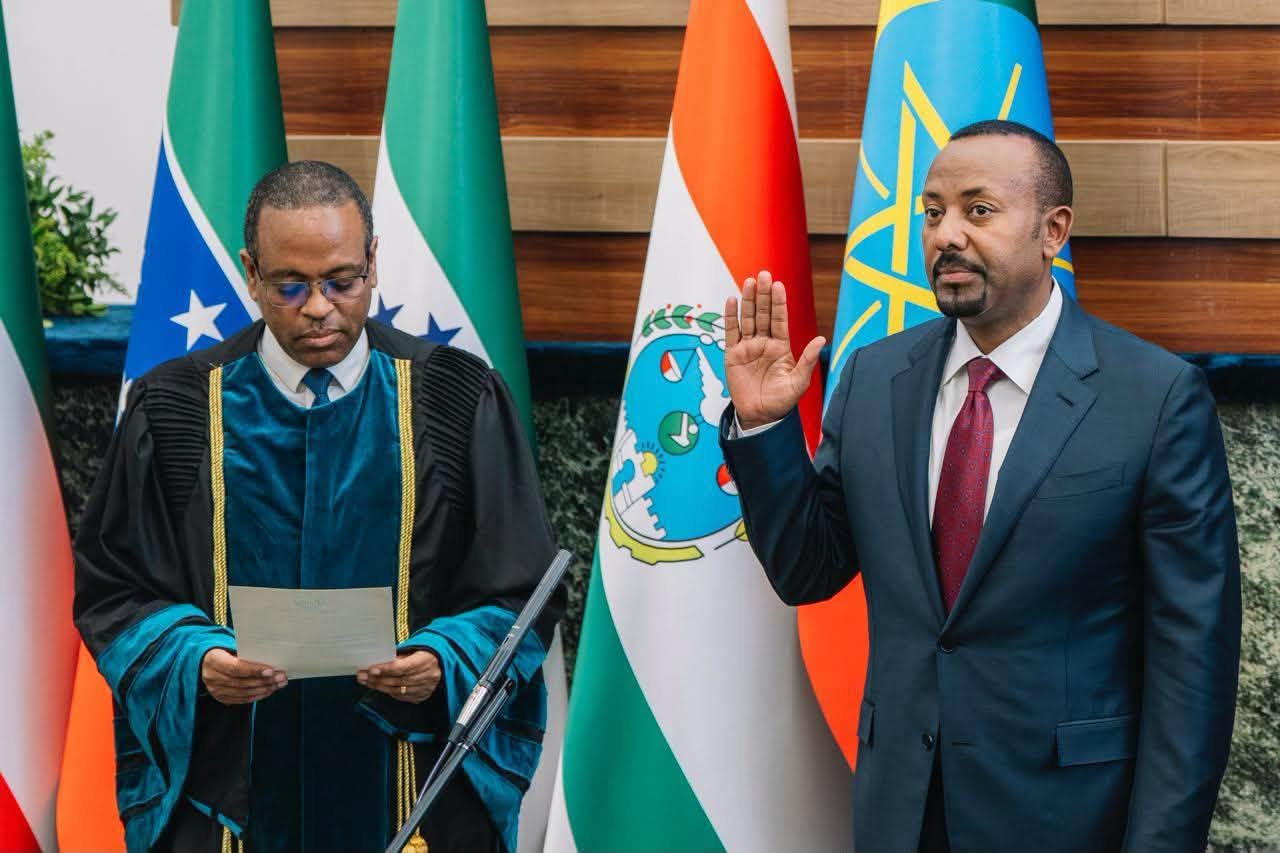
Ethiopian Prime Minister Abiy Ahmed takes the oath of office after being appointed to a new five-year term during the inaugural session of the House of People’s Representatives in Addis Ababa, Ethiopia, October 5, 2026.

By: Mohamed Duale

ADDIS ABABA, Ethiopia, Oct 6 — Ethiopian Prime Minister Abiy Ahmed was sworn in for a new five-year term on Monday after the House of People’s Representatives appointed him to lead the federal government following the country’s June general election.

Abiy took the constitutional oath during the first regular session of the seventh House of People’s Representatives, formally beginning his second term under Ethiopia’s current parliamentary cycle.

The appointment and swearing-in completed a key stage in the formation of Ethiopia’s new federal administration following the seventh general election, held on June 1.

More than 54 million people participated in the election, according to figures from Ethiopia’s National Election Board cited by state media.

The new administration is being described by Abiy’s office as the Medemer Government, a reference to the political and governing philosophy he has promoted since taking office.

Addressing lawmakers after his appointment, Abiy said Ethiopia was entering the new five-year period at a time of rapid changes in its regional and international environment and urged the country to remain vigilant and prepared.

He pointed to developments across the Horn of Africa, Red Sea, Gulf and Middle East, saying the shifting geopolitical environment presented both challenges and opportunities for Ethiopia.
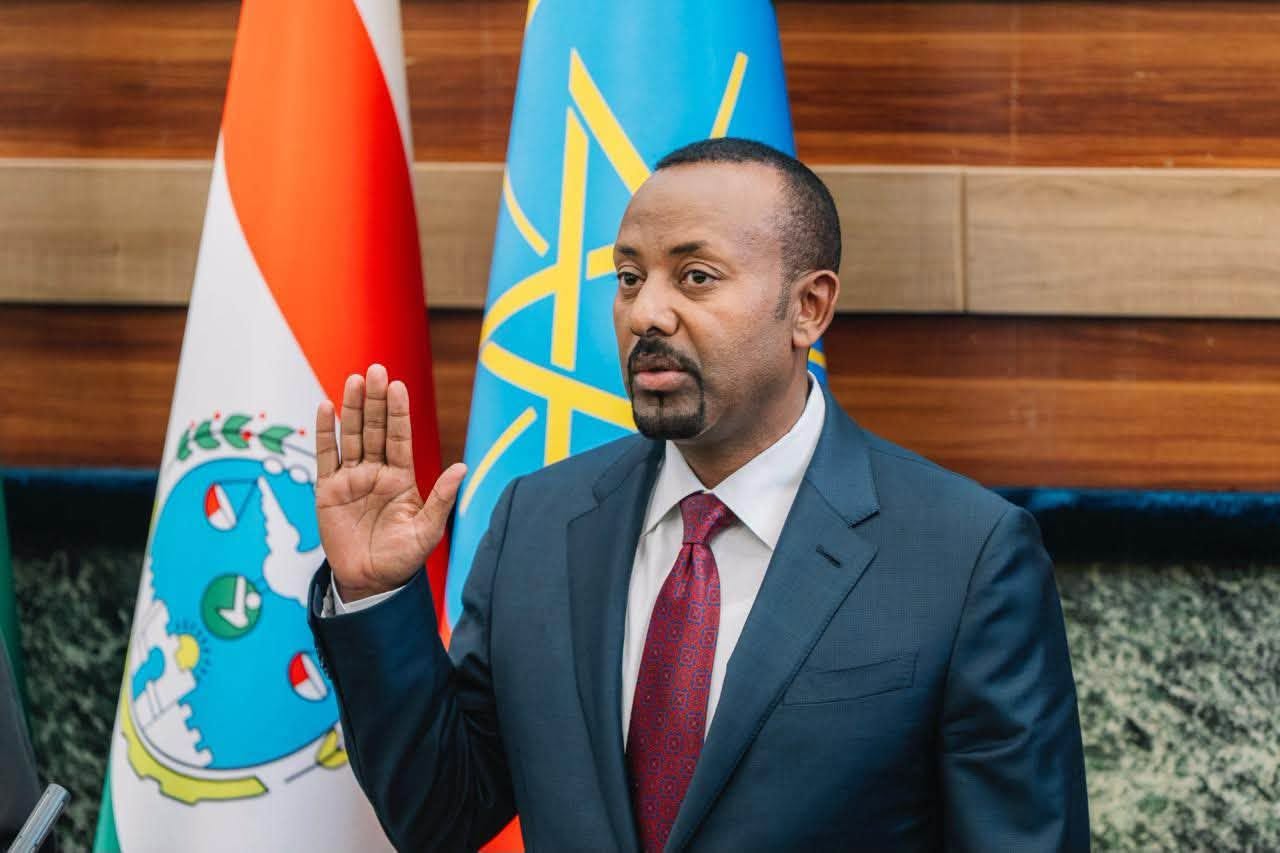
Ethiopian Prime Minister Abiy Ahmed raises his right hand as he takes the oath of office for a new five-year term in Addis Ababa, Ethiopia, October 5, 2026

Abiy said countries that anticipate major changes and prepare for them are better positioned to benefit, while those that fail to adapt risk bearing the costs.

He drew lessons from Ethiopia’s history, arguing that the country had previously faced difficulties when major technological and strategic changes occurred without adequate preparation.

“Getting tripped up by an obstacle once is natural, but stumbling repeatedly is not normal,” Abiy said, according to the state-run Ethiopian News Agency.

He also used the example of a farmer preparing land before the rainy season to stress the importance of anticipating developments rather than waiting until circumstances force a response.

Abiy said Ethiopia needed strong institutions, national cohesion and the capacity to protect its interests as the international order undergoes significant changes.

He presented the Medemer philosophy, broadly referring to synergy or bringing different strengths together, as a framework for mobilising Ethiopia’s resources and strengthening its ability to respond to the changing environment.

“In the midst of all these ups and downs, we realized the true extent of our resilience when we understood that Ethiopia has no choice other than steadfastness,” Abiy said in remarks published by his office.

He said the government believed its work had demonstrated the direction it intended to pursue during the new five-year term.

“We have proven through our hard work that our path is clear, our purpose is reliable, our destination is fruitful, and our approach is correct,” Abiy said.

The prime minister also urged Ethiopians to put broader national interests ahead of political divisions, saying winning and losing political parties were a normal part of democratic competition but that the country should move forward collectively.

His government will remain focused on protecting Ethiopia’s national interests while pursuing economic and institutional reforms, he said.

Abiy also reiterated one of the most prominent foreign policy objectives of his government — securing reliable access to the sea.

“We will work tirelessly to ensure Ethiopia secures a sea outlet,” Abiy said.

Ethiopian authorities have said the government intends to pursue maritime access through dialogue, negotiation, mutual benefit and what Abiy has described as a “give-and-take” approach.

Landlocked Ethiopia has increasingly placed maritime access at the centre of its regional diplomacy, arguing that reliable access is important for the country’s trade, logistics and long-term economic development.

Abiy said Ethiopia would also seek to strengthen its regional influence while continuing major economic and infrastructure projects during the new term.

“Yesterday has passed, and tomorrow is yet to come; but today has arrived favorably,” he said.

Abiy first became prime minister in April 2018. His latest swearing-in follows the June 1 election and the inauguration of a new parliament that will serve for the next five years.

The new parliamentary term has also brought changes to Ethiopia’s legislative leadership, with former Finance Minister Ahmed Shide elected Speaker of the House of People’s Representatives and Ayelech Eshete elected deputy speaker.

Muferihat Kamil was elected Speaker of the House of Federation, Ethiopia’s upper chamber, with Desta Ledamo elected as her deputy.

The formation of the new government comes as Ethiopia faces a changing security and diplomatic environment across the Horn of Africa and Red Sea region, issues that featured prominently in Abiy’s inaugural message.

He said the country’s ability to navigate those changes would depend on preparedness, internal cohesion and its capacity to pursue national interests while adapting to a rapidly changing global order.

(Reporting by Mohamed Duale; HornDiplomat News Desk)

Leave a Reply