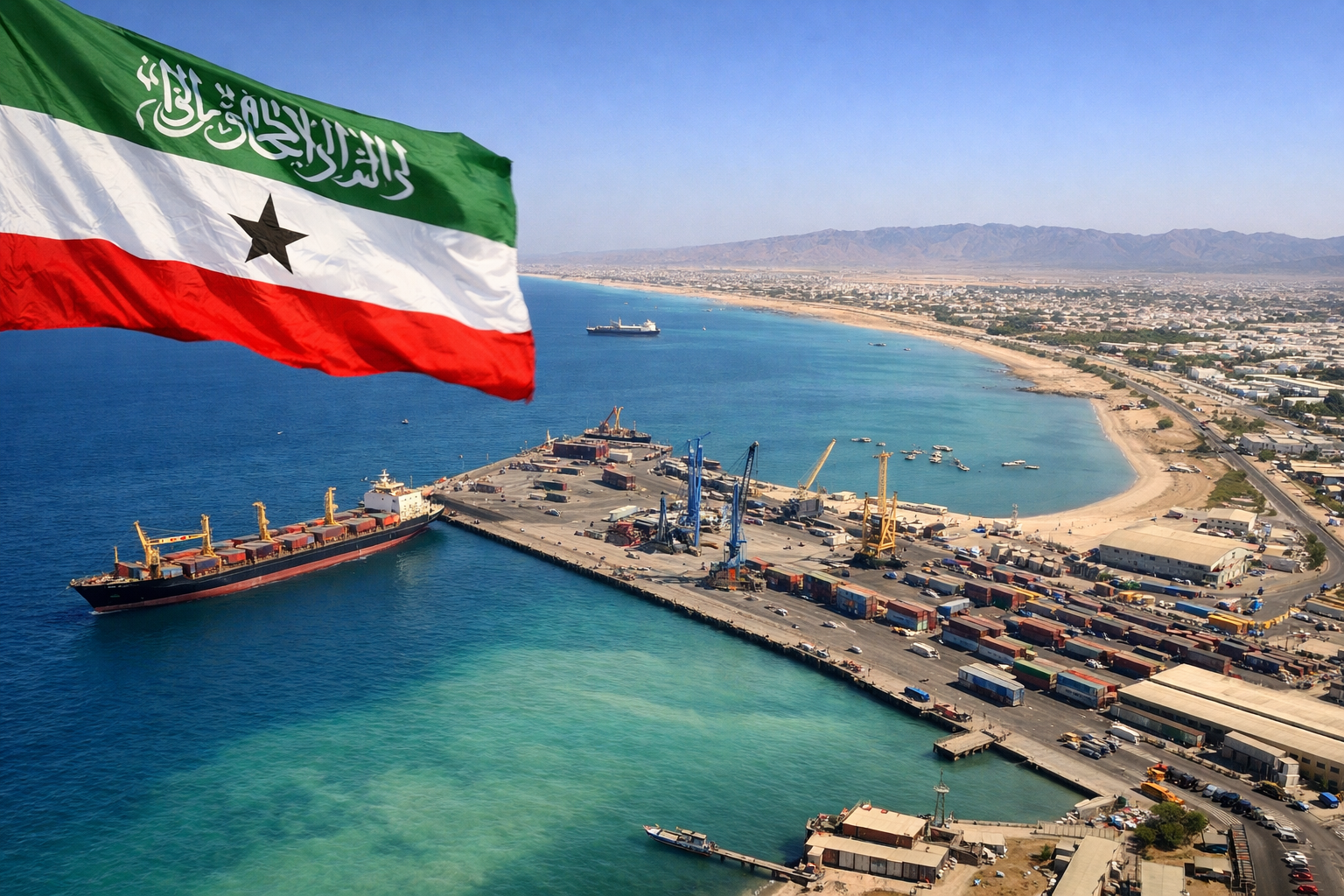
The Horn of Africa is no longer a region whose political discussion is shaped only by Somalia’s terrorism and humanitarian crisis. It has become a frontline of twenty-first-century great-power competition. At the center of this shift stands Somaliland, a peaceful, democratic, and pro-Western polity, strategically located at the mouth of the Bab al-Mandeb.
Israel’s Geopolitical Bombshell Against the CCP/Turkey Alliances Across the Red Sea
Israel’s diplomatic recognition has exposed the ambitions of a growing alignment involving China, Turkey, and Saudi Arabia. Somaliland now faces coordinated pressure from regional and external actors determined to block the rise of a stable, Western-aligned state positioned between Turkey’s foothold in Somalia and the China–Saudi axis based in Djibouti.
A loose but converging group, Turkey, China, Egypt, Saudi Arabia, and Djibouti, now finds common ground through Somalia. Their interests differ, yet they converge in their opposition to the growing prominence of the Republic of Somaliland as a strategically located and increasingly influential actor in the Horn.
Turkey has the most to lose. Turkish companies control more than 90 percent of Somalia’s mineral exploration and extraction agreements, along with long-term leases over ports, airports, and logistics facilities. In effect, Turkey has taken over Somalia’s most strategic sectors. A sovereign Somaliland threatens this arrangement, as Ankara would lose access to major resources inside Somaliland’s borders, including uranium, gold, fisheries, and offshore oil.
Turkey has also secured agreements related to space and satellite launch and tracking, establishing a base in Warsheikh in southern Somalia and deepening its military and technological presence in the region. These deals go far beyond normal business. Somalia’s own Auditor General has repeatedly flagged Turkish-run companies over the past five years for failing to comply with audits, citing inability to access revenues that bypass Somalia’s financial system entirely. Cash is reportedly moved out on aircraft and handled on offshore accounts. This is not partnership; it is exploitation under the cover of a weak state (Somalia), and it helps explain Turkey’s strong reaction to Somaliland’s recognition.
China’s role complements Turkey’s. From Djibouti, Beijing has expanded its influence through major Belt and Road projects, controlling ports, railways, and debt-heavy infrastructure, while hosting its first overseas military base. Djibouti’s position has weakened since DP World invested nearly USD 400 million in Berbera Port, drawing Ethiopian trade away from Djibouti. This shift has unsettled Djibouti’s leadership, as Ethiopia’s reliance on its ports has long been the backbone of its economy, alongside income from foreign military bases. A Western-aligned Somaliland emerging between Turkish-dominated Somalia and Chinese-anchored Djibouti would break the continuity of Sino-Turk influence across the Horn. It is therefore not surprising that both Ankara and Beijing support Somalia’s hostile campaign against Somaliland.
Egypt and Saudi Arabia add further layer of complexity. Egypt’s reported efforts to secure a military base in Tadjoura, Djibouti, probably linked to the Nile politics and its dispute with Ethiopia over the GERD, and its strong opposition to Somaliland’s recognition, are aimed at limiting Addis Ababa’s sea access options, blocking any future Ethiopian naval presence through Somaliland’s sovereign coast. Ethiopia’s silence on Somaliland’s recognition, despite its own strategic interests, only strengthens Egypt’s position and allows Ethiopia’s rival powers closer to its borders.
Saudi Arabia views Somaliland largely through its rivalry with the UAE, whether in Sudan, southern Yemen, or the wider Red Sea region. The rise of a pro-UAE/Israel polity along the Red Sea, directly opposite Yemen, has increased Saudi concerns and pushed Riyadh toward loud alignment with anti-Somaliland efforts. Reports indicate that Saudi Arabia is now discussing military cooperation with Somalia.
Somalia: Weak Itself Yet Used as Deployed Instrument
Somalia itself remains the weakest actor, yet it is being used as the main instrument. President Hassan Sheikh Mohamud rhetoric of “using force” against Somaliland contridicts the reality on the ground. His government controls little beyond Mogadishu. Al-Shabaab controls or contests roughly 30 percent of the country, and its fighters operate within 40 to 50 kilometers of the capital. Towns such as Sabiid, Anole, and Adan Yabaal have been retaken by militants, while Balcad, just 30 kilometers from Mogadishu, remains contested.
Somalia’s army is divided and heavily dependent on AUSSOM’s 11,900 foreign troops, whose contributing countries are now calling for an additional 20,000 troops just to prevent collapse. Therefore, Somalia cannot realistically threaten Somaliland on its own. Instead, the rational logic behind its threats is the actual backing from the converging axis led by Turkey and China which enables Somalia to wage a hybrid campaign against Somaliland, encouraging militant groups, arming proxy militias, and fueling internal divisions. In Las Anod, armed groups backed by Mogadishu and its partners are presented as pro-union actors, but in practice they serve as pressure tools against Somaliland. The recent visit by Saudi, Turkish and Sudanese ambassadors to Somalia in the contested city border of Las Anod signals the intent of the opposing block.
Along Somaliland’s western border, tensions between Issa and Gadabuursi communities have escalated. Reports of advanced weapons supplied to Issa militias, allegedly with support from Djibouti’s authorities, worsen the situation and widen internal instability. Rumors of creating a so-called Guban Federal Member State in the western regions bordering Djibouti, are now circulating within Djiboutian and Somali political circles.
These developments are not isolated. They are part of a broader strategy to keep Somaliland weak, divided, and under constant pressure. The goal is to block its sovereignty so that Somalia and Somaliland remain equally in deadlock; Turkey continues extracting resources, China’s influence goes unchallenged, and Red Sea access stays shielded from Western and Israeli engagement. Israel’s recognition served as geopolitical bomb having disrupted this arrangement. Israel’s clear presentation of Somaliland’s legal and historical case at the UN Security Council exposed the fragility of the opposing narrative and clearly unsettled the other side.
The Path Forward: Seize The Moment or Surrender It
What happens next to Israel’s recognition matters. Israel and its allies, including the United States, must decide whether to step back in the face of coordinated pressure and leave Somaliland isolated, or to fully support it across political, security, and economic sectors. Somaliland is well placed to become an anchor of stability in the Gulf of Aden and a counterweight to the growing influence of China and other actors aligned with Somalia.
In practical terms, Israel’s recognition must now be followed by real support to build state capacity. This should include immediate assistance with, in these three areas:
1. Increased partnership in improving maritime awareness domain, intelligence sharing, and counter-insurgency capabilities to neutralize proxy threats against Somaliland while protecting civilians;
2. Economic support including strengthening ports’ infrastructure, improving financial systems, and facilitating trade and investment access to open up opportunities for Somalilanders, helps Somaliland to shield itself from the consequential isolation from its political enemies;
3. Diplomatically, Somaliland should not be left alone to counter narratives that selectively defend Somalia’s claims while denying Somaliland equal rights. Recognition of Somaliland’s sovereignty, as Israel has done, by the United States and its allies is equally more paramount.
In conclusion, with support from Israel and the West, Somaliland can help prevent the region from sliding further toward coercion, extremism, and anti-west influence. Hesitation from doing so will not maintain balance, it will hand it over.
Now is the time to act.
Abdisalam Rageh is a development practitioner with a background in law and a keen interest in politics, youth rights, and the rule of law in the Horn of Africa.
The views expressed in this article are the author’s own and do not necessarily reflect the Horndiplomat editorial policy.
If you want to submit an opinion piece or an analysis, please email it to Opinion@horndiplomat.com
Horndiplomat reserves the right to edit articles before publication. Please include your full name, relevant personal information and political affiliations