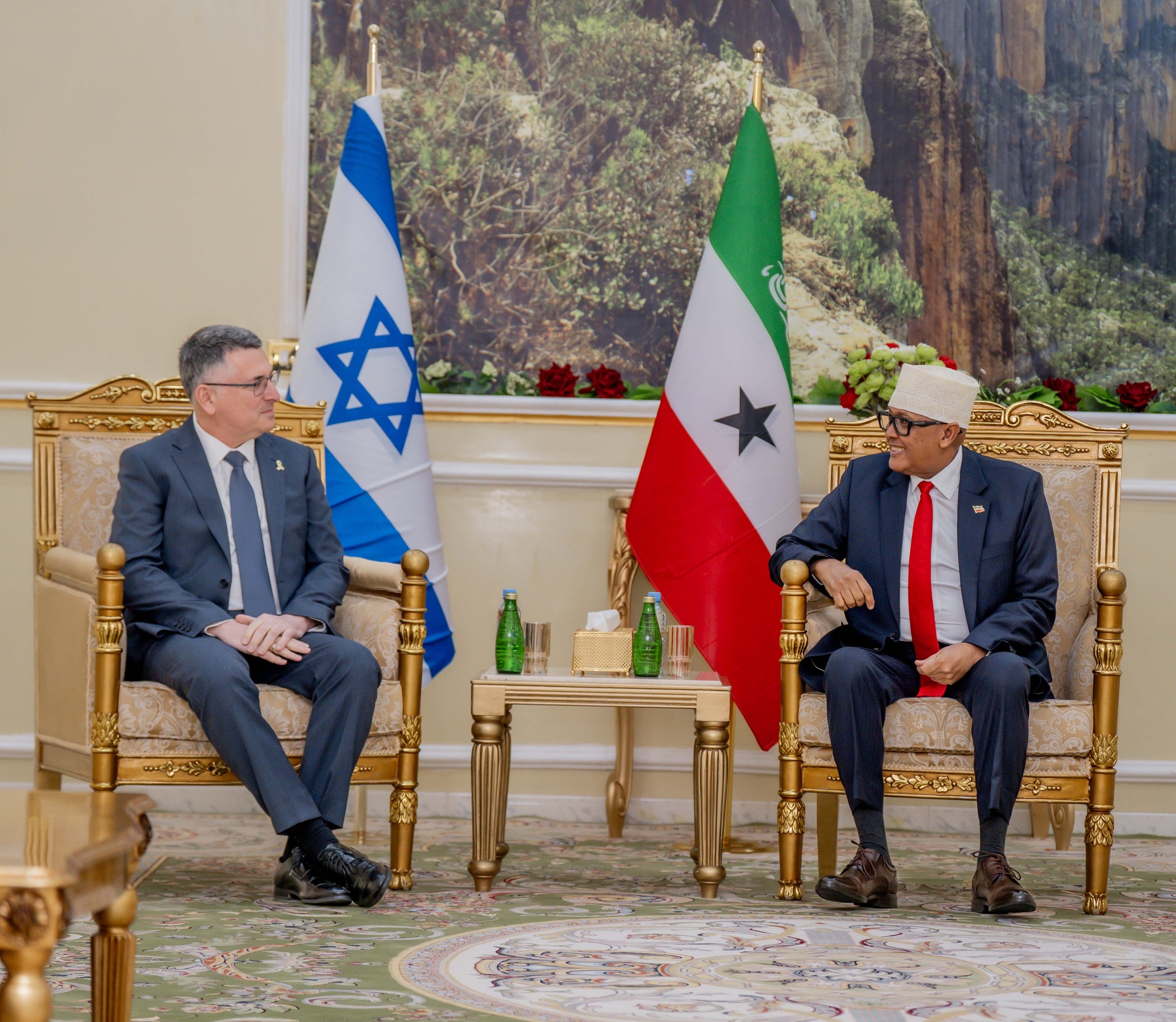
The statements of governments that oppose Somaliland’s recognition and condemn it in order to appease the Somalia government are those that see their own interests in it. Their actions reflect strategic or economic agendas rather than an objective assessment of Somaliland’s legal and political realities. Examples include certain policies pursued by Turkey, Egypt and other regional actors with vested interests in Somalia.
Somaliland is not a foreign project, nor was it created to serve the interests of any other country. It is a real state that gained its independence on June 26, 1960, and a parent state that voluntarily united with Italian Somalia. Somaliland later reclaimed its sovereignty in 1991, within its colonial borders, with a united population, functioning state institutions, democratic elections, and a peace it built and sustained itself.
The separation of Somaliland from Somalia is not unique. Similar precedents exist, including the dissolution of the union between Syria and Egypt, and the separation of Senegal and Gambia, among others, all of which occurred with limited international difficulty. The reality of Somaliland—historically and legally—cannot be altered by rhetoric, political pressure, or condemnations from foreign ministers and leaders.
Egypt’s position is closely tied to regional power competition and leverage in the Horn of Africa, while Turkey’s opposition aligns with its deep economic investments, military presence, and political influence in Mogadishu. In both cases, Somaliland becomes collateral in a broader geopolitical calculation, rather than the subject of an honest diplomatic evaluation.
The assertion that “Somaliland is unrecognized by anyone” misrepresents the facts.Recognition is incremental and usually begins with a single nation. History shows that many countries now fully integrated into the international system spent years obtaining acknowledgment. Israel’s recognition marks the start, not the conclusion, of this process, and it should not be mischaracterized as a political tool by those with conflicting interests.
In fact, Israel’s recognition represents a clear challenge to alliances that are strongly opposed to losing their dominant influence over polical descision making in the Horn of Africa. It demonstrates that Somaliland can be assessed on its own merits, independent of Mogadishu’s political sensitivities. More importantly, it sets a precedent, recognition begins when one state is willing to break from political convenience and acknowledge reality.
The rhetoric of a few pro-Somali states, such as Turkey, clearly reflects fears that recognition of Somaliland would disrupt the economic and maritime agreements that Ankara has signed with Mogadishu, particularly those focused on sea, ports, and influence in the Horn of Africa. When economic interests are at stake, the words “Somali unity” are used as a political weapon, rather than protecting the ground realities that Somaliland truly exists.
Characterizing Somaliland’s decision to pursue recognition as an act warranting “punishment” is deeply unfair, and the Islamic governments of Saudi Arabia, Turkey and their allies, which have clear agreements with Israel, are still opposing Somaliland. This is incorrect, and is an attack on the millions of Somaliland people who have chosen peace, democracy and their own state. The statements coming out of Turkey are not fair diplomacy, nor do they represent the international ethics expected of a government that claims neutrality in the 2012 Somaliland-Somalia dialogue and regional friendship.
Somaliland is not subject to the approval of Ankara or Mogadishu. No one has the right to determine the fate of a people who have freely chosen their political direction. Recognition of Somaliland is a legal right based on the existence of a state that meets all the requirements of statehood and is expected to be fully accepted by the international countries in the near future.
Far from being a threat, Somaliland’s recognition represents an opportunity for regional stability, security in the Red Sea, and enhanced cooperation against terrorism and political instability. The reality of Somaliland is neither a foreign plot nor a matter of opinion, it is the product of decades of governance, peace-building, and the enduring will of its people. Those who resist its recognition today will eventually have to acknowledge the legitimacy of its statehood.
About the AUTHOR
Abdalla A. Aided (Gahnoug).
Author/ Policy & Conflict Analyst
BA: Public Administration.
MA: Project Management.
MA: Peace and Conflict Resolution.
Email:Gahnoug888@Gmail.Com
The views expressed in this article are the author’s own and do not necessarily reflect the Horndiplomat editorial policy.
If you want to submit an opinion piece or an analysis, please email it to Opinion@horndiplomat.com
Horndiplomat reserves the right to edit articles before publication. Please include your full name, relevant personal information and political affiliations