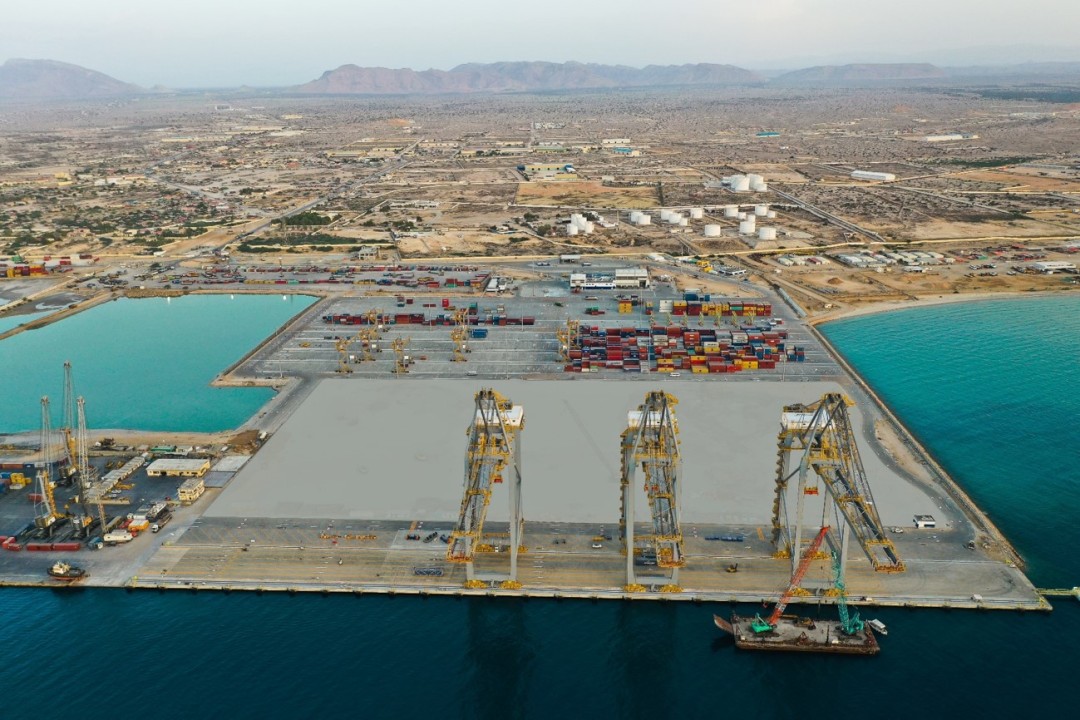
Transforming Berbera into a world-class centre of trade
By Amb. Bashe Awil Omar
When Somaliland signed the landmark Berbera Port investment agreement with DP World in 2016, it was hailed as a model for regional trade and partnership. But in Mogadishu, it triggered outrage. The Somalia Government and its Parliament moved quickly to derail a project over which they had neither jurisdiction nor legal authority.
That year, Somalia’s Parliament passed a motion denouncing the Berbera concession, followed by a Cabinet statement claiming it violated Somalia’s sovereignty. In 2017, Somalia’s Ambassador to the United Nations, Abukar Osman (Baale), took the matter to the UN Security Council, accusing the UAE of breaching Somalia’s sovereignty and calling for punitive action against DP World’s investment in Somaliland. It was a calculated attempt to politicise progress — and it failed.
The Security Council declined to act. The world understood what Mogadishu refused to accept: Somaliland exercises full authority over its territory and its development agenda.
At the time, I was interviewed by Reuters and made it clear that “the Government of Somalia has nothing to do with this agreement,” reaffirming Somaliland’s independent right to pursue partnerships in its own national interest. (Africanews, April 21 2018)
Although Ethiopia initially signed an MoU to acquire a 19 percent share in Berbera Port, it did not proceed with the investment. Nonetheless, the project moved forward. Today, Berbera stands among Africa’s best-performing ports, recognised by the World Bank’s 2023 Global Container Port Index.
As Bloomberg later reported, the UAE established a coastal surveillance and logistics facility in Berbera — part of wider humanitarian and commercial cooperation agreements with Somaliland — a reflection of growing international trust in our stability and governance. (Bloomberg, Nov 6 2018)
Almost a decade later, the Somalia Government tried the same playbook — this time through the skies. By introducing a Somali e-visa system, the government sought to obstruct flights bound for Hargeisa’s Egal International Airport, effectively weaponising airspace management.
Once again, the effort collapsed. Major international airlines — including FlyDubai, Emirates, and Ethiopian Airlines — continue to operate to Somaliland. The IATA Travel Centre lists Hargeisa (HGA) and Berbera (BBO) as recognised international entry points where travellers can obtain visas upon arrival.
This is not political recognition, but practical validation. The aviation world acknowledges what Mogadishu cannot deny: Somaliland governs its own airports, controls its borders, and complies with international aviation standards.
Somaliland’s position is not born of rebellion, but of restoration. In 1960, it gained full independence from Britain and was recognised by more than 35 countries — including all five permanent members of the UN Security Council. The subsequent union with Italian Somalia was never legally ratified, leaving Somaliland’s sovereignty intact in international law. What exists today is not secession, but the continuation of that original, lawful independence.
From Berbera Port to Somaliland’s airspace, the pattern is clear: the Somalia Government obstructs, while the Somaliland Government advances. Somalia’s leaders cling to rhetoric; Somaliland builds institutions, infrastructure, and trust. Each failed attempt to block our progress only reinforces a simple truth — Somaliland has fulfilled every test of statehood, and sooner or later, the world will have to recognise what already exists in reality.
Somaliland’s partnerships — with the UAE, Ethiopia, and others — are grounded in mutual respect and anchored in law. Our record speaks for itself: peace, stability, and steady progress achieved without external aid or recognition. Attempts to politicise or obstruct this reality have failed before and will fail again — because you cannot block what already works. Somaliland’s discipline, governance, and results remain its strongest case for re-recognition and respect.
Bashe Awil Omar is a diplomat and politician. He served as the Somaliland Representative to the UAE (from 2015-2018) and Kenya (from 2018-2021).
The views expressed in this article are the author’s own and do not necessarily reflect the Horndiplomat editorial policy.
If you want to submit an opinion piece or an analysis, please email it to Opinion@horndiplomat.com. Horndiplomat reserves the right to edit articles before publication. Please include your full name, relevant personal information, and political affiliations.