

White Stork Travels 5,515 Kilometres From Poland, Dies in Somaliland

0
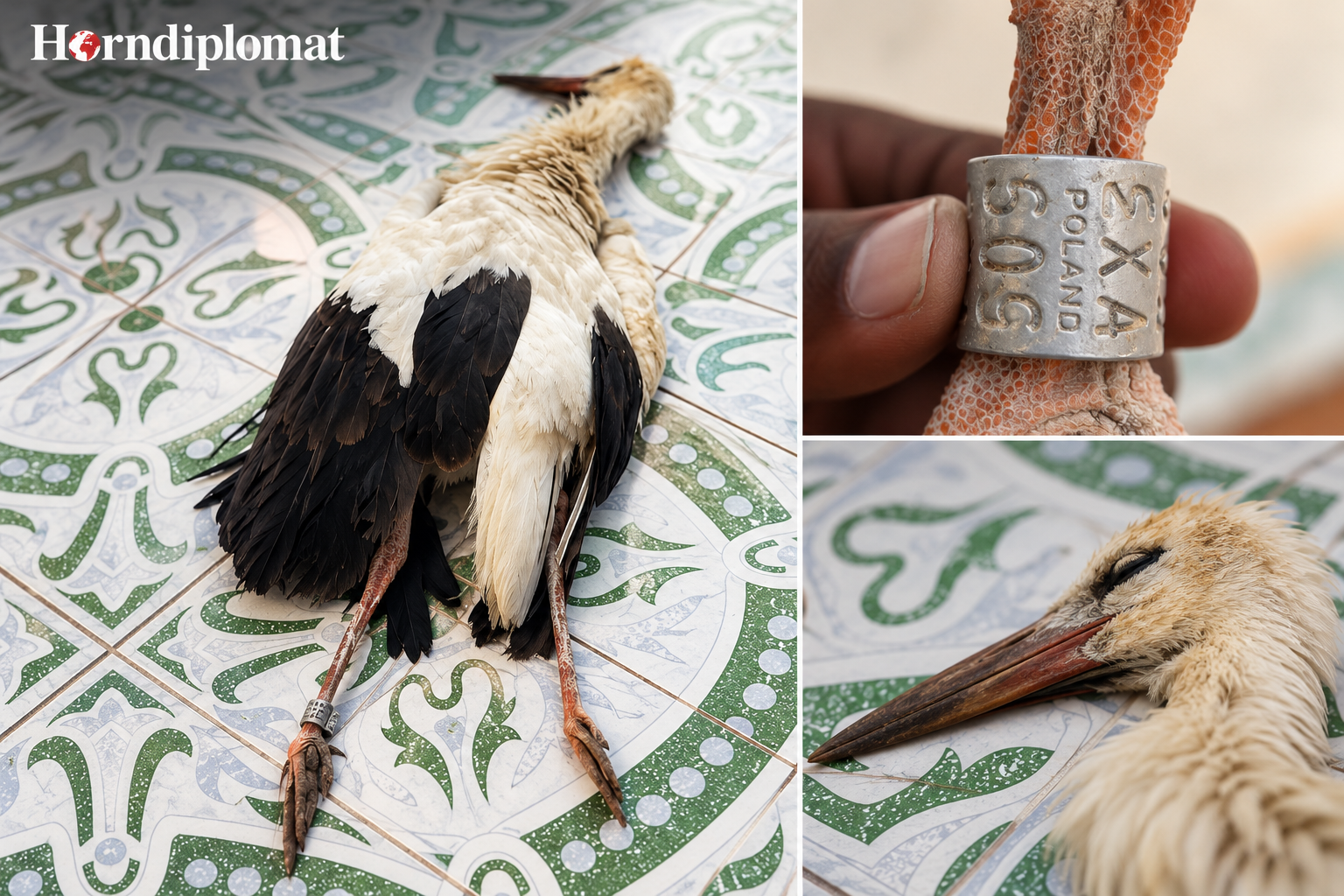
A white stork (Ciconia ciconia) found dead in Ceerigaabo, Somaliland, on September 17, 2026, after being ringed in northern Poland 87 days earlier. The bird was recovered approximately 5,515 kilometres from its original ringing site, with a metal identification ring marked VX 5509. Photo illustration: Horndiplomat.

By: Mohamed Duale

HARGEISA, October 20, 2026 – A white stork that migrated from Poland was found dead in Somaliland’s eastern city of Ceerigaabo, approximately 5,515 kilometres from where it was first identified, highlighting the country’s importance as a passage for migratory birds travelling between Europe and Africa.

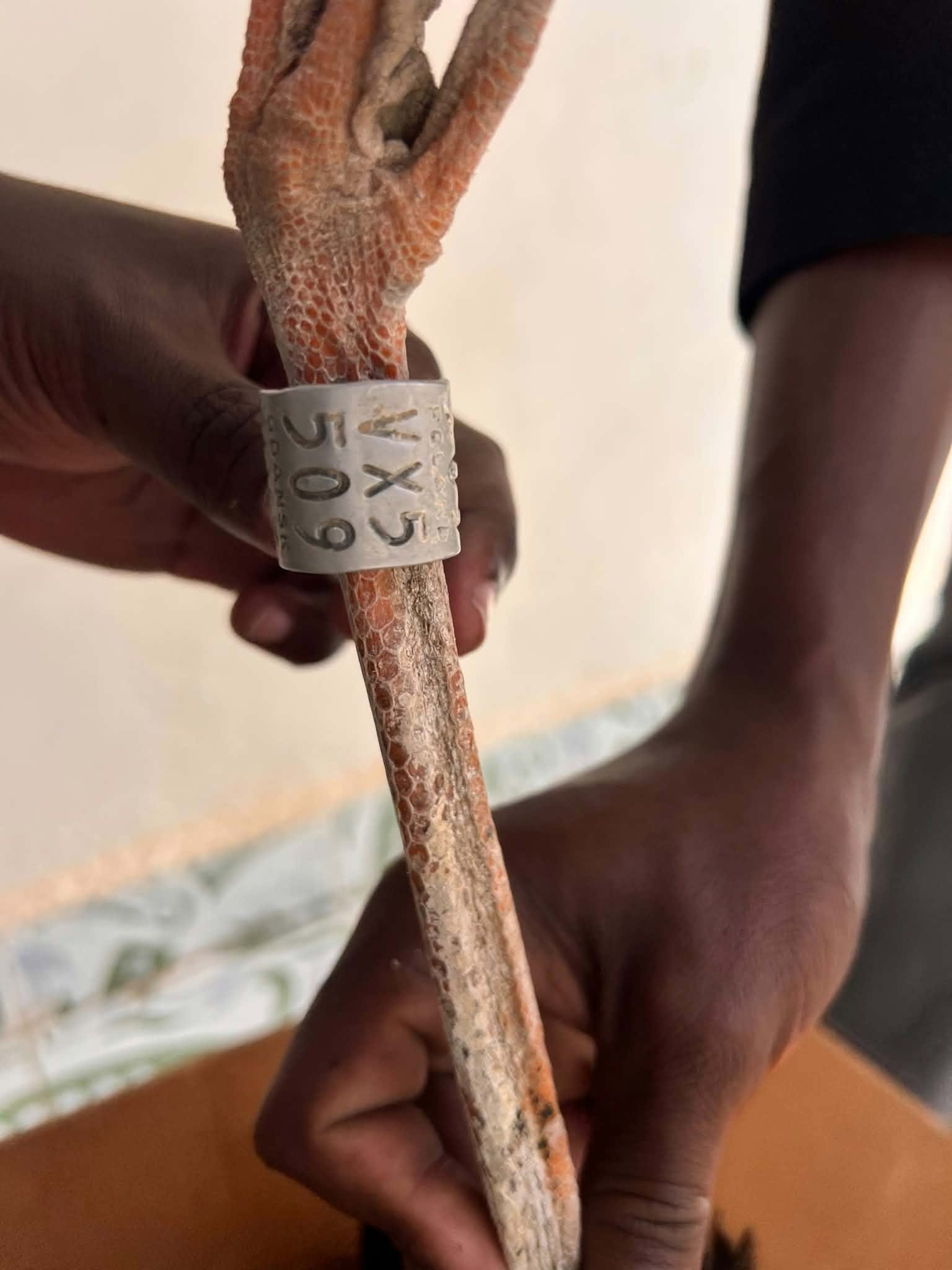
The bird, identified by a metal identification ring marked VX 5509 POLAND, was discovered on September 17 in the courtyard of a residential property in Ceerigaabo, according to a report prepared by wildlife conservation activist Muse Said.

The bird’s remains were collected by Mohamed Yusuf, the Sanaag regional coordinator of Somaliland’s Ministry of Environment.

Following the discovery, the ministry’s Wildlife Department contacted the Polish Bird Ringing Centre to establish the bird’s origin and migration history.

In a response received on October 10, the Polish research centre confirmed that the white stork (Ciconia ciconia) had been ringed on June 22, 2026, in northern Poland.

The bird was still a nestling when it was ringed, and its sex had not been determined.

According to the Polish Bird Ringing Centre, the straight-line distance between the ringing location and Ceerigaabo was approximately 5,515 kilometres, with 87 days separating the ringing date and the discovery of its remains.
A white stork (Ciconia ciconia) found dead in Ceerigaabo, Somaliland, on September 17, 2026, alongside a close-up of its Polish identification ring, VX 5509. The bird was ringed in northern Poland on June 22, approximately 5,515 kilometres from where it was later discovered. Photo: Muse Said.

The centre recorded the bird as having been found dead but did not establish the cause of death.

Muse Said, a Somaliland wildlife conservation activist, told Horndiplomat that the discovery demonstrated the ecological importance of Somaliland’s natural habitats and the need to protect migratory birds.

“Birds are nature’s laboratories,” Said told Horndiplomat, emphasising their role in understanding environmental conditions and the health of ecosystems.

“Where birds are present, it is a sign of rich biodiversity and a thriving natural environment,” he said.

“We must protect birds in their natural habitats,” Said added, calling for greater public awareness of wildlife conservation.

Somaliland lies along the Horn of Africa, a region crossed by migratory birds travelling between Europe, Asia and Africa.

Said identified several locations in Somaliland as important habitats and observation sites for migratory birds, including Rabshiga Mountain, Sa’ad ad-Din Island, Daallo, the Wagar Mountains and Gacan Libaax.

He also highlighted the Warsangli linnet, a bird associated with the Sanaag region, as an example of Somaliland’s distinctive birdlife.

The country’s mountains, coastal areas and other natural habitats offer opportunities for birdwatching, wildlife research and biodiversity conservation, Said said.

Bird ringing is widely used by researchers to study migration routes, survival rates and bird populations. Metal rings carrying unique identification numbers allow researchers to trace individual birds when they are encountered elsewhere.

The discovery in Ceerigaabo provides a documented connection between northern Europe and Somaliland through the movement of a single migratory bird, underscoring the importance of cooperation between local wildlife authorities and international research institutions in studying migration and biodiversity across the Horn of Africa.

(Reporting by Mohamed Duale; HornDiplomat News Desk)

Leave a Reply