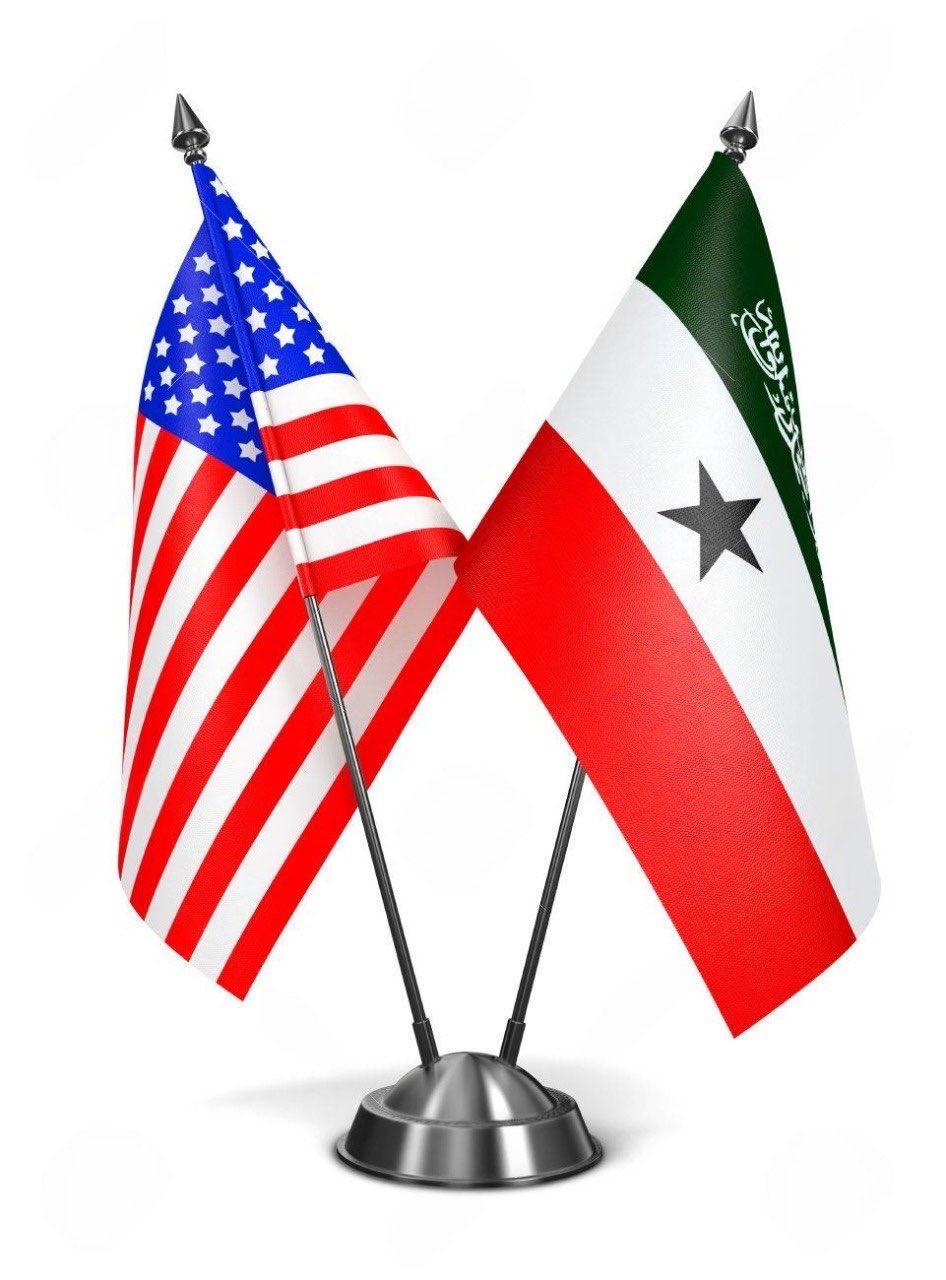
American foreign policy is being redefined around a simple proposition: engagement abroad must make the United States safer, stronger, and more prosperous. This framework, articulated by Secretary of State Marco Rubio, reflects a broader shift toward strategic realism. The era of open-ended commitments with unclear returns is over. The question now is straightforward: do American foreign policy measures or programmes tangibly advance American interests?
The Republic of Somaliland, a stable democracy that has strengthened its institutions since regaining sovereignty in 1991, has offered the United States exclusive access to critical minerals, including rare earth elements, as well as the possibility of hosting American military bases along the Gulf of Aden. It is a weighty proposal, one which is unusual for the region as it is not a request for aid. It is a strategic exchange based on a win-win partnership model.
Therefore, if we apply the America First test seriously, U.S. recognition of Somaliland is logical, defensible and lucrative business.
Start with safety. The Bab el-Mandeb Strait, just off Somaliland’s coast, is one of the most important maritime chokepoints in the world. A significant portion of global trade flows through it, linking Europe, the Middle East, and Asia. Instability in these waters reverberates directly into American supply chains and energy markets. The United States currently relies heavily on its base in Djibouti to project power in the region. Yet Djibouti also hosts China’s first overseas military base, creating strategic proximity between American and Chinese forces that no serious planner should ignore.
Somaliland offers strategic depth. For more than three decades, it has maintained internal stability, secured its territory, and conducted competitive elections with peaceful transfers of power. Unlike Somalia, it is not battling a persistent insurgency from Al-Shabaab. A formal partnership would give the United States a stable security foothold in one of the world’s most volatile corridors, diversifying basing options and reducing reliance on a single host nation. This makes America safer.
Then there is strength. Rare earth elements are essential to modern defence systems, advanced manufacturing, semiconductors, and energy technologies. Yet China dominates the global supply chain for rare earth processing. This concentration of control is not theoretical leverage; it is strategic leverage. Washington is spending billions to de-risk supply chains and rebuild industrial resilience. Somaliland’s offer of mineral access provides an opportunity to diversify sourcing in a geopolitically aligned environment. In an era defined by great-power competition, securing alternative supplies of critical minerals is not optional but is foundational to national strength. This makes America Stronger.
Prosperity follows security and supply chain resilience. The Port of Berbera is expanding into a major commercial hub along the Red Sea corridor. With formal recognition, American companies could invest with legal clarity in infrastructure, mining, logistics, and energy. Stability attracts capital. Clarity reduces risk. Somaliland has demonstrated both for over thirty years without large-scale international subsidy. Interestingly, another sector ripe for American investment is oil and gas, with the President of Somaliland in a recent interview with CNN Business Arabic, stated that Somaliland has billions of barrels of oil reserves which it is only now beginning to
Interestingly, Somaliland also presents a major opportunity in the energy sector. In a recent interview with CNN Business Arabic, the President of Somaliland revealed that the country possesses billions of barrels of untapped oil reserves. Exploration and development are only just beginning, creating a unique window for American companies to participate from the ground floor. Beyond mining and logistics, U.S. investment in Somaliland’s oil and gas sector could help secure energy resources, generate long-term economic returns, and strengthen bilateral trade ties, all while contributing to global energy diversification in a region historically overlooked by Western investors. For America, this is not speculative opportunity; it is strategic prosperity waiting to be realized. This makes America more prosperous.
Contrast this with the record in Somalia.
For decades, the United States and international partners have poured billions of dollars into Somalia in the form of humanitarian assistance, security sector reform, peacekeeping support, and development aid. Despite these investments, Somalia continues to struggle with internal fragmentation, corruption concerns, and a persistent extremist threat. American taxpayers have underwritten stabilization efforts year after year with limited measurable return in terms of durable governance or security outcomes.
This is not an argument against humanitarian responsibility. It is an argument for strategic accountability. If America First means anything, it means evaluating where U.S. engagement produces results and where it does not.
Somaliland has built functioning institutions without the level of sustained international funding Somalia has received. It has maintained order without foreign peace enforcement missions. It has conducted elections without descending into chronic instability. And now it is offering the United States a mutually beneficial partnership rooted in access, alignment, and shared interest.
Recognition would not create a new reality. It would acknowledge an existing one.
The America First framework demands clarity. Does recognizing Somaliland make the United States safer? With enhanced basing options along a critical maritime corridor, yes. Does it make the United States stronger in its strategic competition with China by diversifying access to rare earth minerals? Yes. Does it create the conditions for American investment, trade expansion, and long-term economic gain? Yes.
Foreign policy is ultimately about choices. Somaliland is offering the United States something rare in international politics: strategic alignment without coercion, access without hostility, and partnership without dependency.
Critics may argue that recognizing Somaliland could complicate diplomatic relations or unsettle regional norms. But this perspective overlooks both history and reality. Somaliland’s claim is grounded not only in its stability and governance since 1991, but also in law and precedent. Somaliland gained independence on 26 June 1960, as the successor state to centuries-old kingdoms and sultanates that trace back thousands of years. Its subsequent attempted unification with Somalia (former UN Trusteeship) later that year is widely regarded as illegal, lacking popular consent and robust legal foundation. Since then, Somaliland has governed itself effectively, while Somalia has consistently failed to assert authority over its capital let alone anywhere else. Maintaining a diplomatic fiction has neither united the two states, nor stabilized Somalia, nor strengthened America. Recognition would simply acknowledge the reality on the ground.
Therefore, measured against Secretary Rubio’s own standard – safer, stronger, more prosperous – Somaliland clearly passes the test. Recognition would not be a symbolic gesture; it would be a practical, strategic decision that advances American security, economic interests, and global influence. In short, acknowledging Somaliland is not just the right choice but it is the America First choice.
Sharmake Ali is a leading political analyst on the Horn of Africa, widely recognised for his authoritative insight into Somaliland’s quest for international recognition and the shifting geopolitics of East Africa. Educated in the United Kingdom, he combines rigorous public policy expertise with deep regional knowledge to provide sharp, strategic analysis on statehood, sovereignty, and regional security.
A regular commentator across television and international media platforms, Sharmake contributes informed perspectives to global audiences, shaping debate on Somaliland’s legal, political, and moral case for recognition. His work bridges academia, policy, and media, positioning him as a prominent voice on the future of the Horn of Africa.
The views expressed in this article are the author’s own and do not necessarily reflect the Horndiplomat editorial policy.
If you want to submit an opinion piece or an analysis, please email it to Opinion@horndiplomat.com
Horndiplomat reserves the right to edit articles before publication. Please include your full name, relevant personal information and political affiliations