
By Muse Hassan Abdi
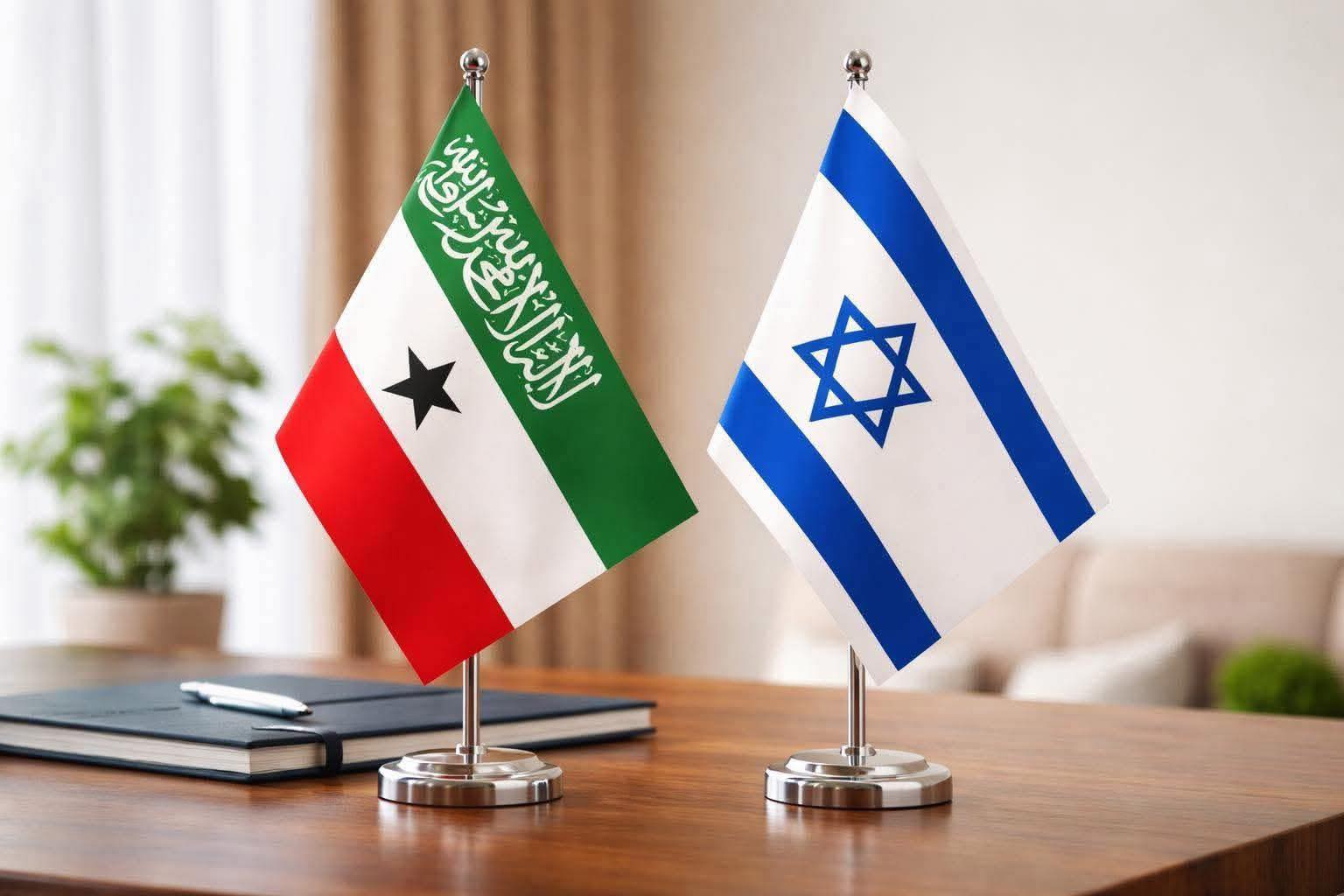
The evolving relationship between Somaliland and Israel has contributed to a notable shift in the political dynamics of the Horn of Africa. Although Somaliland remains internationally unrecognized, its strategic location along the Gulf of Aden and near the Red Sea has elevated its geopolitical importance at a time of intensifying global competition over maritime security and trade routes.
Israel’s engagement in the Horn of Africa is rooted in long-standing security and strategic interests. The region sits adjacent to critical global shipping lanes linking Europe, Asia, and the Middle East, making stability there a matter of international concern. Historically, Israel has sought partnerships across Africa to counter security threats, expand diplomatic influence, and strengthen intelligence cooperation. Within this context, Somaliland stands out as a relatively stable political entity in an otherwise volatile region.
For Somaliland, relations with Israel offer potential diplomatic and strategic advantages. Engagement with a technologically advanced and globally influential state could enhance Somaliland’s international visibility and support its long-standing pursuit of recognition. Cooperation in areas such as security, agriculture, water management, and technology may further strengthen Somaliland’s institutional capacity and governance structures. These factors reinforce Somaliland’s narrative as a functioning and responsible political actor, distinct from the instability often associated with the wider Somali context.
However, closer Somaliland–Israel ties also introduce political sensitivities. The Horn of Africa is deeply connected to Arab, Islamic, and African political networks, many of which maintain complex or adversarial positions toward Israel. As a result, strengthened relations with Israel may complicate Somaliland’s engagement with certain regional and international actors, particularly those that prioritize solidarity with the Palestinian cause or adhere to broader Middle Eastern diplomatic alignments.
The Role of Neighboring Countries and Great-Power Competition in the Horn of Africa
Across the Horn of Africa, many neighboring states maintain strong economic and political ties with China. Through loans, infrastructure projects, and port development, Beijing has gained significant influence, often shaping regional governments’ foreign-policy decisions. Most of these countries formally adhere to the One-China policy, limiting their diplomatic flexibility.
China and the United States: Competing Visions
Strategic competition between China and the United States is increasingly visible in the region.
-
China prioritizes ports, logistics corridors, and long-term control over infrastructure.
- The United States focuses on security cooperation, counterterrorism, freedom of navigation, and political partnerships.
In recent years, Washington has shown growing awareness of Somaliland’s strategic importance, particularly its location along vital shipping lanes in the Gulf of Aden and the Red Sea.
Somaliland, Taiwan, and Chinese Pressure
Somaliland has taken a markedly different path from many African actors by establishing and maintaining strong relations with Taiwan. This decision is both symbolic and strategic.
-
China has repeatedly urged Somaliland to sever ties with Taiwan.
-
Beijing reportedly offered large-scale investments—including ports, airports, roads, and other major infrastructure projects—in exchange for ending that relationship.
-
Somaliland refused, prioritizing political autonomy and principle over short-term economic incentives.