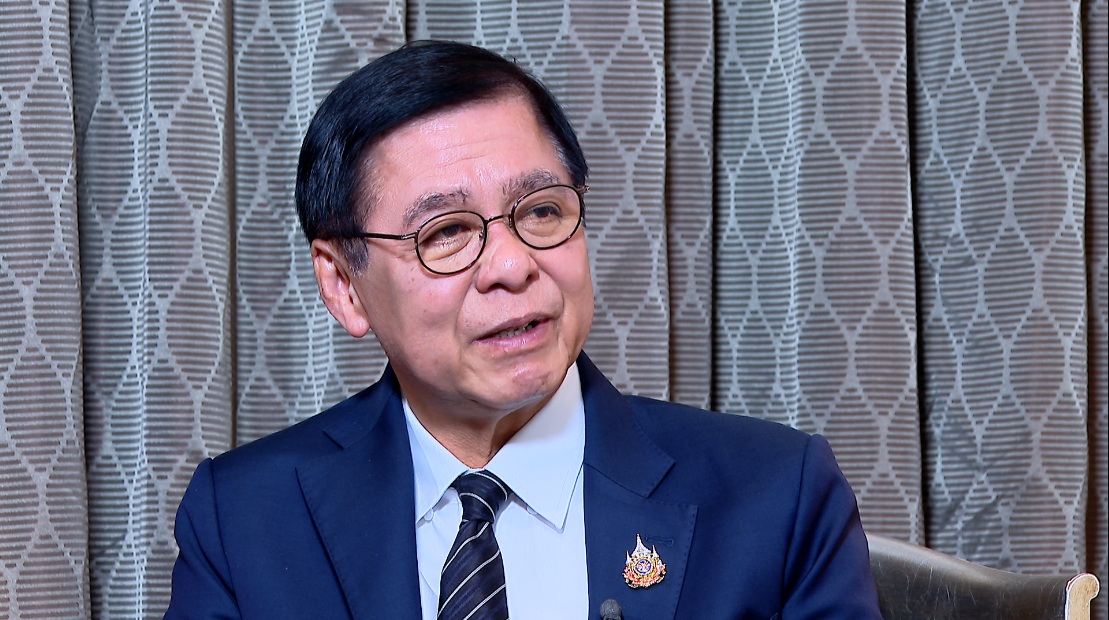
ADDIS ABABA, Aug. 29 (Horndiplomat) — Thailand’s Deputy Prime Minister and Foreign Minister Sihasak Phuangketkeow said Ethiopia’s pursuit of access to the sea was legitimate and should be addressed through dialogue and cooperation with neighboring countries.
Phuangketkeow made the remarks during an official visit to Ethiopia, where he discussed the country’s push for access to port facilities on the Red Sea in an interview with the state-run Ethiopian News Agency.
“Deep-sea ports are important for trade, for investment,” he said, adding that Ethiopia’s quest required understanding from its neighbors.
Landlocked Ethiopia has intensified efforts to secure reliable maritime access, arguing that its population of more than 130 million and expanding economy require sustainable access to international shipping routes.
Prime Minister Abiy Ahmed has repeatedly said Ethiopia would pursue sea access peacefully, describing the issue as a long-overdue national aspiration shaped by the country’s geographic, historical and economic circumstances.
“A population of over 130 million people cannot remain landlocked. A generation of today will not bequeath a geographically imprisoned nation to posterity,” Abiy was quoted as saying.
Phuangketkeow said Ethiopia and its neighbors shared economic interests and could negotiate an arrangement granting the country access to port facilities.
“There are possible ways of talking with the leaders and the policymakers to see how you can work out an arrangement whereby Ethiopia would have access to the port facilities,” he said.
“I’m sure that if we talk in a very frank and constructive way, and we don’t mean any ill will, it’s real progress. Countries have to learn how to move beyond conflict.”
Ethiopia lost direct access to the Red Sea after Eritrea gained independence in 1993 and has since depended heavily on ports in neighboring countries for its international trade.
Addis Ababa says a negotiated maritime arrangement could promote regional trade, economic integration and shared prosperity rather than become a source of geopolitical tension.
Phuangketkeow also called for stronger cooperation among countries in the Global South, saying developing nations should coordinate more closely to defend their interests and make their voices heard in the international system.
“Well, I think what’s most important now is that those of us in the Global South, those of us among developing countries should make our voice heard — and heard louder these days,” he said.