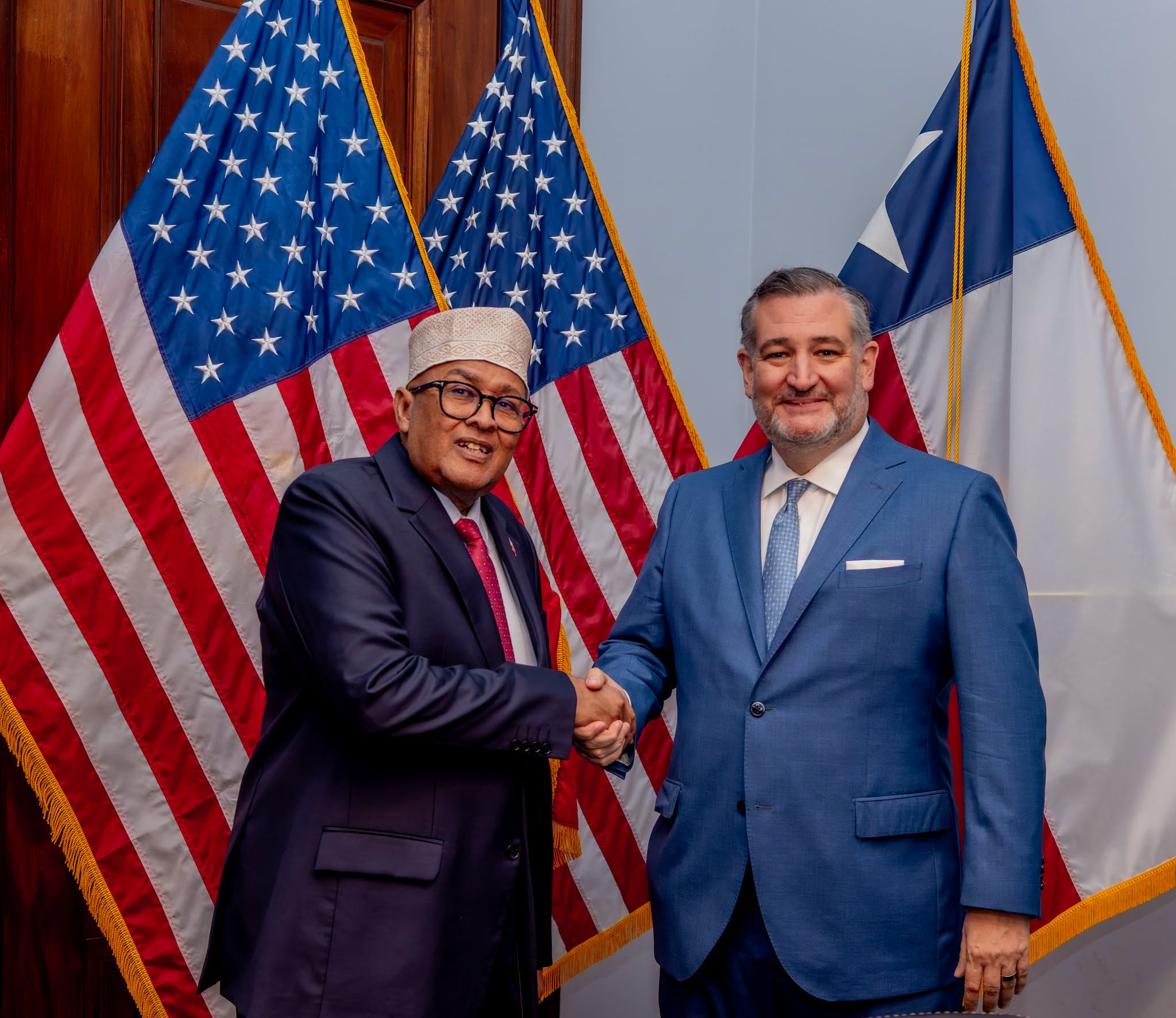
Somaliland President Abdirahman Mohamed Abdullahi shakes hands with U.S. Senator Ted Cruz during their meeting on Capitol Hill in Washington, D.C. Photo: Somaliland Presidency.
WASHINGTON, Nov. 15 (Horndiplomat) — U.S. Senator Ted Cruz has renewed his call for the State Department to move towards recognising Somaliland’s independence, saying progress on the issue would determine his support for President Donald Trump’s nominee for ambassador to Somalia.
In a post on X, the Texas Republican urged the department to act on what he described as Trump’s guidance distinguishing Somaliland from Somalia.
“President Trump has made his position on Somaliland clear: Somaliland is a totally different country than Somalia,” Cruz wrote.
“The State Department should be taking steps in line with the President’s guidance, up to and including recognizing Somaliland’s independence.”
Cruz also renewed his warning over the confirmation of Devin Kennington, whom he questioned at a Senate Foreign Relations Committee hearing on Nov. 10.
“Last week I questioned President Trump’s nominee to be ambassador to Somalia on the issue. I made it clear that his confirmation relies on the State Department making progress towards that goal,” he said.
At that hearing, Kennington supported expanding engagement with Somaliland, citing commercial opportunities, its position on China and its contribution to Red Sea security. He also pledged to engage Somaliland’s authorities through visits if confirmed.
Cruz pressed the nominee to explain why the State Department had not advanced recognition. Kennington said he was not in a position to identify the obstacles, while reiterating his support for closer relations with Hargeisa.
Cruz’s latest remarks repeat that demand and explicitly link progress towards recognition to the ambassadorial confirmation process.
The senator has also sought changes to Washington’s treatment of Somaliland in other areas. In July, he urged Secretary of State Marco Rubio to introduce a separate travel advisory for Somaliland, arguing that the existing advisory failed to reflect its security and governance conditions.
(Reporting by Mohamed Duale; Editing by Horn Diplomat Desk)