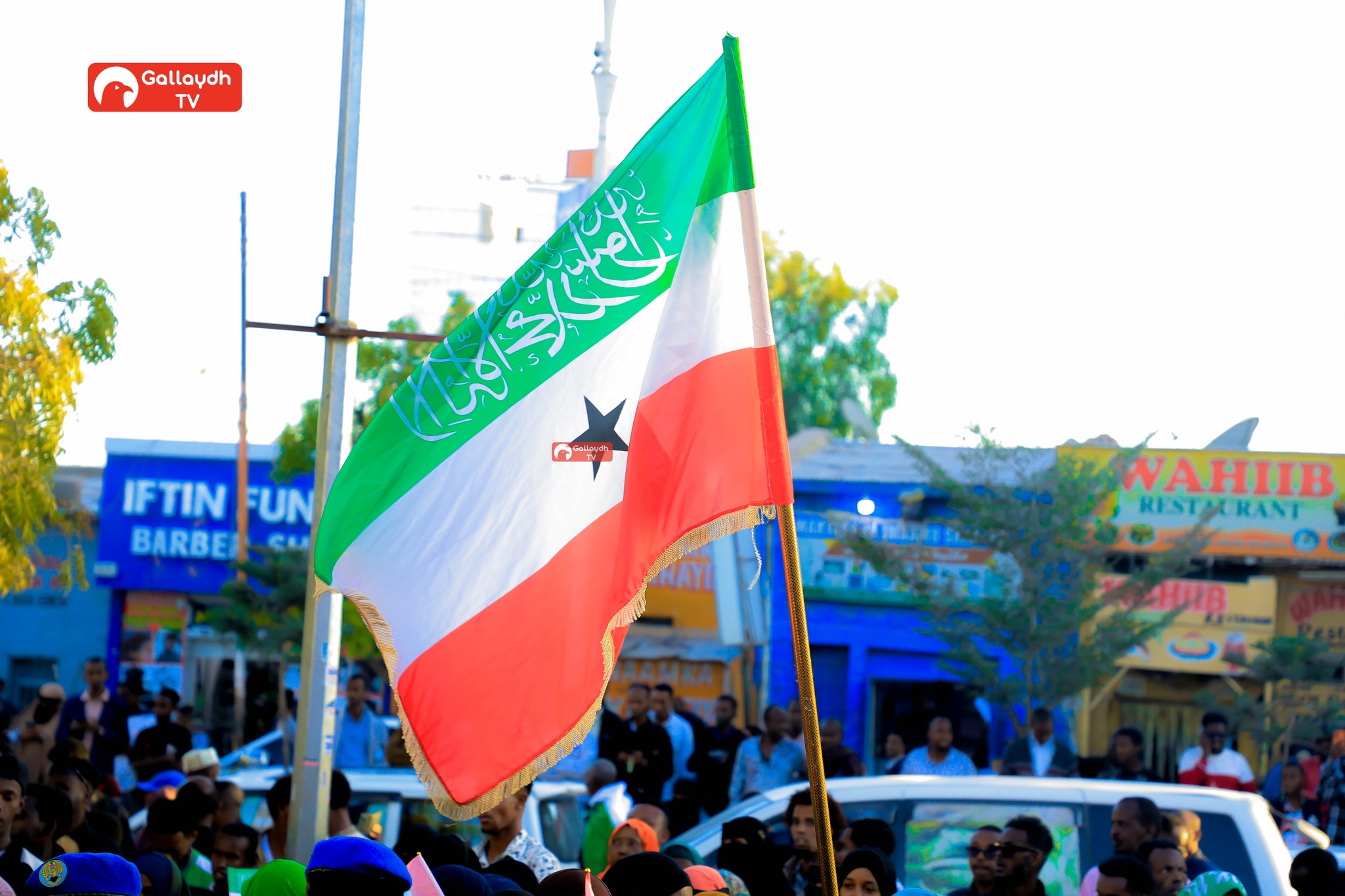
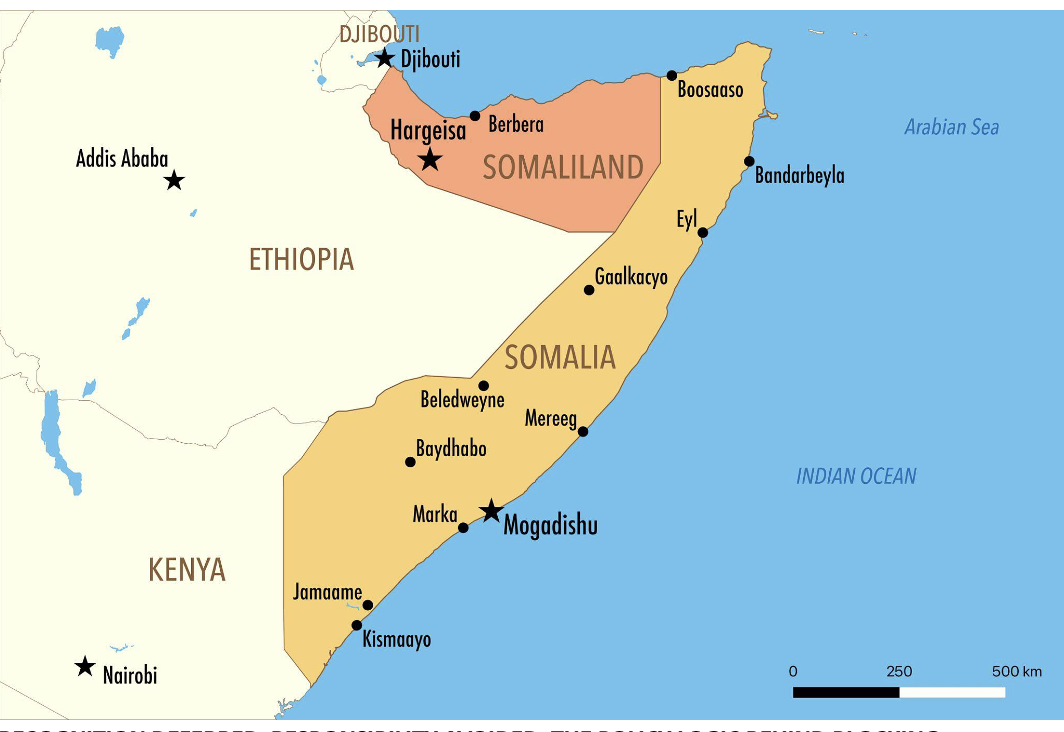
Opposition to Somaliland’s international recognition is no longer analytically sustainable. Framed as a defense of Somalia’s sovereignty and territorial integrity, this position obscures timelines, ignores empirical outcomes, and ultimately transfers responsibility away from those who have overseen, actively or passively, one of the longest and most externally managed state collapses in modern history. After thirty-five years of political separation and sustained self-governance, the core question is no longer whether Somaliland should wait, but why it is still being asked to do so.
Somaliland has been politically, administratively, and security-wise separate from Somalia for more than three and a half decades. This separation is not recent, provisional, or externally imposed. It is a generational political reality produced by internal reconciliation, negotiated social contracts, and locally driven governance. During this period, Somaliland demobilized militias, restored public order, held multiple competitive elections, and maintained internal peace, without international recognition, foreign peacekeeping forces, or long-term trusteeship.
Yet today, a number of external actors, most notably Turkey, Egypt, and Qatar, position themselves as the most forceful opponents of Somaliland’s recognition. Their argument is familiar: recognition would undermine Somalia’s state-building project. This claim, however, rests on assumptions that do not withstand scrutiny, namely, that Somalia’s state-building process is cohesive, steadily progressing, and approaching consolidation. None of these conditions currently holds.
Somalia’s recovery process remains fragmented, externally dependent, and increasingly securitized. Political authority is contested, governance is uneven, and sovereignty itself is frequently subcontracted to peacekeeping forces and foreign security arrangements. Despite decades of international investment, Somalia continues to struggle to monopolize violence, deliver basic services nationwide, or mediate political disputes without external arbitration. This is not a failure of intent, but it is a failure of outcome.
If opposition to Somaliland’s recognition were genuinely motivated by concern for Somalia’s recovery, a basic question would demand a clear answer: What tangible political consolidation has been achieved over the past three decades that justifies the indefinite deferral of Somaliland’s rights?
The record of external engagement raises further contradictions. Turkey’s fifteen-year presence in Mogadishu has expanded diplomatic, security, and economic ties, yet it has not resolved Somalia’s foundational governance deficits. Egypt’s involvement has been episodic and largely shaped by regional rivalries, treating Somalia more as a geopolitical arena than as a society in recovery. Qatar’s influence has similarly emphasized leverage and alignment over durable institutional consolidation. None of these approaches has altered Somalia’s structural fragility in a way that would warrant conditioning Somaliland’s future on Somalia’s unresolved trajectory.
Paradoxically, pressure is not applied to accelerate reform where instability persists, but to restrain progress where stability has already been achieved. Somaliland, a polity that has delivered peace, order, and institutional continuity, is asked to subordinate its political future to an open-ended and deteriorating process over which it has neither control nor responsibility. From an analytical standpoint, this is indefensible.
Recognition is not a reward for perfection. It is an acknowledgment of demonstrated political capacity, sustained self-governance, and popular consent. Somaliland meets the empirical criteria commonly cited in international practice: a defined territory, a permanent population, an effective government, and the demonstrated ability to enter relations with other states. To deny recognition solely because Somalia remains unresolved is to invert responsibility, punishing success in order to compensate for failure.
More troublingly, sustained opposition to Somaliland’s recognition actively reinforces Somalia’s stagnation. By insisting that progress elsewhere must be frozen until Mogadishu stabilizes, external actors remove incentives for accountability, normalize dependency, and entrench a cycle of managed insecurity. The outcome is a Somalia sustained in poverty, insecurity, and political limbo, while a functioning neighbor is told to suspend its destiny indefinitely.
Where, then, were these objections during the last thirty-five years when Somaliland rebuilt from collapse, governed itself, and preserved peace?
Where was the insistence on sovereignty when Somalia itself operated without one?
And on what analytical basis do external actors now claim authority to veto a people’s right to self-determination?
It is important to be clear: advocating for Somalia’s recovery and recognizing Somaliland’s self-determination are not mutually exclusive positions. Supporting Somalia’s reconstruction does not require denying Somaliland’s political reality. On the contrary, acknowledging successful governance models may offer Somalia, and the wider Horn of Africa, practical lessons rather than symbolic threats.
The demand that Somaliland “wait” is no longer neutral diplomacy; it is a political choice with consequences. It delays accountability in Somalia, destabilizes proven governance models, and erodes the credibility of international norms on self-determination. A serious regional strategy must engage realities as they are, not as they were imagined decades ago.
“Recognition delayed is not stability preserved. It is a responsibility deferred”.
Constructive Policy Considerations
For states and citizens genuinely committed to Somalia’s recovery and long-term regional stability, a modest recalibration of approach may strengthen outcomes for all parties.
First, support for Somalia’s state-building should be analytically separated from the indefinite postponement of Somaliland’s political future. Treating these trajectories as distinct realities allows each to be assessed on its own merits and reduces counterproductive zero-sum assumptions.
Second, international positions would benefit from greater consistency by anchoring decisions in evidence-based criteria, effective administration, territorial control, popular legitimacy, and institutional continuity, applied uniformly rather than selectively.
Finally, engaging stability where it already exists can reinforce, rather than undermine, regional recovery. Constructive engagement with functioning polities such as Somaliland, particularly on security, trade, and development, reflects practical realities and contributes to a more resilient Horn of Africa.
About the Author
Dr. Abdirahman Osman Gaas is a policy analyst, scholar-practitioner, and strategic advisor specializing in governance, state-building, and security dynamics in the Horn of Africa. He works across academia, think tanks, and policy advisory platforms, with a strong focus on Somaliland’s political development, regional geopolitics, and democratic governance. His work bridges research, policy, and practice. gaas@aogaas.org
The views expressed in this article are the author’s own and do not necessarily reflect the Horndiplomat editorial policy.
If you want to submit an opinion piece or an analysis, please email it to Opinion@horndiplomat.com
Horndiplomat reserves the right to edit articles before publication. Please include your full name, relevant personal information and political affiliations