


By Mahir Abduselam
As the international system shifts away from unipolar dominance toward a complex multipolar architecture, Ethiopia’s diplomatic orientation remains defined by constructive engagement. Rather than resisting the emerging multipolar reality, the nation continues to expand its international partnerships, translating broader geopolitical shifts into tangible avenues for national and regional progress.
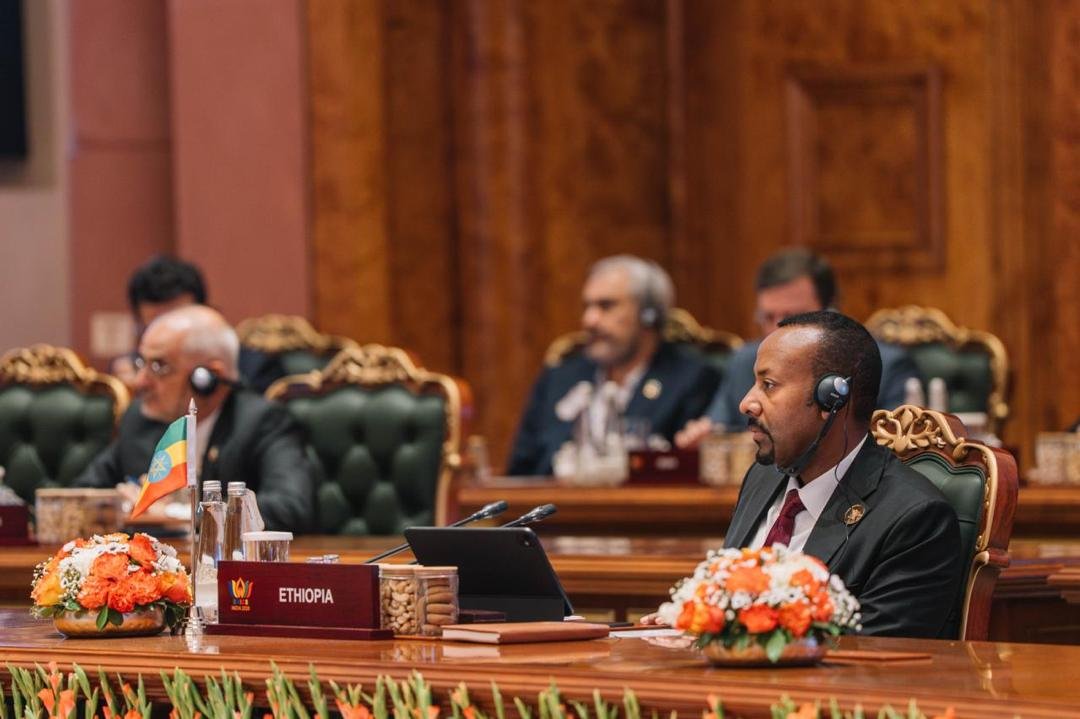
Ethiopia views its storied history not as a static burden of the past, but as a dynamic blueprint for national revitalization and future governance. From joining the League of Nations as the only independent Africa State, to co-founding the United Nations and the Organization of African Unity (OAU, later the African Union), the country has consistently left its diplomatic mark on the international stage. That continuity reached a new milestone when Ethiopia officially became a full member of BRICS, effective 1 January 2024.
This transition marks a definitive evolution from observer and applicant status to primary stakeholder within one of the most consequential coalitions of the Global South, achieved through strategic leadership that prioritizes synergy, national sovereignty, and expanding partnerships over confrontation.
The Imperative for Ethiopia: Core Drivers Shaping its Emerging Global Role
Out of more than 40 candidate nations that expressed interest, Ethiopia was selected at the 15th BRICS Summit in Johannesburg in 2023 for a combination of strategic, demographic, and diplomatic attributes that position it uniquely in the emerging multipolar landscape.
Its geostrategic location in the Horn of Africa places Ethiopia near the Red Sea and critical global trade routes, offering BRICS members a gateway for projecting influence across Africa and the Middle East. As the second-most populous country on the continent, with a population exceeding 130 million, Ethiopia brings a substantial market and demographic dividend, a large domestic consumer base and a youthful, productive labor force capable of supporting industrialization and value-chain development.
Addis Ababa’s role as a diplomatic hub, hosting the African Union headquarters and the United Nations Economic Commission for Africa (UNECA), gives the country outsized political weight and a ready platform for amplifying African voices. This is reinforced by economic potential rooted in sustained growth, long-term investments in infrastructure, agriculture, industrial parks, and energy projects such as the Grand Ethiopian Renaissance Dam.
Equally important are strong bilateral ties with core BRICS members, particularly China (major infrastructure and investment partner), India, Russia, Brazil, and South Africa, alongside alignment with a multipolar vision that seeks a more equitable global financial and political architecture. Ethiopia’s longstanding independent foreign policy and commitment to South-South cooperation made it a natural fit rather than an ideological newcomer.
Unlocking Opportunity: Economic Dividends and Strategic Gains for Ethiopia
BRICS has grown from its original five members into an expanded grouping that now represents a significant share of global economic and demographic weight, roughly 48 percent of the world’s population, 36 percent of global landmass, approximately 39 percent of global GDP in purchasing-power-parity terms, and around 23 percent of international trade.
Membership delivers concrete levers for elevating Ethiopia’s geopolitical and economic footprint. First, Financial and trade flexibility stands out. Access to local-currency trade frameworks and emerging payment systems within BRICS can help mitigate foreign-exchange shortages that have constrained imports and growth. The New Development Bank (NDB) offers an important channel of alternative financing, infrastructure and sustainable development loans that operate with fewer of the policy conditionalities associated with traditional Western lenders. Ethiopia has moved to formalize closer engagement with the NDB, viewing it as a tool for diversifying development finance sources amid its homegrown reform efforts.
Second, Macroeconomic synergy is another gain. Membership aligns with domestic reforms aimed at attracting foreign direct investment, expanding industrial capacity, and securing technology transfer in agriculture, manufacturing, renewable energy, and digital infrastructure. Early signals include expanded commercial engagement, such as Brazil’s decision to open a permanent Summit, Brasil trade and investment office in Addis Ababa, and growing trade volumes with key partners including China and India. These relationships support industrialization goals while reducing over-reliance on any single external partner.
Finally, Global South leadership is strengthened. Ethiopia gains enhanced leverage in discussions on international trade reform, climate finance, digital transformation, and South-South cooperation. Recent BRICS summits have explicitly endorsed Ethiopia’s WTO accession process and supported its candidacy for expanded representation in bodies such as the International Civil Aviation Organization, illustrating how membership translates into tangible diplomatic capital. As host of the African Union, Ethiopia is also better positioned to advocate for deeper BRICS–Africa alignment consistent with Agenda 2063.
In practice, Ethiopia has framed BRICS not as an anti-Western bloc but as a complementary platform for strategic hedging, deepening ties with emerging economies while maintaining engagement with the IMF, World Bank, and traditional partners. This pragmatic approach maximizes policy space in a multipolar environment.
Ethiopia’s accession does not automatically resolve structural challenges, debt sustainability, institutional capacity, logistics costs for a landlocked economy, or the need to convert potential into bankable projects. Yet it decisively elevates the country’s standing from interested observer to active stakeholder. By leveraging its demographic weight, diplomatic importance, and strategic location within an expanding BRICS framework, Ethiopia is converting the winds of global change into new instruments of national action and continental impact.
About the Author
Mr. Mahir Abduselam serves as a diplomat at the Ethiopian Consulate General office in Hargeisa, holding a Master’s Degree in Diplomacy and International Relations