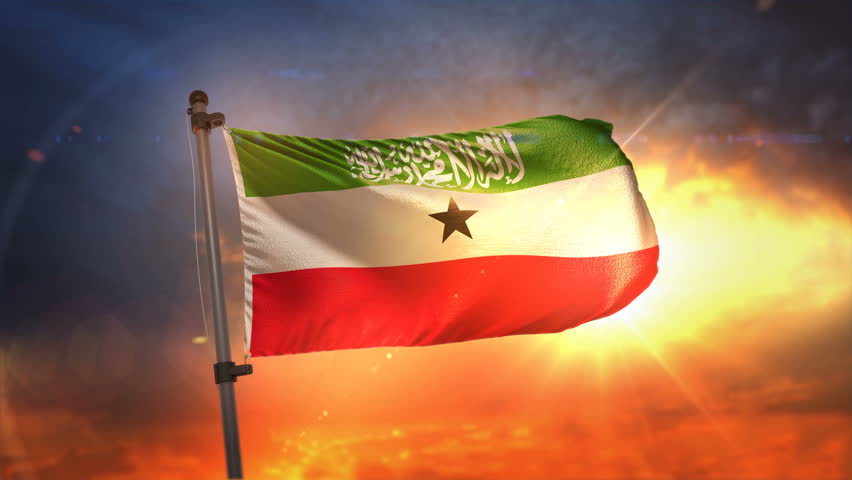
For more than three decades, Somaliland has existed in a paradox that continues to puzzle policymakers, diplomats, and scholars alike. It governs itself, controls territory, holds competitive elections, maintains security, issues its own currency, and engages internationally, yet it remained unrecognised as a sovereign state for over three decades. This contradiction raises a fundamental question: what, in legal and political terms, is Somaliland?
Too often, Somaliland is dismissed as a “breakaway region” or reduced to a footnote in discussions about Somalia. Such characterisations overlook both historical context and international legal standards. A closer examination, particularly through the lens of the Montevideo Convention on the Rights and Duties of States, reveals that Somaliland’s claim to statehood is neither reckless nor unprecedented. Rather, it is grounded in law, history, and sustained political practice.
A brief historical context
Somaliland was not born out of the collapse of the Somali state in 1991, as is sometimes assumed. It was a British Protectorate that gained independence on 26 June 1960. During that brief but legally significant period, Somaliland existed as a sovereign entity and received diplomatic recognition from approximately 30 states. Five days later, it voluntarily entered into a union with the former Italian Somalia (Somalia Italiana) to form the Somali Republic.
That union, however, was never properly ratified through a binding legal instrument accepted by both parties. Over the following decades, Somalilanders experienced political marginalisation, repression, and large-scale massacres under the military regime in Mogadishu. When Somalia’s central government collapsed in 1991, Somaliland withdrew from the union and declared the restoration, not the creation, of its independence.
Understanding Somaliland’s contemporary status requires viewing it not as a secessionist movement, but as a former sovereign entity reclaiming its pre-union status.
Statehood and the Montevideo Convention
The Montevideo Convention (1933) outlines four criteria for statehood: a defined territory, a permanent population, an effective government, and the capacity to enter into relations with other states. While recognition by other states is politically significant, it is not a constitutive legal requirement under international law.
Measured against these criteria, Somaliland presents a compelling case.
A defined territory
Somaliland claims the same territorial boundaries it held as a British Protectorate. These borders were established through treaties between the United Kingdom, Italy, France, and Ethiopia, making them legally defined colonial frontiers.
While Somaliland faces territorial disputes with Somalia, most notably highlighted by the conflict in Las Anod since 2023, international law does not require borders to be undisputed. Many fully recognised states have ongoing border conflicts. What matters is the existence of a defined territory and effective control over substantial parts of it, both of which Somaliland possesses.
Government institutions function across most of this territory, providing security, justice, and public services. The presence of localised conflict does not negate the legal existence of the state any more than it does elsewhere in the world.
Uti possidetis juris and the African Context
One of the most common objections to Somaliland’s recognition is the fear that it would undermine Africa’s colonial borders and open a “Pandora’s box” of secessionist claims. This concern is rooted in the principle of utipossidetis juris, which requires newly independent states to respect colonial boundaries.
Ironically, Somaliland’s case aligns with this principle rather than violating it. Somaliland does not seek to redraw colonial borders; it insists on them. Its claim is explicitly limited to the boundaries of the former British Protectorate.
This position was acknowledged by an African Union fact-finding mission, which concluded that Somaliland’s case is “historically unique and self-justified” and does not threaten continental stability. The mission further observed that Somaliland’s claim does not constitute an attempt to dismantle inherited borders but to restore them.
Moreover, international jurisprudence, particularly the International Court of Justice’s advisory opinion on Kosovo, clarifies that the principle of territorial integrity applies primarily to relations between states, not to internal political transformations or withdrawals from failed unions.
A permanent population
Somaliland is home to an estimated 5.7 million people. It has a citizenship law defining nationality, and despite the presence of nomadic communities that cross borders, there exists a stable population permanently linked to the territory.
The vast majority of Somaliland’s population lives under the authority of its government, participates in elections, pays taxes, and identifies with Somaliland as their political community. This satisfies the population criterion without controversy.
An effective and legitimate government
Perhaps Somaliland’s strongest claim lies in the effectiveness and legitimacy of its government. Since 1991, Somaliland has pursued a bottom-up state-building model that blends traditional conflict resolution mechanisms with modern constitutional governance.
It has a presidential system with three branches of government. Presidents, parliamentarians, and local councils are elected through one-person, one-vote elections that international observers have repeatedly deemed credible. Courts apply laws enacted by an elected parliament. The state maintains security forces, a taxation system, border and coastal guards, and a functioning central bank.
Unlike many post-conflict societies, Somaliland’s institutions were not imposed externally. They emerged through local reconciliation conferences and popular consent, culminating in a constitution approved by referendum in 2001. Internal sovereignty, in both legal and practical terms, is firmly established.
Capacity to enter into relations: Recognition as a political barrier
The most contested criterion is Somaliland’s capacity to enter into relations with other states. Critics argue that the lack of recognition itself proves the absence of such capacity. This reasoning, however, conflates legal capacity with political willingness.
Somaliland has demonstrated the competence to conduct foreign relations independently. It has entered into trade, security, and cooperation agreements with countries such as Ethiopia and Seychelles (and business agreements with international companies such as DP World). Western states engage with Somaliland on development, security, and electoral support. Somaliland passports are accepted by several countries, and foreign consulates and liaison offices operate in Hargeisa.
What Somaliland lacks is not capacity, but reciprocal recognition. International law recognises that an entity may fulfil the criteria of statehood even if other states, for political reasons, refuse to acknowledge it.
Importantly, Somaliland is not dependent on a patron state for survival, unlike some other unrecognised entities. Its foreign policy is not outsourced, nor is it militarily sustained by an external power. This autonomy strengthens, rather than weakens, its claim to independence.
Is Somaliland’s declaration of independence legal?
International law is often misunderstood as either endorsing or prohibiting declarations of independence. In reality, it does neither. This was made clear by the International Court of Justice in its advisory opinion on Kosovo, which held that international law contains no general prohibition against declarations of independence.
The Court deliberately avoided ruling on recognition or statehood, reinforcing the idea that independence declarations are political acts with legal consequences determined by subsequent state practice, not automatic illegality.
Applied to Somaliland, this means its 1991 declaration does not violate international law. Whether it results in recognition is a political decision for states and international organisations, not a legal verdict predetermined by doctrine.
Beyond the recognition stalemate
There is a growing consensus among scholars that Somaliland fulfils the objective criteria of statehood. The disagreement lies not in law, but in politics. Many states prefer the ambiguity of engagement without recognition, citing regional stability, African Union sensitivities, or relations with Somalia.
Yet this prolonged non-recognition carries its own costs. It restricts Somaliland’s access to international finance, limits its ability to formalise security cooperation, and penalises a society that has achieved stability through peaceful, democratic means in one of the world’s most volatile regions.
Recognition should not be viewed as a reward, but as an acknowledgement of reality.
Conclusion
So, what is Somaliland?
It is a territory with defined colonial borders, a permanent population, an effective and legitimate government, and the demonstrated capacity to engage internationally. It emerged not from chaos, but from historical sovereignty and voluntary union. It withdrew from that union when it collapsed, and it rebuilt itself without foreign occupation or trusteeship.
Whether or not the international community chooses to recognise Somaliland, the legal and political facts remain. Somaliland functions as a state. The question is no longer whether it meets the criteria of statehood, but how long international politics can afford to ignore a reality that has endured for over thirty years.
About the Author
Guleid Ahmed Jama , Lawyer and analyst ,Hargeisa, Somaliland
The views expressed in this article are the author’s own and do not necessarily reflect the Horndiplomat editorial policy.
If you want to submit an opinion piece or an analysis, please email it to Opinion@horndiplomat.com. Horndiplomat reserves the right to edit articles before publication. Please include your full name, relevant personal information, and political affiliations.