
By: Kamaal Marjaan
On 26 December 2025, Israel announced its official recognition of Somaliland as an independent and sovereign state, a move that acknowledged Somaliland’s long-standing de facto independence, stable governance, and distinct political and legal trajectory over more than three decades. The announcement triggered an immediate diplomatic reaction from Somalia, which continues to claim sovereignty over Somaliland and rejects any external recognition as null and void, notwithstanding the long-standing lack of administrative control over the territory since 1991.
Seeking to counter the political impact of Israel’s decision, Somalia attempted to leverage its temporary membership in the United Nations Security Council (UNSC) to force urgent consideration of the issue. Somalia was expected to secure a strong Security Council outcome that would delegitimize Israel’s recognition of Somaliland, deter other states from following Israel’s example, and impose political or legal consequences on Somaliland or Israel.
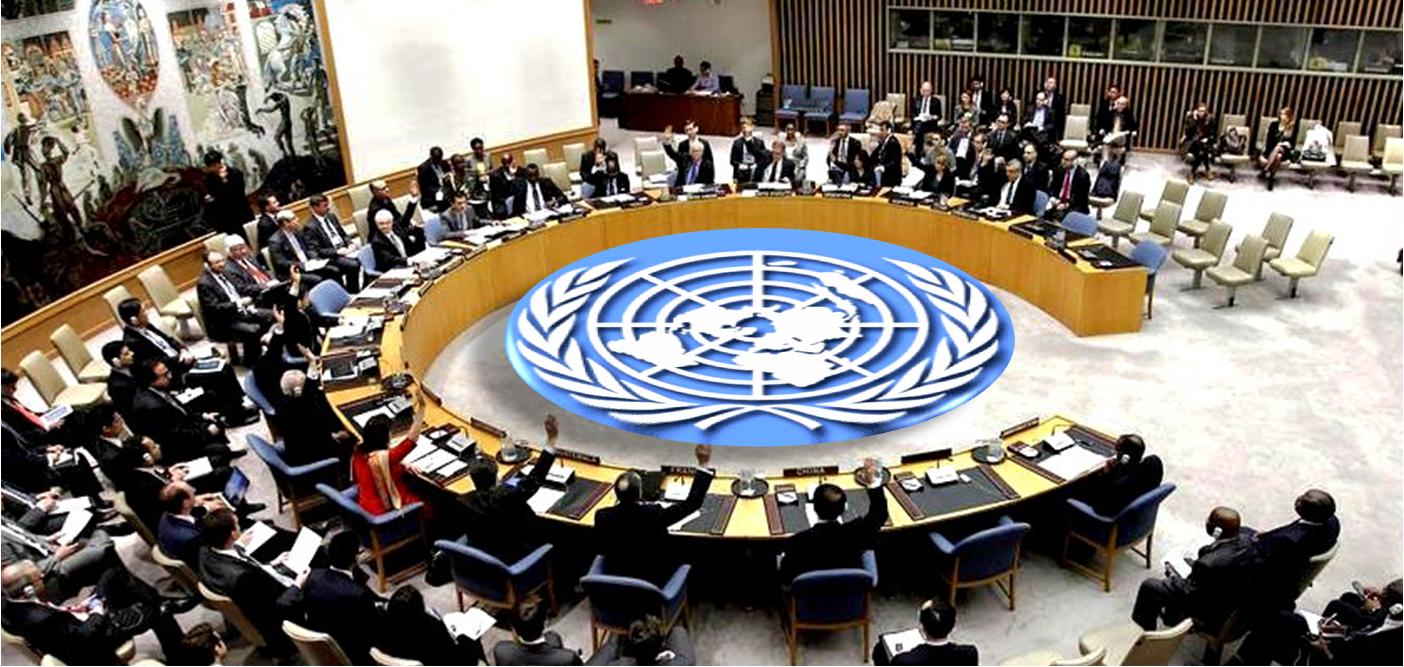
An emergency session was therefore convened on 29 December 2025 under the agenda item “Threats to international peace and security,” and was framed primarily around Somalia’s sovereignty and regional stability, rather than as a direct legal challenge to Somaliland’s statehood or the legality of recognition.
Procedurally and substantively, the meeting took the form of a briefing-only exchange of views. The Council heard briefings from the UN Departments of Political and Peacebuilding Affairs and Peace Operations, followed by statements from Council members and invited non-members. No draft resolution was introduced, no outcome text was negotiated, and no vote was held. Under established UN practice, such a process reflects limited consensus and a low appetite for action. While politically visible, the session carried no legal force, no enforcement authority, and no coercive implications for Somaliland.
The meeting concluded without any formal or informal Council product. There was no resolution, no condemnation, and no sanctions language. Although many speakers reiterated general principles of sovereignty and territorial integrity with reference to Somalia, these statements were made strictly in national capacities and were not adopted by the Council as a collective position. Equally significant was the deliberate diplomatic restraint shown toward Israel.
No censure was issued, and no call was made for punishment. The issue was acknowledged but consciously not escalated. Despite Somalia’s lobbying efforts, the Council declined to issue any binding or political instrument targeting Somaliland or Israel, and the absence of even a presidential or press statement underscored the lack of consensus for action.
All 15 members of the Security Council participated in the session, either individually or through joint statements. Somalia spoke on behalf of Algeria, Guyana, and Sierra Leone in a joint intervention emphasizing sovereignty, unity, and territorial integrity, and later made a second individual intervention directly rebutting Israel’s recognition. The overall pattern was striking: while speakers reiterated standard formulations of international law, no punitive measures were adopted and no Council action against Somaliland was pursued. No delegation advocated broader enforcement actions beyond calls for rectification or firm opposition. The restraint exercised by the permanent members was particularly decisive, signaling an unwillingness to translate Somalia’s objections into binding international constraints.
Several non-Council members were invited to participate in accordance with Articles 31 and 32 of the UN Charter, reflecting the regional relevance of the Horn of Africa, the Red Sea, and the Gulf of Aden, as well as the Council’s practice of hearing from states whose interests are directly affected. Their participation, however, carried no voting rights and no capacity to alter outcomes. Their statements were heard and recorded, but they did not shape the Council’s final posture, reinforcing the reality that Somalia was unable to mobilize broader international pressure.
From a diplomatic and strategic perspective, the outcome represents a setback for Somalia and a political gain for Somaliland. As an institution, the Security Council did not condemn the recognition, did not characterize it as illegal or illegitimate, and did not prohibit other states from recognizing Somaliland.
No sanctions or enforcement language was adopted, and neither Somaliland nor Israel faced coercive pressure. Most notably, this was the first time Somaliland appeared explicitly in a Security Council discussion touching on recognition, and it emerged without damage. In UN diplomacy, restraint is often intentional, and the Council’s decision not to act carries real significance: Somaliland was discussed, but not disciplined.
The historical importance of this moment should not be understated. For more than 34 years, Somaliland’s political status had never appeared on the Security Council’s formal agenda as a recognition issue. Previous references were limited to indirect, descriptive mentions within Somalia-related discussions, without legal or political effect. No Arria-formula meetings had been convened, and Somaliland had never been explicitly debated by the Council. The 29 December 2025 session therefore marked a historic threshold: the first explicit Council discussion triggered by recognition of Somaliland, yet without any adverse legal or political determination.
The contrast with the Northern Cyprus case is instructive. When the Turkish Republic of Northern Cyprus declared independence in 1983, the Security Council convened specifically because of that declaration and adopted Resolution 541, declaring it legally invalid and calling on all states not to recognize it. Despite Turkey’s continued recognition, the UN response was immediate and explicit. In the Somaliland case, no such resolution exists. The Council has neither declared the recognition invalid nor urged states to withhold recognition. This contrast highlights the extent of Somalia’s diplomatic failure: even the minimum legal rejection applied in the Cyprus case was absent.
Within the recognized hierarchy of UNSC outcomes—ranging from binding Chapter VII measures to purely informational meetings—the 29 December 2025 session clearly falls within the category of a briefing-only session, with high political visibility but no legal weight, low coercive pressure, and no precedent-setting effect. The governing principle applies fully: pressure flows from outcomes, not from meetings.
In conclusion, Somalia entered the Security Council seeking a decisive international rebuke of Israel’s recognition of Somaliland. It emerged without a resolution, without condemnation, and without legal effect. While abstract principles of sovereignty were reiterated, the Council deliberately avoided enforcement, escalation, or legal judgment. For Somaliland, the meeting constitutes a diplomatic milestone: its recognition was discussed at the highest level of international security governance and withstood scrutiny. In UN terms, the conclusion is clear and defensible: the Security Council discussed Somaliland, but it did not act against Somaliland.
About the Author

Kamaal Marjaan
Senior Journalist, Author, and Strategic Communications Expert