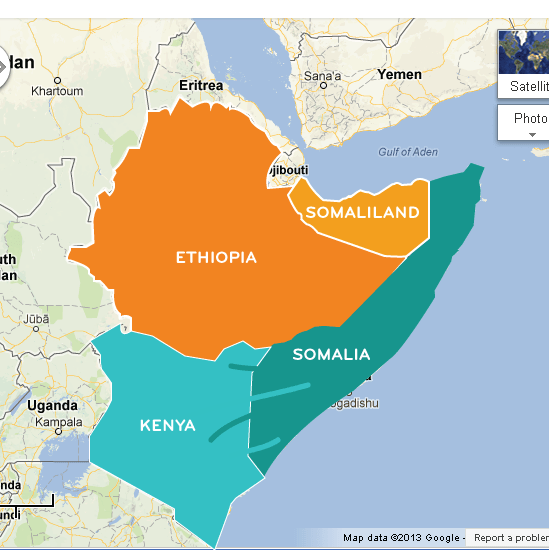
For Somaliland, the escalating US–Israel–Iran conflict is not a remote geopolitical scene. It poses a direct economic risk. Globaly the crisis has already contributed to higher oil prices, increased maritime insurance costs, and greater uncertainty about tanker traffic in and around the Strait of Hormuz. For a small, import-dependent economy located near the Bab al-Mandeb and reliant on Berbera as its main trade gateway, shocks of this kind can quickly spread from global markets to household prices, business costs, and government revenues.
The first transmission channel is fuel. Somaliland’s energy system remains heavily exposed to imported oil. According to the Ministry of Energy and Minerals, Somaliland’s energy production depends 80% of electricity on diesel generation, which means any increase in global oil prices does not remain confined to fuel imports. It can feed directly on electricity prices, transport costs, generator expenses, and, ultimately, the price of basic goods across the country. In a largely privatized power market, that pass-through can be rapid and painful.
The second channel is imported inflation. Somaliland’s economy is structurally dependent on imported goods, with Berbera acting as the main gateway for commercial supplies. Due to the Gulf conflict, shipping insurance may suddenly become more expensive, and some ships may take longer to avoid riskier routes, or even postpone deliveries. This drives up the cost of bringing in everyday necessities like food, fuel, medicine, and building supplies. Even before shoppers notice empty shelves, supermarkets, store owners and market vendors will likely feel the touch first. As they face higher costs for shipping, insurance, and getting goods into their businesses, they may have no choice but to raise prices to keep their businesses afloat.
The third channel is fiscal pressure. Somaliland’s 2026 National budget is projected at approximately 2.87 trillion shillings, but the revenue base remains structurally narrow. The National budget 2026 shows that customs generate roughly 73% of government revenues, while the share of inland taxes is about only 27%. Which means any external trade shock not only raises import prices but also can reduce trade volumes, slow the business cycle, and decrease revenue collection. At the same time, the budget allocates about 46.6% to security and 18.5 to governance (64.1%), while allocating the economy sector only 15.1%. Also, allocating only 1% as a national reserve. Which limits the space to adjust the budget accordingly.
The fourth channel is port and logistics vulnerability. Berbera has become more efficient and more economically important after the DB world investment. Berbera Port is considered one of the most developed ports in the region, with annual container handling capacity having increased to 500,000 TEUs. Which increased its competitiveness. However, it is also noted that Red Sea disruptions by Houthis are already affecting shipping patterns. In other words, Somaliland’s modernization gains have increased its economic upside but also heightened its sensitivity to regional maritime instability. When trade flows are a lifeline, shipping risk quickly becomes a national economic issue.
The fifth channel is Somaliland’s reliance on the informal international financial system. Without having direct access to the international banking system, the country depends on overseas routes to process trade payments and receive remittances. Dubai is the central hub making these transactions possible, while Djibouti serves as a backup—but only to a limited extent. Under normal circumstances, this setup works. If these financial channels are disrupted, businessmen and traders could struggle to pay their suppliers in countries such as Turkey and China, slowing imports and making supply chains more fragile. Also, this conflict may disrupt remittance flows from the diaspora, especially the USA and Europe, thereby shrinking the purchasing power of the society. In Somaliland, these external transfers aren’t just a bonus—they’re a lifeline that keeps daily life running for countless households.
The main lesson for Somaliland is clear: the main danger is not only conflict itself, but the speed and range of economic transmission. A prolonged regional crisis could affect the Somaliland economy through higher fuel costs, more expensive imports, rising shipping charges, weaker customs performance, and falling household purchasing power. Because Somaliland’s economy depends so much on the outside world and already faces budget challenges, even a brief crisis elsewhere can hit home in a big way. The right response is early action, not a delayed reaction.
The policy implication is straightforward: facing uncertainty means taking real, practical steps to protect everyday life. The government needs to pay close attention to the price of fuel and basic goods (things people depend on) and work with importers and distributors, so that ordinary people aren’t hit by unfair price hikes. Also, ensuring that Berbera port keeps running smoothly and that the most essential supplies, like food and fuel, keep coming in, even if things get tough. At the same time, the cabinet should accelerate practical steps to reduce structural energy vulnerability, notably by lowering reliance on diesel through renewable generation and, where feasible, regional power interconnection.
In shocks of this kind, resilience is not a matter of words; Real resilience comes from acting quickly, taking practical steps to protect people and livelihoods before short-term problems turn into lasting hardships.
About the Author
Abdiweli Soufi Jibril, Ph.D., is a former Somaliland Minister of ICT and an academic lecturer specializing in ICT, public policy, governance, and Horn of Africa geopolitics.
The views expressed in this article are the author’s own and do not necessarily reflect the Horndiplomat editorial policy.
If you want to submit an opinion piece or an analysis, please email it to Opinion@horndiplomat.com. Horndiplomat reserves the right to edit articles before publication. Please include your full name, relevant personal information, and political affiliations.