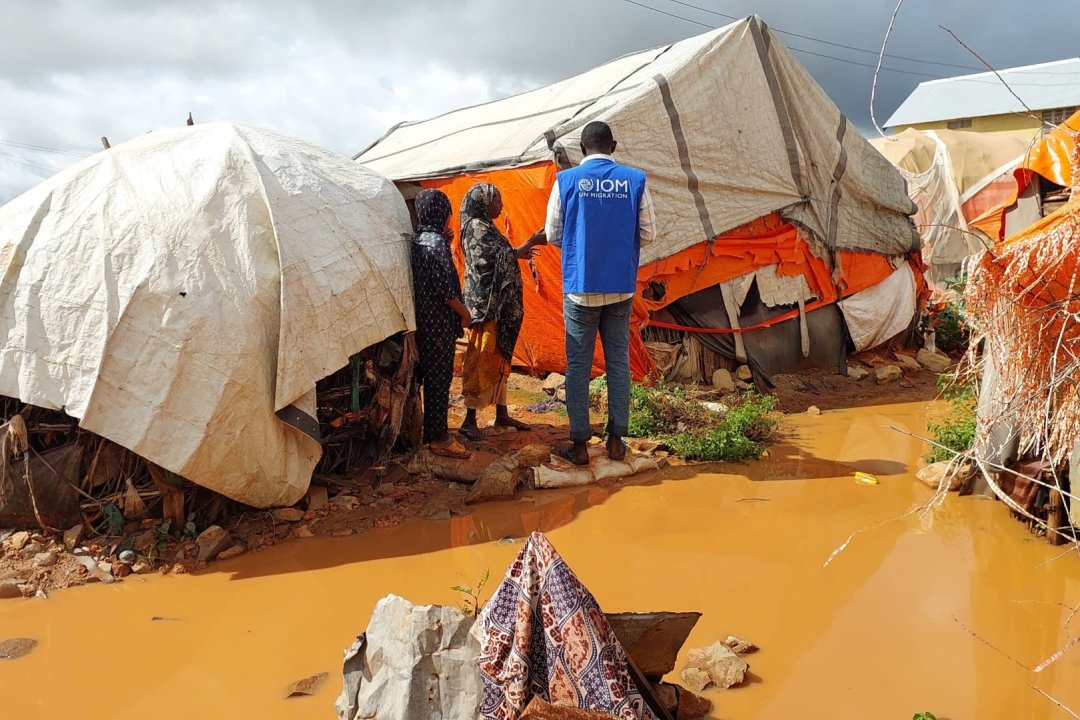
MOGADISHU, Oct. 22 (Horndiplomat) — Nearly 874,000 people in Somalia could be displaced by flooding and other hazards over the final three months of 2026, the International Organization for Migration (IOM) warned, as heavy rainfall and rising river levels threaten vulnerable communities across the country.
In a statement issued on Wednesday, the United Nations migration agency said new projections developed jointly with the Danish Refugee Council (DRC) estimated that 874,319 people could be displaced between October and December, with flooding expected to account for 92% of the total.
The warning comes as Somalia enters a rainy season expected to bring above-normal rainfall amid strengthening El Niño conditions, raising fears of another humanitarian emergency in communities already affected by drought, conflict and repeated displacement.
“We are looking at the possibility of hundreds of thousands of people losing their homes in just a matter of weeks. Many of these families have already been displaced before and have very little left to fall back on,” said Manuel Marques Pereira, IOM Somalia Chief of Mission.
“There is still time to reduce the impact, but that window is closing. We urgently need funding to help people protect their homes and livelihoods, reach safer ground where necessary, and avoid another cycle of displacement,” he added.
Rising Rivers Threaten Communities
IOM said early signs of flooding were already emerging in several parts of Somalia.
In Dollow, the Jubba River is approaching flood levels, while water levels along the Shabelle River are rising towards the top of its banks in Jowhar.
Heavy rainfall in Baidoa has already damaged homes and forced families to leave several neighbourhoods, according to the agency.
Beletweyne and Gaalkacyo are among the locations facing the greatest displacement risks, with approximately 229,000 and 82,000 people respectively potentially affected.
The agency warned that families living in overcrowded displacement settlements were particularly vulnerable because of inadequate access to clean water and sanitation facilities, increasing the risk of disease outbreaks if flooding worsens.
Funding Shortfall Hampers Response
Despite the growing threat, IOM said it had received only 14.4% of the $16.62 million required for its El Niño flood preparedness and emergency response operations.
The funding is intended to support more than 517,000 people living in flood-prone communities across Somalia.
The agency said insufficient resources were restricting efforts to establish safe relocation sites, provide emergency shelter and improve access to clean water, sanitation and healthcare.
Flooding could also destroy agricultural land, damage crops, contaminate drinking water sources and disrupt access to essential services, further worsening humanitarian conditions.
IOM said it was working with Somali authorities and local communities to strengthen early warning systems, identify evacuation routes and prepare emergency assistance before flooding intensifies.
The agency called on international donors to urgently increase funding for preventive measures and humanitarian operations to reduce the risk of mass displacement.