Investigation: Djibouti’s Quiet Hand in Western Somaliland’s Border Conflict

0
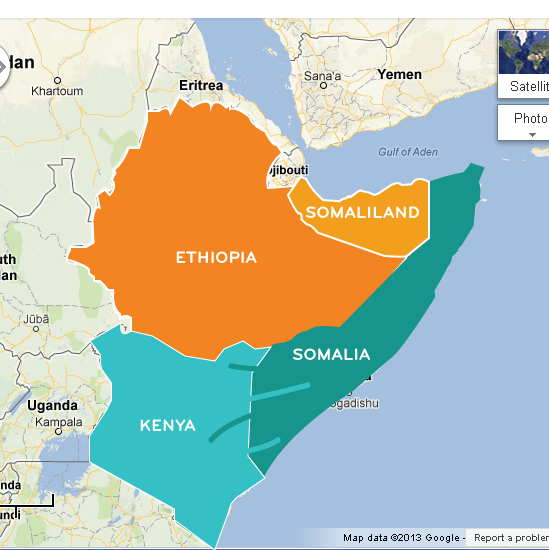
Horn of african MAP

By James Ernis
Veteran U.S. security journalist based in Djibouti

SEILA, Somaliland — Fighting between Gadabuursi and Issa communities in western Somaliland has escalated into one of the most dangerous border crises in the Horn of Africa in years, with mounting evidence pointing to Djibouti’s backing of armed elements involved in the conflict, according to security sources, elders and regional analysts.

The clashes, centred on the Seila area and extending toward the wider Zeila corridor, have disrupted decades of coexistence between neighbouring communities that share grazing land, trade routes and family ties along Somaliland’s western frontier.

While Somaliland authorities insist they are not backing any side and are focused on mediation, multiple sources say the conflict has been sustained and shaped by external interference, primarily from Djibouti.

From my reporting inside Djibouti, there is little evidence that this war reflects public sentiment. On the contrary, opposition to the fighting appears widespread among civilians, elders and even within Djibouti’s own security institutions.

A divided community, an exploited fault line

Elders and regional officials say internal divisions within the Issa community have played a critical role in prolonging the conflict.

The Issa groups involved are known locally as HASAN and CAWL.

The HASAN group, largely based in Djibouti, strongly opposes the fighting, according to elders and civil society figures. The CAWL group, primarily resident in Somaliland, is accused by multiple security and community sources of actively participating in and sustaining clashes with neighbouring Gadabuursi communities.

“This is not a community war,” said one elder involved in cross-border mediation. “It is a political war imposed on communities that have lived together for generations.”

Alleged coordination from Djibouti

Security sources with knowledge of regional military movements say the fighting has been coordinated and supported by figures linked to Djibouti’s political and military establishment.

Four individuals are repeatedly cited by sources as central to the operation:

  • Mohamed Jama, head of the presidential guard

  • General Zekeriye, commander of Djibouti’s armed forces

  • Ismail Tani, a former government minister

  • Subagle, a civilian figure previously based in Borama, Somaliland

Two sources said an operational coordination office was recently moved from within Djibouti’s presidential compound to the armed forces headquarters — a change widely interpreted by analysts as signalling direct military oversight.

Djiboutian authorities did not respond to requests for comment.

Power, proximity and family ties

Particular scrutiny has fallen on Mohamed Jama, whom sources describe as a key operational figure. He is assisted by Sadiq John, a former Somali security official who previously served as Chief of Police of the Banadir Region.

Sadiq John married Haibado Ismail Omar, the youngest daughter of President Ismail Omar Guelleh, in December 2022, according to public records and officials familiar with the matter.

While no official role has been acknowledged, analysts say the family connection has heightened concerns about blurred lines between personal networks and state security decisions.

In a region where power often travels through informal channels, such relationships matter.

Resistance inside Djibouti

Notably, opposition to the conflict is not limited to civilians. Sources familiar with Djibouti’s security institutions say the country’s intelligence chief is firmly opposed to the fighting, reflecting deeper fractures within the state.

Public resistance is even clearer. Djiboutian elders and activists interviewed for this report consistently rejected the war.

“This is not something the people want,” said a Djibouti-based community leader. “It threatens our economy, our families and our stability.”

Somaliland’s mediation push

Somaliland officials deny any involvement in the fighting and say they are focused on preventing escalation between Gadabuursi and Issa communities.

“Our role is mediation, not mobilisation,” said a senior Somaliland official involved in peace efforts. “We are working with elders to stop the bloodshed.”

Local leaders confirm that several mediation attempts are underway, though progress has been slowed by continued armed mobilisation.

A wider political backdrop

Security sources say planning linked to the conflict began in early 2024, following Somaliland’s memorandum of understanding with Ethiopia — a development that heightened regional competition and anxiety.

Sources also point to President Guelleh’s declining health as a factor contributing to internal power struggles and increasingly aggressive regional behaviour by competing factions within Djibouti’s ruling elite.

Why this matters

What began as a localised dispute now carries regional implications.

If Djibouti’s alleged backing continues, analysts warn the conflict risks destabilising a strategically vital border zone near the Red Sea and Bab al-Mandab corridor — a region already under intense global scrutiny.

“This is how small wars become regional problems,” said one Horn of Africa analyst. “When external actors intervene, local conflicts stop being local.”

For now, elders on both sides continue to push for dialogue. Whether external pressure eases or intensifies, may determine whether western Somaliland returns to uneasy peace or slips further into instability.


About the Author

James Ernis is a veteran U.S. security journalist and political analyst with more than 20 years of experience reporting from Djibouti and across the Horn of Africa. His work focuses on regional security, cross-border conflicts, political power dynamics, and the strategic implications of Red Sea and Bab al-Mandab geopolitics.

Based in Djibouti, Ernis has extensively covered developments involving Djibouti ,Ethiopia, Somalia, and Somaliland, with a particular emphasis on external interference, state security institutions, and community-level conflict dynamics. His reporting draws on long-standing regional sources, field investigations, and security analysis.

Contact: Ernisjames@protonmail.com


The views expressed in this article are the author’s own and do not necessarily reflect the Horndiplomat editorial policy.
If you want to submit an opinion piece or an analysis, please email it to Opinion@horndiplomat.com

Leave a Reply