
By: Abdillahi Gaboose
Saudi Arabia’s regional behavior is often interpreted through the lenses of rivalry, ambition, or leadership competition. Such readings miss a more fundamental reality: geography, not politics, is the primary constraint shaping Saudi Arabia’s strategic posture.
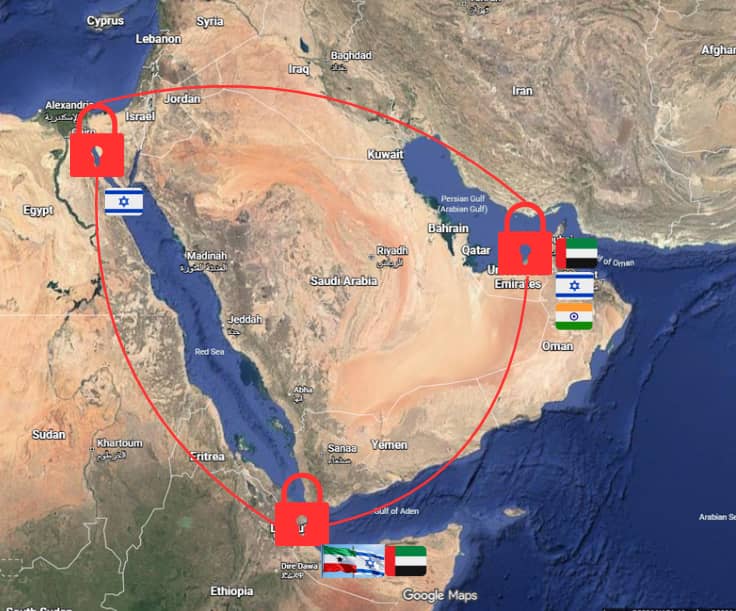
Despite its extensive coastline along both the Red Sea and the Arabian Gulf, Saudi Arabia’s access to global maritime trade is governed by three external chokepoints—the Suez Canal, the Strait of Hormuz, and Bab al-Mandeb. None are under Saudi control, and all are influenced by actors whose strategic priorities only partially align with Riyadh’s.
Structural Dependence on Maritime Chokepoints
Saudi Arabia’s maritime exposure is defined by three critical corridors:
-
The Gulf of Aqaba, where access is constrained by Israel’s control of maritime security and port access at the northern Red Sea.
-
The Strait of Hormuz, where logistical dominance and port infrastructure are increasingly shaped by the UAE and its regional partnerships.
-
Bab al-Mandeb, where security and access are influenced by Horn of Africa actors, including Somaliland, alongside extra-regional powers with expanding naval and commercial footprints.
Collectively, these realities produce an unusual condition in geopolitics: Saudi Arabia is functionally sea-locked despite being surrounded by water. Its energy exports, trade flows, and supply chains remain structurally dependent on routes it does not control.
This reality explains Riyadh’s persistent strategic anxiety far more convincingly than narratives centered on prestige or rivalry.
The Emerging Maritime Network
A loose but consequential alignment involving Israel, the UAE, India, and Somaliland has reshaped the logistical and security environment surrounding these chokepoints. While not a formal alliance, this network collectively influences ports, maritime surveillance, undersea infrastructure, and trade corridors stretching from the eastern Mediterranean to the Indian Ocean.
For Saudi Arabia, this configuration raises structural concerns over:
-
Energy export security
-
Supply-chain resilience
-
Long-term strategic autonomy