


By Mahir Abduselam
Ethiopia is undergoing one of the most ambitious periods of economic and social transformation in its recent history. At the center of this effort is a development agenda championed by Prime Minister Abiy Ahmed, combining home-grown economic reforms with large-scale initiatives in agriculture, tourism, infrastructure, technology, manufacturing, education and institutional development.
The significance of these initiatives should not be measured simply by the number of projects launched. Their broader importance lies in an attempt to change Ethiopia’s development model: strengthening domestic productive capacity, reducing dependence on imports, mobilizing local resources and positioning the country to compete more effectively in a rapidly changing global economy.
Agriculture and the Pursuit of Food Security
Agriculture remains fundamental to Ethiopia’s economy and to the livelihoods of millions of its citizens. One of the government’s most prominent objectives has therefore been to reduce dependence on imported food and expand domestic production.
Wheat production has become a centerpiece of this strategy. Ethiopia previously spent substantial amounts of scarce foreign currency importing wheat. The expansion of domestic production, including irrigated farming, represents an effort to conserve foreign exchange while strengthening national food security.
The transformation extends beyond wheat. Initiatives covering horticulture, livestock, poultry, dairy, tea and urban agriculture are seeking to diversify production and improve nutrition. Modern farming techniques and community-based agriculture also offer opportunities to bring food production closer to rapidly expanding urban populations.
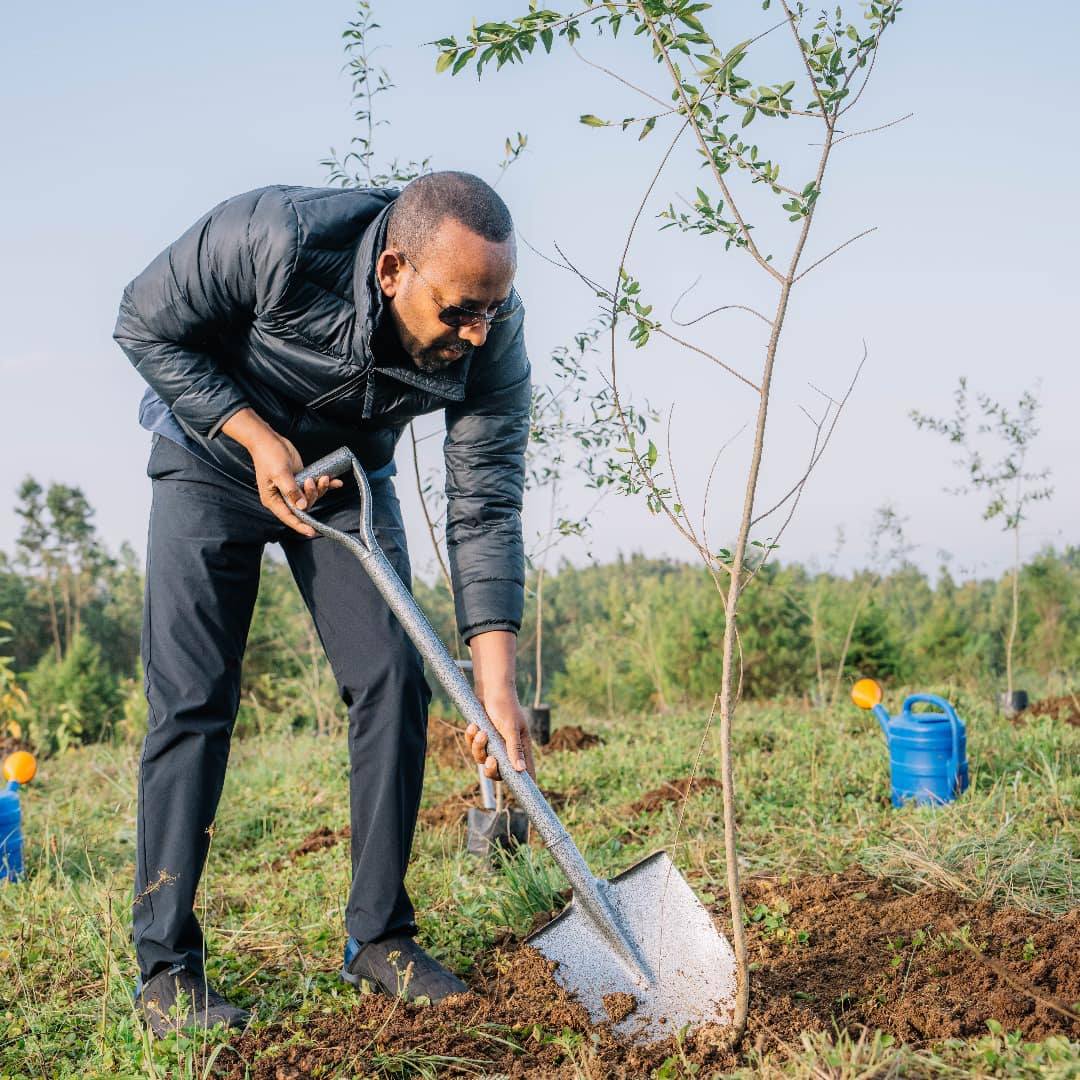
Environmental rehabilitation has accompanied this agricultural agenda. Through the Green Legacy Initiative, billions of seedlings have been planted across Ethiopia. Beyond its highly visible mass-planting campaigns, the initiative represents an attempt to restore degraded land, improve watershed management, increase vegetation coverage and strengthen Ethiopia’s resilience to climate change.
The long-term test will be ensuring that planting campaigns translate into sustained forest growth and measurable environmental benefits. Nevertheless, the scale of public participation has made environmental restoration a prominent part of Ethiopia’s national development conversation.
Tourism as an Engine of Development
For decades, Ethiopia possessed enormous tourism potential that was not fully reflected in visitor numbers or tourism revenues. Its ancient civilizations, religious heritage, diverse cultures and extraordinary landscapes gave it the foundations of a major destination, but inadequate infrastructure and limited investment constrained the sector.
The government has sought to change this through destination development projects and the construction of new tourism infrastructures.
Tourism destination projects launched by Ethiopian Prime Minister Dr. Abiy Ahmed, under National Tourism Development Initiative called “Dine for Generations” at Arba Minch, Hayk, Denbi, Shabele, Gorgora, Wonchi and Koysha, together with eco-lodges and other conference facilities, illustrate a strategy that views tourism not simply as recreation, but as an economic sector capable of creating employment, generating foreign exchange and stimulating local economies.
These investments can also have a wider national impact. Improved roads, accommodation, public spaces and services around tourism destinations can benefit surrounding communities while encouraging Ethiopians themselves—including members of the diaspora—to explore and invest in the country.
If supported by effective marketing, reliable transportation, conservation and high service standards, Ethiopia has the potential to strengthen its position on Africa’s international tourism map.
Investing in Education and Human Capital
No development strategy can succeed over the long term without investing in people.
The establishment of the Abrehot Library in Addis Ababa symbolizes the government’s emphasis on knowledge, reading and research. Large public knowledge institutions are particularly important in a country with a young population seeking greater access to educational resources and digital information.
At the same time, investment in school construction, early childhood education and school feeding programs addresses more immediate barriers to education.
The expansion of classrooms in underserved communities can particularly benefit girls and children in rural areas, while school feeding programs can encourage attendance and help reduce dropout rates among students from economically vulnerable households.
Ethiopia’s greatest long-term resource is ultimately its population. Infrastructure matters, but a transformation becomes sustainable only when investments in roads, electricity and industry are matched by investments in skills, education and human potential.
From Digitalization to Artificial Intelligence and Space Science
Perhaps one of the most consequential changes underway is Ethiopia’s growing emphasis on science and digital technology.
The launch of Ethiopia’s first remote-sensing satellite, ETRSS-1, represented an important milestone in the country’s ambitions in space science. Satellite technology can support agriculture, environmental monitoring, weather analysis, infrastructure planning and disaster preparedness.
Developing domestic expertise is even more important than the technology itself. Training Ethiopian scientists and engineers creates the institutional capacity required for the country eventually to design, operate and utilize increasingly sophisticated technological systems.
The development of artificial intelligence capabilities represents another important frontier.
Through the establishment of the Ethiopian Artificial Intelligence Institute, the country is attempting to build domestic expertise in a field that will increasingly influence healthcare, agriculture, financial services, security, education, public administration and industrial productivity.
Ethiopia’s aim is not merely to consume technologies developed elsewhere, but to develop solutions adapted to African realities. With its large population, expanding technological innovations and growing digital economy, its aspiration is to become a regional hub for technological innovation.
Manufacturing and the Drive for Economic Sovereignty
A country of Ethiopia’s size cannot rely indefinitely on importing a large share of the products consumed by its population.
The government’s “Ethiopia Tamr’t” — Ethiopia Produces initiative reflects recognition of this challenge. By encouraging domestic manufacturing, the initiative aims to expand production, create employment, substitute imports and eventually strengthen export competitiveness.
Flourishing Industrial parks, improved electricity supply, logistics reforms and investment incentives can provide the foundations for this transformation.
Health and Inclusive Development
Economic development is meaningful only when its benefits improve people’s lives.
Ethiopia’s profound effort to modernize medical centers and expand specialized healthcare facilities are therefore an essential component of its broader development agenda. Reinforced domestic treatment capacity has significantly reduced the number of Ethiopians who used to travel abroad for better medical care while retaining valuable foreign currency within the economy.
Growing Cancer prevention, diagnostic services, research institutions and specialized regional medical centers are playing vital role in tackling the dual burden of communicable and non-communicable diseases in the country, thereby providing generous opportunities for neighboring nations.
Community Welfare and the Culture of Collective Responsibility
Some of the government’s most socially visible initiatives have relied not only on state financing but also on community participation, volunteers, businesses and philanthropic contributions.
Housing construction and renovation campaigns for low-income families and vulnerable elderly citizens demonstrate the potential of organized voluntary action.
Youth participation in community projects can have an additional benefit: strengthening civic responsibility and creating a sense that development is not exclusively the responsibility of government.
This principle of collective responsibility has deep roots in Ethiopian society. Building up on this existing collective responsibility of social heritage, the government has launched a resilient summer volunteer programs by pooling financial and non-financial resources through participation of government, businesses and communities to change a life of low-income households.
Building Institutions That Can Sustain Transformation
Physical development is visible. Institutional development is less visible, but ultimately more important. Roads, resorts, industrial parks, libraries and public facilities can be constructed within years. Building institutions characterized by accountability, competence, predictability and public trust takes considerably longer.
The Prime Minister Abiy Ahmed’s reform government, has therefore, emphasized on improving public-sector efficiency, reducing bureaucratic bottlenecks, modernizing workplaces and strengthening project implementation.
Turning Ambition into Sustainable Prosperity
Prime Minister Abiy Ahmed’s development agenda is ambitious in both its scale and diversity. From wheat fields and reforestation campaigns to tourism destinations, manufacturing, education, Healthcare facilities, corridor (urban) development, artificial intelligence and space science initiatives reflect his profound determination to transform Ethiopia in several dimensions simultaneously.
Yet large ambitions inevitably bring large challenges. Ethiopia continues to face internal political challenges and external interventions intended to block its development aspirations. Despite these compounded challenges, it continued turning its development ambition into sustainable prosperity.
That distinction is essential
The strongest case for Ethiopia’s transformation will ultimately come not from announcements or impressive infrastructure alone, but from measurable improvements in productivity, household incomes, employment, education, food security, healthcare and institutional effectiveness.
Ethiopia has immense human, agricultural, cultural and geographic potential. The initiatives undertaken by the Prime Minister Abiy Ahmed in recent years demonstrate a determination to convert those advantages into productive national assets.
If the country can sustain reform, strengthen institutions, maintain social stability and ensure that development reaches communities across its diverse regions, today’s projects could become foundations for something much larger: a more productive, technologically capable, environmentally resilient and economically self-reliant Ethiopia. That would be the most consequential measure of Ethiopia’s comprehensive transformation—and the lasting legacy of the development agenda now being pursued.
About the Author
Mr. Mahir Abduselam serves as a diplomat at the Ethiopian Consulate General office in Hargeisa, holding a Master’s Degree in Diplomacy and International Relations