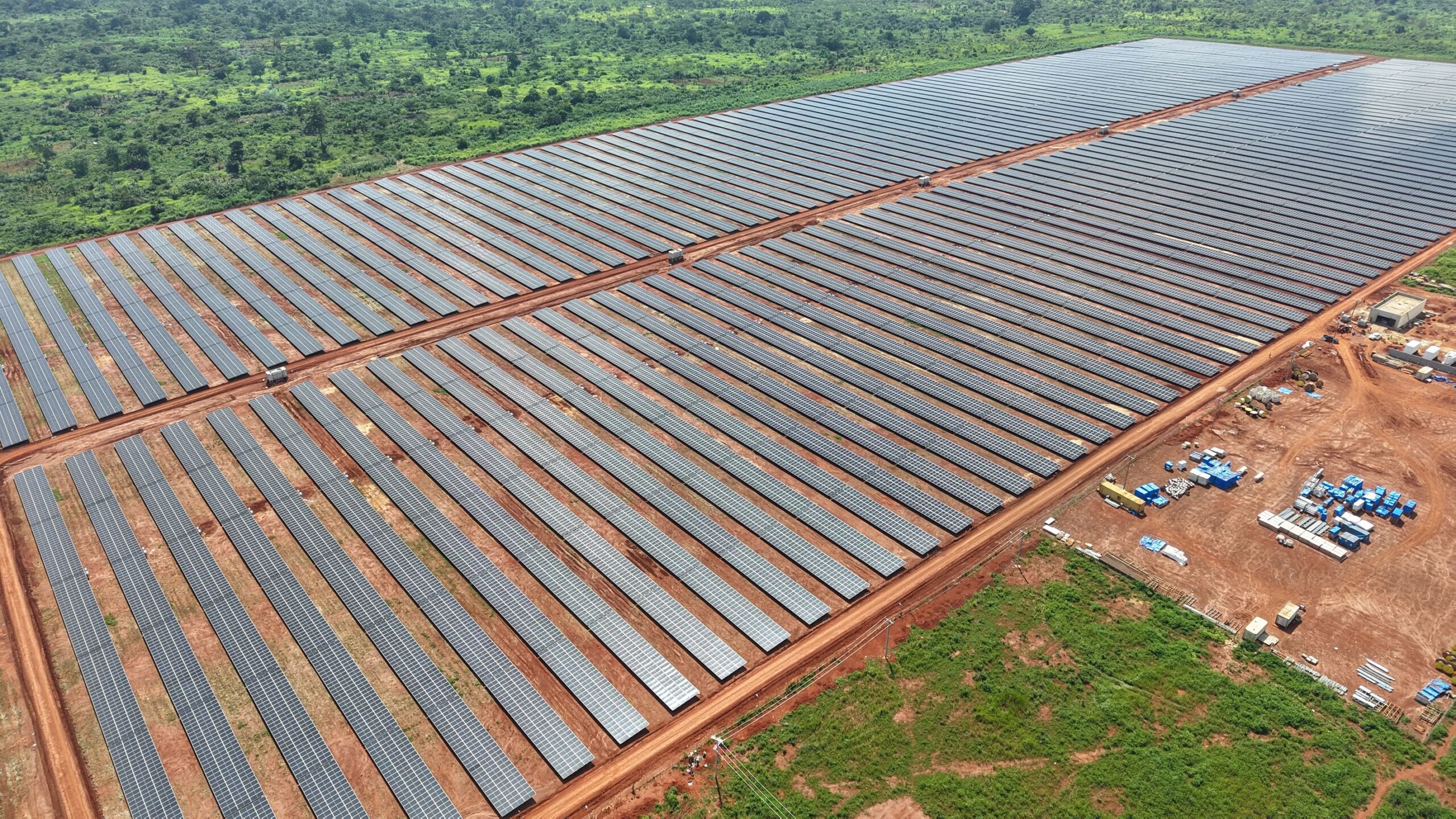
BANGUI, Aug 12 (Horndiplomat) — Abu Dhabi-based Global South Utilities (GSU) has inaugurated a 50-megawatt solar power plant in the Central African Republic, a project the company says is the largest infrastructure development in the country’s history and will increase national electricity generation capacity by more than 60%.
The solar photovoltaic plant, located in Sakaï, combines 50 MW of generation capacity with a 15-megawatt-hour Battery Energy Storage System (BESS), designed to strengthen grid stability and improve access to reliable electricity, according to a report by the UAE’s state-run Emirates News Agency (WAM).
The facility uses more than 80,000 solar panels and 156 inverters and is expected to supply clean electricity to more than 300,000 households while cutting carbon dioxide emissions by more than 50,000 tonnes annually.
“It is a project of historic national importance that will help shape the future of the Central African Republic,” Ali Alshimmari, Managing Director and Chief Executive Officer of Global South Utilities, said at the inauguration.
“It reflects the power of partnership, the importance of keeping commitments — delivered in 10 months — and a shared belief in a better future for the Central African Republic,” he added.
The inauguration ceremony was attended by Central African Republic President Faustin-Archange Touadéra, senior government officials, representatives of GSU and project partners.
The project represents a major expansion of the Central African Republic’s electricity infrastructure. Reliable power supplies are expected to support hospitals, schools and other public services while providing additional capacity for businesses and industries.
GSU said the expansion could also help attract investment and create wider economic opportunities as the country seeks to strengthen its energy system.
The Sakaï development follows the start of construction on the project in August 2025, when GSU said the plant would significantly expand electricity access and support the Central African Republic’s transition towards renewable energy.
“Every successful infrastructure project begins with a shared vision, but it is partnership that turns that vision into reality,” Alshimmari said.
He credited the Abu Dhabi Fund for Development with providing concessional financing that helped make the project possible.
“We thank the Abu Dhabi Fund for Development, whose concessional financing was instrumental in enabling the delivery of this project,” Alshimmari said.
“For GSU, this is another step in building enduring partnerships across Africa and contributing to the continent’s long-term economic and social development.”
The project also highlights expanding economic ties between the United Arab Emirates and the Central African Republic. The two countries signed a Comprehensive Economic Partnership Agreement in March 2025 aimed at increasing bilateral trade and investment across several sectors.
Sakaï adds to GSU’s growing international energy portfolio following the delivery of a solar project in Chad. The UAE-based company has projects and partnerships across Africa, Central Asia and South America as it expands investment in large-scale energy infrastructure.
The inauguration comes as Gulf countries, particularly the UAE, increase investment in renewable energy and infrastructure projects across Africa, where governments are seeking additional generating capacity to support economic growth and improve electricity access.


 has inaugurated a 50-megawatt solar power plant in the Central African Republic,)