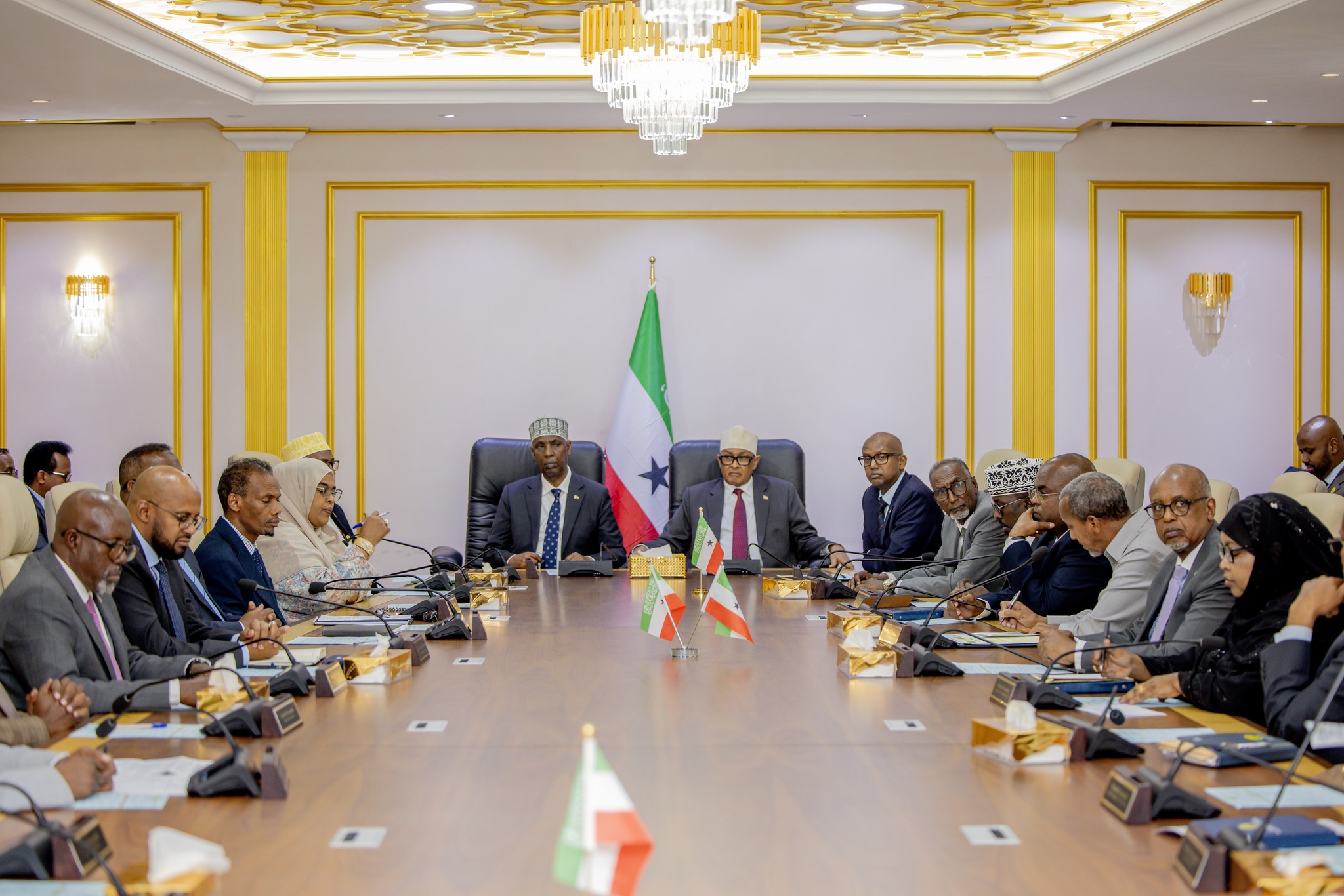
HARGEISA, March 5 (HornDiplomat) — Somaliland’s Council of Ministers held its 56th session on Thursday at the Presidential Palace in Hargeisa, chaired by President Abdirahman Mohamed Abdullahi (Irro) and attended by Vice President Mohamed Ali Aw Cabdi.
The meeting reviewed a range of national issues including security, economic developments, the impact of Middle East tensions on trade, as well as the state of health and education services in the country.
Security Situation
Somaliland’s Minister of Interior and Security Abdalle Mohamed Arab briefed the cabinet on the country’s security situation, saying overall stability remains intact across Somaliland.
He told ministers that security conditions are stable “from east to west,” with no major conflicts or tensions reported across the regions, aside from routine criminal incidents and traffic accidents.
Arab said the government continues to prioritize maintaining national security and stability, particularly as Somaliland enters what officials described as a new phase following recent diplomatic developments.
He emphasized that both the government and the public must remain vigilant and work together to safeguard the country’s security.
Economic Outlook
Minister of Finance and Economic Development Abdillahi Hassan Aden warned that ongoing conflicts in the Middle East could affect Somaliland’s economic growth and domestic revenue.
He noted that a large portion of government revenue comes from taxes on imported goods, meaning disruptions in global trade routes could have economic consequences.
“If the conflicts in the Middle East continue for a prolonged period, Somaliland must rely more on national self-sufficiency,” the minister told the cabinet.
Aden also highlighted the importance of establishing a National Insurance system, describing it as a strategic pillar for strengthening the country’s economy, protecting national assets and supporting business development.
Impact of Middle East Tensions on Trade
Minister of Trade and Tourism Abdirahman Hassan Nur said tensions in the Middle East could affect Somaliland’s economy, particularly fuel supplies and the cost of essential goods.
He said instability in strategic maritime routes and oil-producing regions could lead to rising fuel prices and higher shipping costs, which may eventually increase the price of imported commodities.
The minister said his ministry is working with a presidentially appointed task force to closely monitor global market developments and maintain stability in domestic markets.
Authorities have also held meetings with local traders, urging them not to raise prices of fuel and basic goods due to the Middle East tensions.
Health Sector Update
Health Development Minister Dr. Hussein Bashir Hirsi told the cabinet that cases of fever-related illnesses reported in recent months have declined.
However, he warned that ongoing drought conditions have affected health services in some areas due to growing shortages of food and water.
The minister also cautioned that Middle East conflicts could disrupt the supply of medicines and medical equipment, most of which are imported.
The Ministry of Health, he said, will closely monitor pharmaceutical stocks in local markets to ensure essential medicines remain available.
Drought Impact on Education
Minister of Education, Science and Training Professor Ismail Duale Yusuf briefed ministers on the severe impact of drought on the country’s education sector, particularly in rural and pastoralist communities.
He said prolonged drought, water shortages and food insecurity have forced many families to migrate in search of pasture and water, disrupting school attendance for many children.
The minister urged the National Drought Relief Committee to include support for drought-affected schools in its emergency response plans to prevent further disruption to students’ education.