
By: Saeed Mohamed Ahmed
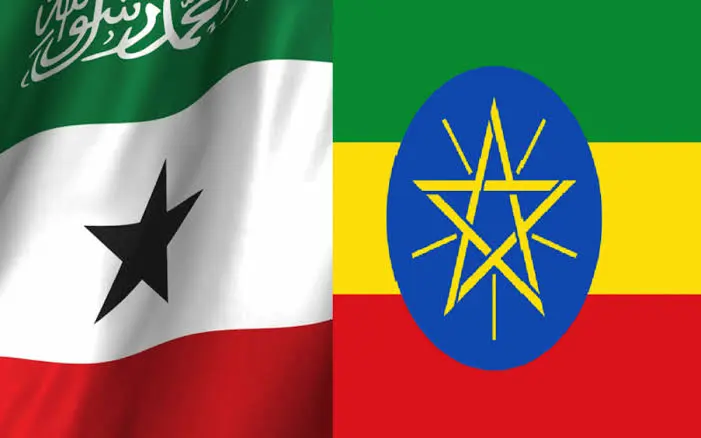
The recent two-day high-level visit by Somaliland President Abdirahman Mohamed Abdillahi Cirro to Addis Ababa concluded on a distinctly positive note, according to both the brief communiqué from the President’s office and corresponding statements from Ethiopian officials. Early indications suggest that the visit unfolded in a constructive atmosphere, with discussions covering shared interests in the socio-economic, political, security, and cooperationdomains.
Beyond the formal agenda, the cordial tone at the start and the cautiously optimistic conclusion underscored the meeting’s historic and strategic importance. The summit marked several significant firsts and took place amid a turbulent geopolitical climate.
Key Contextual Highlights
1. First Face-to-Face Meeting
This was the first formal, state-level meeting between President Cirro and Ethiopian Prime Minister Abiy Ahmed Ali. It was also the first time President Cirro met the Ethiopian leader as the head of state of the Republic of Somaliland, leading a senior government delegation on a formal invitation from Prime Minister Abiy.
2. Regional Geopolitical Flux
The summit occurred at a moment of heightened geopolitical realignment across the Horn of Africa. Ethiopia is grappling with internal political complexities while regional alliances shift rapidly.
Key regional dynamics include:
-
The gradual thawing of tensions between Ethiopia and the Federal Government of Somalia (FGS),
-
Persistent strains with Egypt over Nile waters,
-
Frosty ties with Eritrea despite recent cooperation, and
-
Quiet but palpable friction with Djibouti under President Ismail Omar Guelleh.
In such an environment, the Addis Ababa summit represented a bid to recalibrate and consolidate Ethiopia’s relations with one of its most dependable neighbors—Somaliland.
3. The Fading MoU
The timing of the summit is particularly notable given the effective stagnation—if not demise—of the controversial Somaliland–Ethiopia Memorandum of Understanding (MoU). The deal faced sweeping rejection from regional and international actors, including the African Union (AU), European Union (EU), IGAD, the Arab League, the OIC, and key nations such as Turkey, Egypt, Djibouti, and the Federal Government of Somalia (referred to here as Chapter 7 Somalia).
4. Great Power Competition
The meeting unfolded amid intensifying global power rivalries involving the UK, USA, China, Russia, and the EU.
These powers lack a unified approach to the Horn of Africa and the broader Red Sea–Bab-el-Mandeb corridor, regions whose strategic balance could be profoundly shaped by the outcome of Ethiopia–Somaliland cooperation.
Moving Forward: The Case for Strategic Patience
The tangible outcomes of this dialogue will emerge in the coming months. Both nations recognize their mutual strategic dependence and the reality that their cooperation underpins regional stability. However, achieving a durable, mutually beneficial partnership will require calm negotiation, trust-building, and respect for each other’s core national interests.
A successful path forward demands:
-
Balancing short-term political pressures with long-term strategic vision;
-
Exercising caution against opportunism and external manipulation; and
-
Ensuring policy integrity and consistency amid a volatile regional landscape.