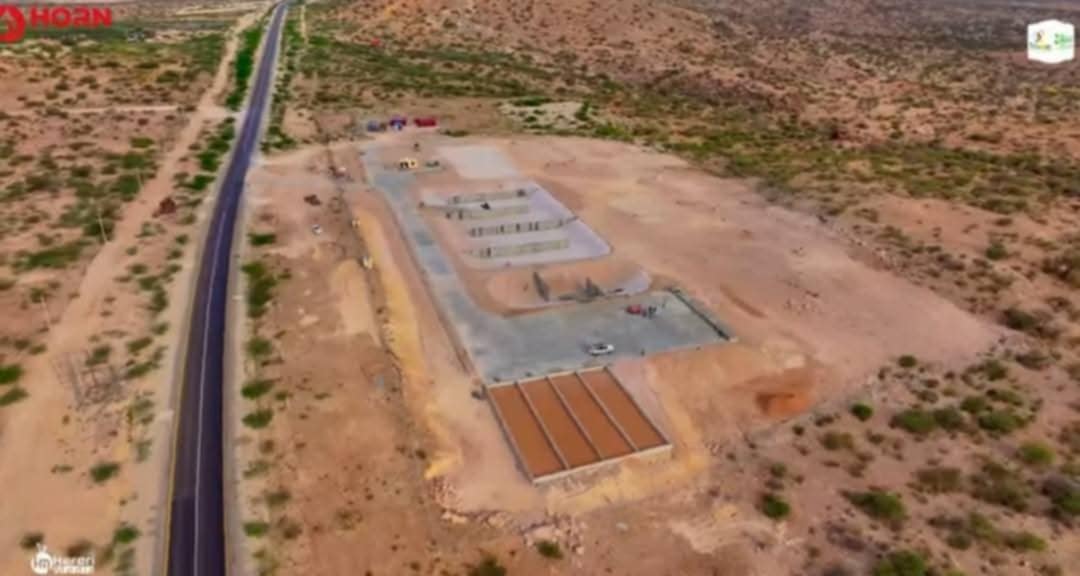
By: Khadir Dhore
-
Introduction
Naaso-Hablood is one of the most iconic landmarks of Hargeisa. Standing side by side on the eastern edge of the city, have long been a natural symbol of the Somaliland capital. In the soft light of early morning or during the golden hours of sunset, the hills release a warm glow, creating a gorgeous view for visitors. The surrounding landscape, spread with acacia trees (Geedka Qudhac ah) and seasonal greenery after the rains, enhances the site’s attraction. Naaso-Hablood is a much-loved landmark in Hargeisa, known for its peaceful beauty, unique twin-hill shape, and cultural importance. Its gentle slopes, open spaces, and wide views make it a perfect place for walking, sightseeing, and picnics, it will welcome visitors from across Somaliland and beyond, and with simple additions like shaded seating areas, information boards, and safe walking paths, and it will grow into an even more inviting tourism spot. Caring for its natural beauty and protecting it from damage will help it remain a proud symbol of Hargeisa offering attraction, relaxation, and cultural value for many years to come.
The blocked expansion of the city toward the east has led to poor waste and liquid management, causing pollution and bad odors that affect nearby districts like Maclin Harun, Gacan Libax, Hodan Hills, and Kaah. Chemicals such as nitrogen and phosphates (which can cause algae growth), aluminum and lime (used for disinfection and pH control), heavy metals like lead and mercury, industrial solvents like benzene and toluene, and untreated sewage contaminate soil and water, harming the environment and public health. While some of these chemicals are important for bacteria control, odor reduction, and wastewater treatment, they must be carefully managed to prevent environmental damage. Proper handling and eco-friendly treatment are essential to protect Naaso-Hablood’s natural beauty and the wellbeing of surrounding communities.
The project lacks a proper Environmental Impact Assessment, which goes against global standards for evaluating potential adverse effects. Without this assessment, the negative environmental impacts may be underestimated or overlooked, leading to harm to local ecosystems, public health risks, and unsustainable development in Eastern Hargeisa. Conducting a thorough assessment is essential to identify, mitigate, and manage these risks effectively
-
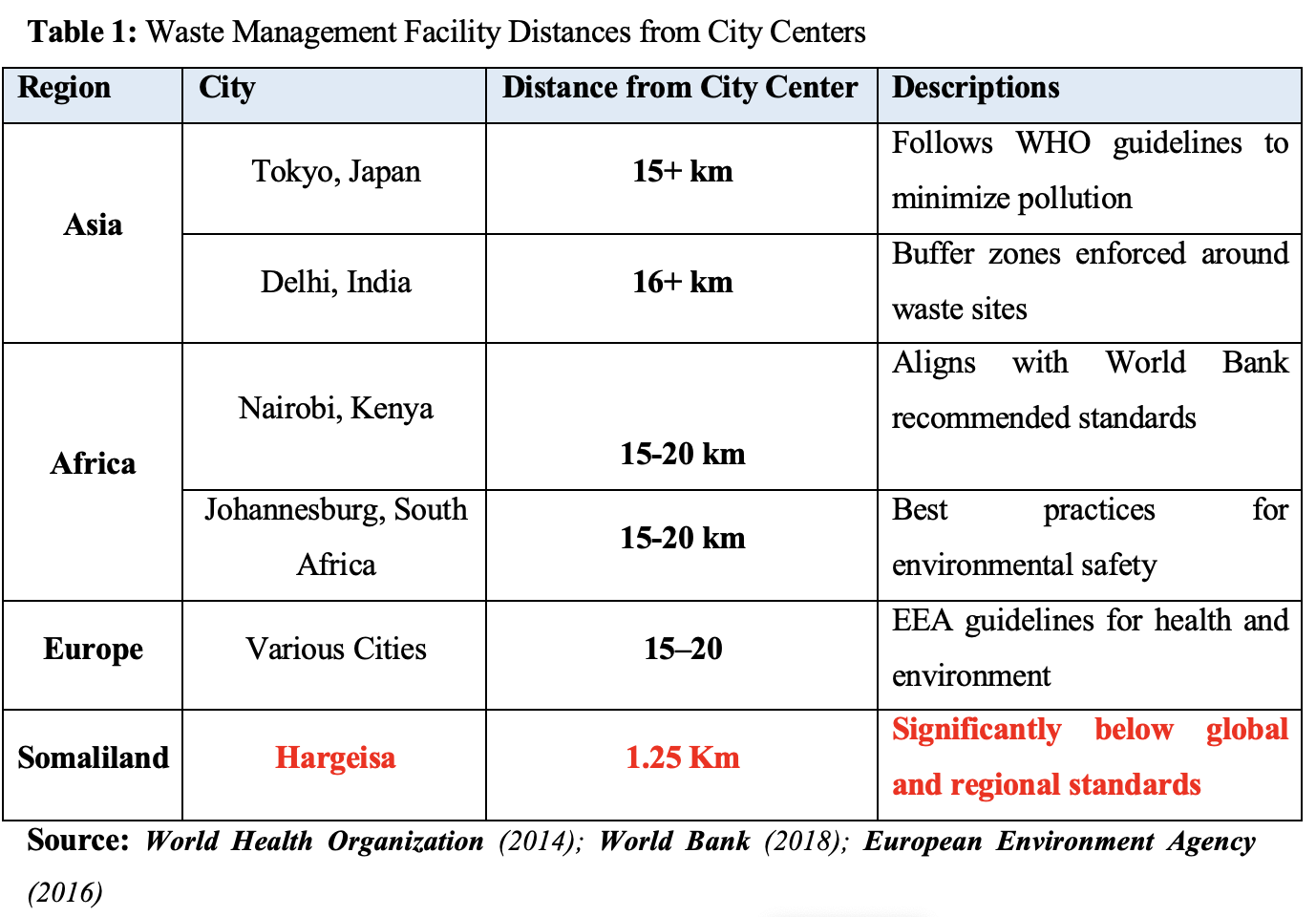
Waste Facility Distances: Global, Regional, and Hargeisa Comparison
Globally, effective waste and liquid waste management facilities are strategically located to minimize their impact on human health and the environment. In many parts of the world, including Asia, Africa, and Europe, it is common practice to site these facilities between 15 and 20 kilometers away from major urban centers. This distance helps reduce exposure to harmful pollutants, odors, and contamination risks for city residents. In Asia, major metropolitan areas such as Tokyo and Delhi strictly follow these guidelines, situating waste treatment plants and landfills well outside densely populated areas. For example, Tokyo’s waste management sites are typically located over 15 kilometers from residential zones to prevent air and water pollution and maintain urban livability (WHO, 2014). Similarly, in India’s capital, Delhi, authorities enforce buffer zones around waste sites to protect public health and reduce nuisance odors. In Africa, cities like Nairobi in Kenya and Johannesburg in South Africa also adopt similar approaches, locating waste disposal and treatment facilities 15 to 20 kilometers from city centers. This practice not only minimizes the risk of contamination to water sources and soil but also helps maintain the quality of life for urban populations living nearby (World Bank, 2018).
These distances align with best practices recommended by international organizations to safeguard both people and ecosystems. Europe, guided by the European Environment Agency (EEA), follows rigorous standards that place landfill sites and waste treatment plants at least 15 to 20 kilometers away from urban areas. This is intended to protect communities from potential health hazards, reduce environmental degradation, and control unpleasant odors that could affect daily life (EEA, 2016). In stark contrast, Hargeisa’s waste management site is located only about 1.25 kilometers from the city center. This proximity is far below accepted global and regional standards and raises serious concerns. Being so close to residential and commercial areas increases the likelihood of air and water pollution, foul odors, and contamination of local soil and water sources. Such conditions can lead to respiratory and other health problems for residents, reduce property values, and hinder urban development. Moreover, the close location puts pressure on the natural environment surrounding Naaso-Hablood, risking damage to one of Hargeisa’s most important natural landmarks and its growing suburbs. Without proper waste and liquid management practices that meet international standards, the environmental and social consequences could be severe and long-lasting. Therefore, to protect public health, preserve the environment, and support sustainable urban growth, it is essential that Hargeisa review the location of its waste management facilities. Relocating them to a safer distance aligned with global best practices and investing in modern treatment technologies will help the city avoid pollution problems and promote a healthier, cleaner living environment.
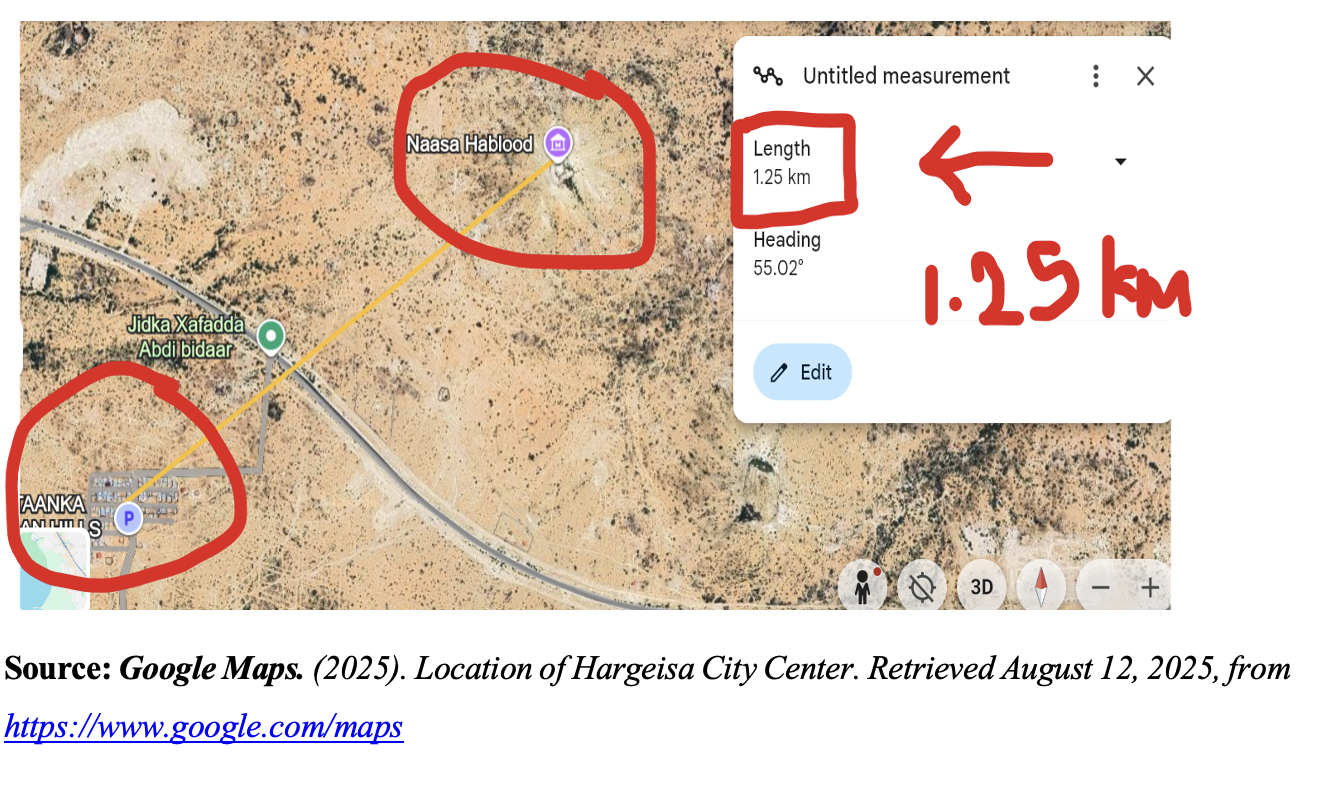
Source: Google Maps. (2025). Location of Hargeisa City Center. Retrieved August 12, 2025, from https://www.google.com/maps
-
Chemical Use and Impact in Waste Management: Disinfection, Treatment, and Environmental Concerns
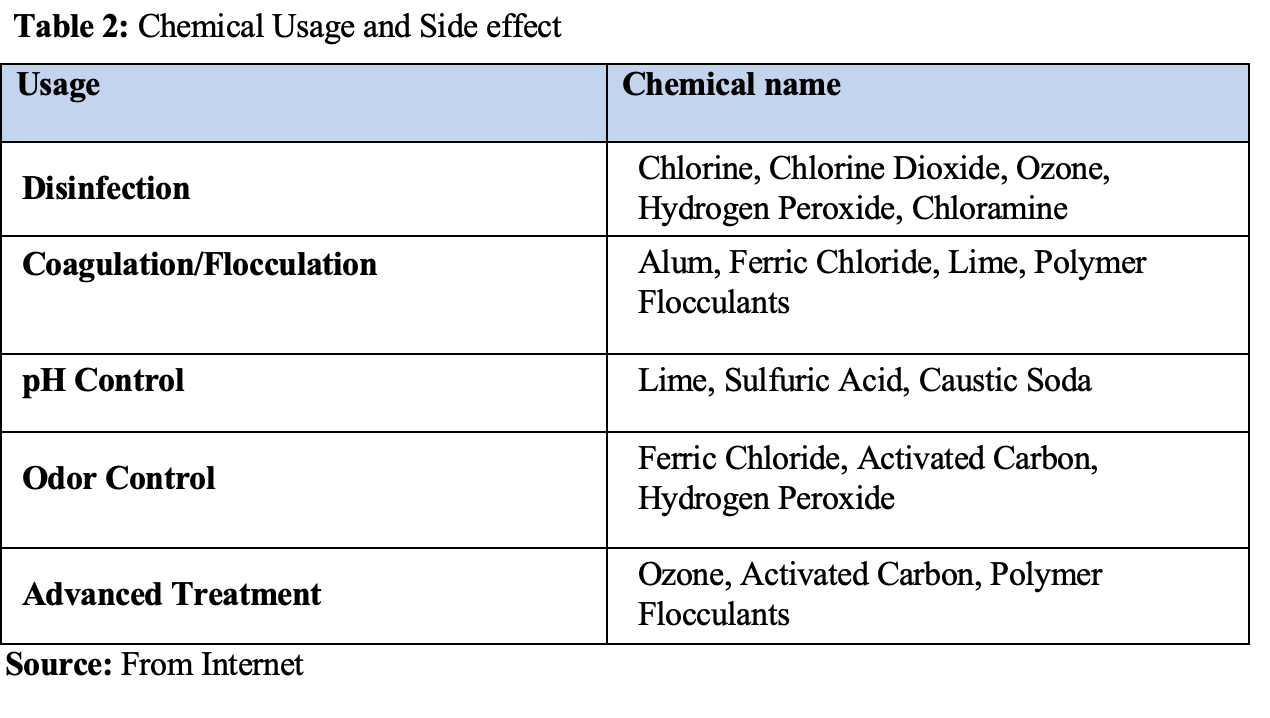
Waste management processes involve a variety of chemicals designed to treat wastewater, control odors, and ensure safe disposal. Key chemicals include chlorine (Cl₂), chlorine dioxide, ozone (O₃), aluminum sulfate, lime, sulfuric acid, activated carbon, ammonia, and sodium hydroxide. Each chemical has specific functions but can also cause environmental and health risks if mismanaged.
-
Disinfection: Chlorine (Cl₂), chlorine dioxide, and ozone (O₃) are widely used disinfectants in waste treatment. They kill harmful bacteria and pathogens to protect public health. For example, chlorine is commonly used due to its effectiveness and affordability; however, excessive chlorine discharge can produce harmful byproducts like trihalomethanes, which are carcinogenic (WHO, 2017). Ozone offers strong disinfection with fewer byproducts but is costly.
-
Coagulation/Flocculation: Aluminum sulfate (alum) and lime are frequently applied to aggregate suspended solids and contaminants, improving the clarity of treated water. Aluminum sulfate works by binding particles, while lime adjusts water chemistry to enhance coagulation. However, excess aluminum residues can accumulate in soil and water, posing toxicity risks to aquatic life (Morrison et al., 2016).
-
PH Control: Lime and sulfuric acid regulate pH during treatment to optimize chemical reactions and reduce corrosiveness. Improper use may lead to highly alkaline or acidic discharges, damaging ecosystems. Sodium hydroxide is also used to increase pH, but overuse causes environmental stress (EPA, 2014).
-
Odor Control: Ammonia and activated carbon help manage odors from waste. Activated carbon adsorbs volatile organic compounds (VOCs), while ammonia can neutralize acidic odors. Nonetheless, ammonia release in high amounts can cause respiratory irritation and contribute to eutrophication when entering waterways (Smith et al., 2015).
-
Practical Impacts from Global Waste Management Challenges
-
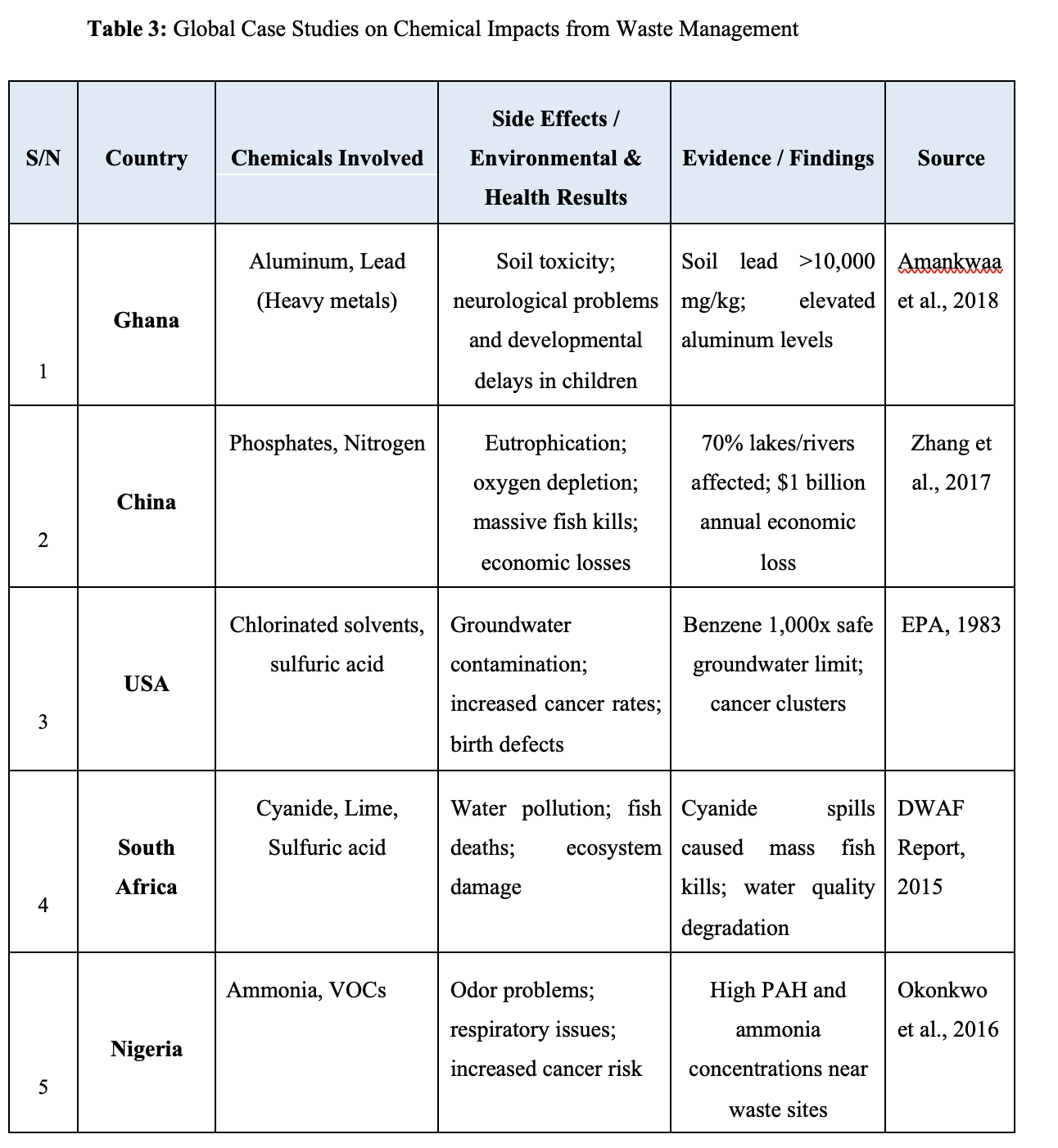
Ghana
In the Agbogbloshie area, one of the world’s largest electronic waste dumps, waste management practices rely heavily on chemicals like aluminum sulfate for coagulation in water treatment. However, poor disposal and runoff have caused high concentrations of aluminum and other heavy metals to accumulate in nearby soil and water sources. A 2018 study reported soil lead levels exceeding 10,000 mg/kg far above the US EPA’s safe limit of 400 mg/kg and found elevated aluminum levels toxic to both plants and humans (Amankwaa et al., 2018). Elevated heavy metals have been linked to neurological disorders and developmental delays in children living near the site. This shows how chemicals used in waste processing, when not carefully managed, can contribute significantly to environmental toxicity.
-
China:
Industrial discharge and improper chemical dosing have caused a surge of phosphates and nitrogen compounds in freshwater bodies, especially in the Yangtze River basin. According to Zhang et al. (2017), over 70% of lakes and rivers experienced eutrophication between 2010 and 2015, resulting in massive algal blooms. These blooms depleted oxygen, killing fish and harming biodiversity. The economic losses due to reduced fisheries, water treatment costs, and tourism decline were estimated at over $1 billion annually. The overuse and mismanagement of phosphate-based coagulants and nitrogenous waste highlight the environmental risks when chemical inputs in waste management exceed safe thresholds.
-
USA
The Love Canal disaster in Niagara Falls, New York, is a landmark environmental crisis. From the 1940s to 1950s, industrial solvents, including chlorinated solvents and sulfuric acid, were buried improperly, leading to leachate contaminating groundwater. By the 1970s, residents reported a spike in cancers, miscarriages, and birth defects. EPA testing revealed benzene levels in groundwater as high as 1,000 times the maximum contaminant level (EPA, 1983). The incident resulted in a federal emergency cleanup costing over $400 million and was a major impetus for the US Superfund program. This case clearly illustrates how hazardous chemicals improperly managed in waste sites can devastate communities.
-
South Africa
In 2015, a cyanide spill at a mining waste facility contaminated the Wonderfonteinspruit River near Johannesburg. The Department of Water Affairs and Forestry (DWAF) reported that pH alterations caused by lime and sulfuric acid usage in tailings ponds led to cyanide release, killing thousands of fish and severely degrading water quality (DWAF Report, 2015). The spill also posed risks to communities relying on the river for water. This event underscores the need for precise chemical management, especially regarding pH control agents, to avoid environmental disasters.
-
Pakistan and Nigeria
Waste treatment plants in urban centers like Karachi (Pakistan) and Lagos (Nigeria) have faced community complaints due to odors and poor air quality. Research by Khan et al. (2019) in Karachi found ammonia and volatile organic compounds (VOCs) such as benzene and formaldehyde released in concentrations exceeding WHO recommended air quality standards near waste sites. Similarly, Okonkwo et al. (2016) reported high levels of PAHs and ammonia causing respiratory issues and odor nuisances in Lagos communities. These chemicals are often used for odor control and disinfection but require careful handling to prevent harmful exposure.


Effects of Odor from Waste Sites on Nearby Communities
Hargeisa is one of the fastest-growing cities in Somaliland, with rapid housing and suburban expansion threatening the natural beauty and ecological integrity of the Naaso-Hablood hills. Unplanned development in this area could lead to severe environmental degradation, particularly due to waste mismanagement. Improper disposal of sewage and solid waste often results in the release of harmful chemicals such as chlorine (Cl₂), ozone (O₃), aluminum sulfate, and ammonia into the air and soil.
-
Health Impacts
-
Odors often come from gases like hydrogen sulfide (H₂S), ammonia (NH₃), and volatile organic compounds (VOCs). These can cause headaches, nausea, respiratory irritation, and eye discomfort among residents (Amoatey & Bani, 2011).
-
Long-term exposure may worsen asthma and other chronic respiratory conditions.
-
-
Quality of Life Decline
-
Persistent foul smells reduce outdoor activities and social interaction as people avoid open spaces near the source.
-
Sleep disturbances and stress increase due to constant odor nuisance.
-
-
Economic Effects:
-
Property values drop because of the unpleasant environment, making it hard for residents to sell or rent their homes.
-
Businesses may relocate, reducing local economic activity.
-
-
Displacement of Residents
-
When odors become unbearable, people often choose to move away, sometimes abandoning their homes entirely. This leads to social disruption and increased housing demand elsewhere.
-
In some documented cases, entire neighborhoods near waste sites have seen significant population decline due to odor and pollution issues (UNEP, 2007).
-
-
Environmental Degradation:
-
Odorous gases can contribute to acid rain and soil contamination, further harming local vegetation and biodiversity.
-
To Hargeisa Water Agency
It has been reported that this project cost 4 million dollars; however, the city of Hargeisa continues to face severe water shortages. Given this ongoing challenge, what are your plans for effective waste management in a context of limited water availability? Despite the substantial financial investment, the persistent scarcity of water in Hargeisa raises serious concerns about the viability and effectiveness of current waste management and sanitation efforts. Efficient sewage treatment and sanitation systems are highly dependent on a reliable water supply. Without addressing the underlying water shortage, it will be increasingly difficult to manage waste properly and safeguard public health. Therefore, it is crucial to integrate water resource management with waste treatment strategies to ensure sustainable urban development and improve living conditions for Hargeisa’s growing population.
Recommendations
-
Relocate waste and liquid management facilities away from Naaso-Hablood and residential areas, given the current site’s proximity (1.25 km from Hargeisa city center). The relocation to sites at least 15–20 km away should be directed by His Excellency, the President of Somaliland, Abdirahman, to order the closure of the current site.
-
Conduct comprehensive Environmental Impact Assessments (EIAs) before establishing or expanding waste sites to identify potential environmental and social impacts. This process should be overseen by the Ministry of Environment and Climate Change to ensure adherence to global and regional environmental standards.
-
Enforce strict zoning and urban growth controls to protect Naaso-Hablood and surrounding suburbs from unplanned construction and waste site encroachment through coordinated efforts of relevant urban planning authorities. By Ministry of Local Government
-
Create legally protected buffer zones around Naaso-Hablood and other natural landmarks to prevent urban sprawl and pollution impacts, with responsibility assigned to the Ministry of Trade and Tourism.
-
Enhance community awareness and participation by educating local communities on waste management best practices and involving them in monitoring and reporting pollution issues, under the guidance of the Ministry of Information and Cultural Orientation.
-
Improve municipal waste collection and disposal systems to prevent illegal dumping and reduce environmental contamination in expanding urban areas, a role to be fulfilled by the Local Government of Hargeisa.
-
Strengthen the technical and regulatory capacity of Somaliland’s environmental and urban planning authorities to enforce laws and manage waste effectively, supported by the broader Government of Somaliland.
Appendixes
Reaction of the Community Inhabiting Maclin Harun District
Watch here: https://www.facebook.com/share/v/19Z3WdE6p6/
Environmentalism expert: Ahmed Ibrahim Awale discuss negative impact of this project
Watch here: another video https://fb.watch/Bg502edUiv/?mibextid=SphRi8
Traditional leaders, Academic figure, other community parts that against this projects
References
-
European Environment Agency (EEA). (2016). Landfill and Waste Treatment Guidelines. European Environment Agency. https://www.eea.europa.eu
-
World Bank. (2018). Solid Waste Management in Africa: Challenges and Best Practices. World Bank Publications. https://www.worldbank.org
-
World Health Organization (WHO). (2014). Guidelines for Safe Waste Disposal. World Health Organization. https://www.who.int
-
United Nations Environment Programme (UNEP). (2017). Waste Management Practices and Environmental Protection. UNEP Publications. https://www.unep.org
-
Amankwaa, G., et al. (2018). Heavy metal contamination in Ghana’s urban waste sites. Science of the Total Environment. https://doi.org/10.1016/j.scitotenv.2018.01.042
-
Zhang, W., et al. (2017). Nutrient pollution and eutrophication in China’s freshwater lakes. Environmental Science & Pollution Research. https://doi.org/10.1007/s11356-016-8235-2
-
S. Environmental Protection Agency (1983). Love Canal: A Special Report. https://www.epa.gov/history/love-canal-tragedy
-
Department of Water Affairs and Forestry (2015). Water Quality Management Report – South Africa. https://www.dws.gov.za/
-
Khan, S., et al. (2019). Air quality impacts from waste facilities in Pakistan. Environmental Monitoring & Assessment. https://doi.org/10.1007/s10661-019-7250-3
-
Okonkwo, C., et al. (2016). Volatile organic compound emissions from Nigerian waste sites. Journal of Environmental Science and Health. https://doi.org/10.1080/10934529.2016.1170440