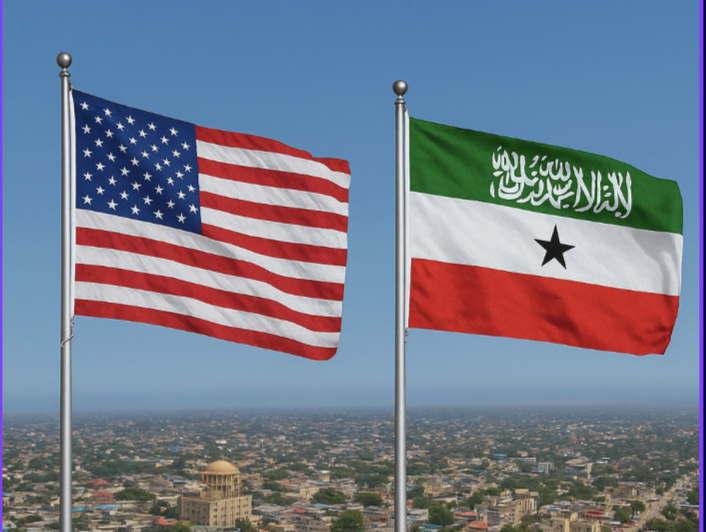
Inspired by the introduction of the Somaliland Economic Access and Opportunity Bill in the U.S. Congress, this article explores the health assistance opportunities available to Somaliland under the new America First Strategy for Global Health. The Somaliland Economic Access and Opportunity Act (H.R. 7993) seeks to address Somaliland’s limited access to global financial systems by mandating the U.S. Treasury to identify legal, regulatory, and technical barriers that hinder Somaliland’s participation in banking, remittances, and international financial institutions. Furthermore, the bill evaluates Somaliland’s adherence to anti-money laundering and counter-terrorism financing standards and suggests measures to enhance transparency and financial integration. Although it does not immediately alter policy, it aims to bolster U.S.–Somaliland economic engagement and support future trade and investment opportunities.
While this initiative is commendable, a more feasible task would be to facilitate Somaliland’s access to U.S. foreign assistance, particularly in light of the shift in the U.S. framework for international assistance to less developed nations. The America First Global Health Strategy (2025) represents a shift in U.S. global health policy from a primarily humanitarian approach to one that prioritizes advancing national interests. It emphasizes that global health investments should directly benefit the United States by enhancing health security, bolstering the economy, and reinforcing geopolitical influence.
The strategy is structured around three main pillars: making America safer, stronger, and more prosperous. The “safer” pillar focuses on preventing and controlling infectious diseases through improved global surveillance, early detection, and rapid response systems. The “stronger” pillar aims to enhance the efficiency and accountability of global health programs. The “more prosperous” pillar underscores how global health investments can support U.S. innovation, research, and economic growth.
A significant aspect of the strategy is a shift from multilateral approaches to bilateral partnerships with individual countries. These agreements outline shared priorities, funding responsibilities, and measurable outcomes, aiming to increase accountability and align programs with U.S. strategic interests. The strategy also advocates for country ownership and co-financing, encouraging partner countries to gradually assume more financial responsibility for their health systems. While U.S. support for essential services—particularly for HIV/AIDS, tuberculosis (TB), malaria, maternal and child health, polio eradication, disease surveillance, and infectious disease outbreak response and preparedness—continues, it is expected to diminish over time as domestic investments increase.
Overall, the America First Global Health Strategy seeks to enhance efficiency, reduce dependency on foreign aid, and ensure measurable returns on investment. It represents a strategic and interest-driven approach, positioning global health as both a security priority and a tool of foreign policy. The U.S. bilateral health agreements with Ethiopia, Kenya, Rwanda, and Uganda—under the America First Global Health Strategy—focus on strengthening health systems while advancing shared responsibility. These multi-year compacts prioritize HIV/AIDS, tuberculosis, malaria, and pandemic preparedness, alongside broader system reforms. A central feature is country ownership, with partner governments increasing domestic financing and gradually reducing reliance on U.S. aid. The agreements emphasize direct government-to-government funding, improved efficiency, and measurable outcomes. While they aim to enhance sustainability and accountability, concerns persist about reduced funding, implementation capacity, and the potential impact on broader health services and equity.
Currently, the total budget of the USA and East African countries that have successfully signed a bilateral health agreement with America stands at $6.3 billion across the four countries, with Ethiopia receiving $1.46 billion, Kenya $2.24 billion, Uganda $2.2 billion, and Rwanda $228 million. Somaliland already ranks among the most perilous places in the world to give birth or be born. Climate change-driven internal displacement, gross underfunding of the health system, and persistent droughts have fractured public infrastructure, making health access difficult in many regions. Maternal mortality is at 692 deaths per 100,000 live births, and nearly 1 in 10 children in Somaliland do not survive to age five.
The Ministry of Health Development oversees policy and coordination, including the implementation of EPHS. Due to insufficient capacity, coordination is weak, and health programs are implemented in a fragmented manner by various NGOs, leading to overlap and resource wastage. Regulation is inadequate, and there is widespread malpractice and negligence in Somaliland’s healthcare system.
Health services in Somaliland are delivered through a decentralized network aligned with the Essential Package of Health Services (EPHS), including primary health units, health centers, and hospitals. Despite expansion, access remains uneven, particularly in rural areas. Utilization indicators remain low, with skilled birth attendance estimated at around 31%, and facility-based deliveries similarly limited. Somaliland faces a critical shortage of health workers, with a density of just 0.92 health workers per 1,000 people, significantly below the World Health Organization’s minimum threshold of 4.45 per 1,000 necessary for providing essential services and advancing toward Universal Health Coverage. The Somali Health and Demographic Survey 2020 reports that only 49% of births are attended by trained health personnel due to limited infrastructure, insecurity, and cultural norms, compounded by a shortage of trained staff and financial barriers. This shortage is further exacerbated by the lack of training programs and retention strategies, restricting the ability to respond effectively to health crises and outbreaks.
In 2017, the online District Health Information Software (DHIS2) platform for HMIS was introduced in all districts in Somaliland to collect, report, analyze, visualize, and support the dissemination of HMIS data for all programs, including the Expanded Program of Immunization and malaria. At the same time, revised data tools were introduced. However, subsequent reviews of the HMIS reveal a weak system requiring continuous support for all components of the health information system. The availability of medicines has improved but remains inconsistent due to supply chain challenges. Stock-outs of essential drugs are common, affecting treatment outcomes for conditions such as malaria and childhood illnesses. The system heavily relies on out-of-pocket payments, estimated at over 65% of total health expenditure, creating financial barriers. Government health spending remains as low as 3% of total public expenditure, contributing to inadequacies and inequities in access and service utilization.
Sustained donor support over the past decade, led by America, has improved these bleak outcomes for Somaliland. American investments have helped expand access to essential services and contributed to measurable improvements in child survival, vaccination coverage, and outbreak preparedness in Somaliland’s most vulnerable regions. However, that progress is now in jeopardy. In recent months, USAID, the most significant and reliable funder of health in Somaliland, was abruptly dismantled. Other donors, including the United Kingdom, Germany, and Scandinavian countries, have also reduced their commitments. Organizations are struggling to keep their programs running. Clinics are closing, health workers are unemployed, and Somaliland children and mothers are again dying of measles, diarrhea, and hunger. But this isn’t just another humanitarian crisis in a remote part of the world. It’s a nation that fulfills all three criteria for the new American Framework for Assistance: making America safer, more prosperous, and stronger.
Somaliland recently received official recognition as a sovereign state from Israel, a close ally of the United States. Somaliland also maintains diplomatic and economic ties with Taiwan, despite China’s opposition. Taiwan is also a close pro-democratic ally of the USA. Somaliland is a democratic, peaceful, and pro-American nation strategically located at the gateway of the Bab el-Mandeb Strait in the Gulf of Berbera, with an 850km coastline. The president of Somaliland has repeatedly declared that Somaliland is willing to provide rare minerals and a military base at the strategic port city of Berbera to the US in exchange for recognition or strong diplomatic engagement from the US. Somaliland meets all three criteria for U.S. foreign assistance, making America safer, stronger, and more prosperous. Somaliland is an ideal candidate for receiving American bilateral health agreements and other bilateral assistance from the USA.
Therefore, I urge our ambassador to the United States, Dr. Bashir God, and his team to explore all possible avenues to secure access for Somaliland to U.S. foreign assistance based on the new American foreign assistancemodels, such as the America First Global Health Strategy 2025.
About the Author
Dr. Mohamed Bobe, The Author currently works with OPM as public health expert. He was a technical health advisor for Save the Children Somalia and Somaliland and faced redundancy following USAID funding cut in 20225.
The views expressed in this article are the author’s own and do not necessarily reflect the Horndiplomat editorial policy.
If you want to submit an opinion piece or an analysis, please email it to Opinion@horndiplomat.com. Horndiplomat reserves the right to edit articles before publication. Please include your full name, relevant personal information, and political affiliations.