
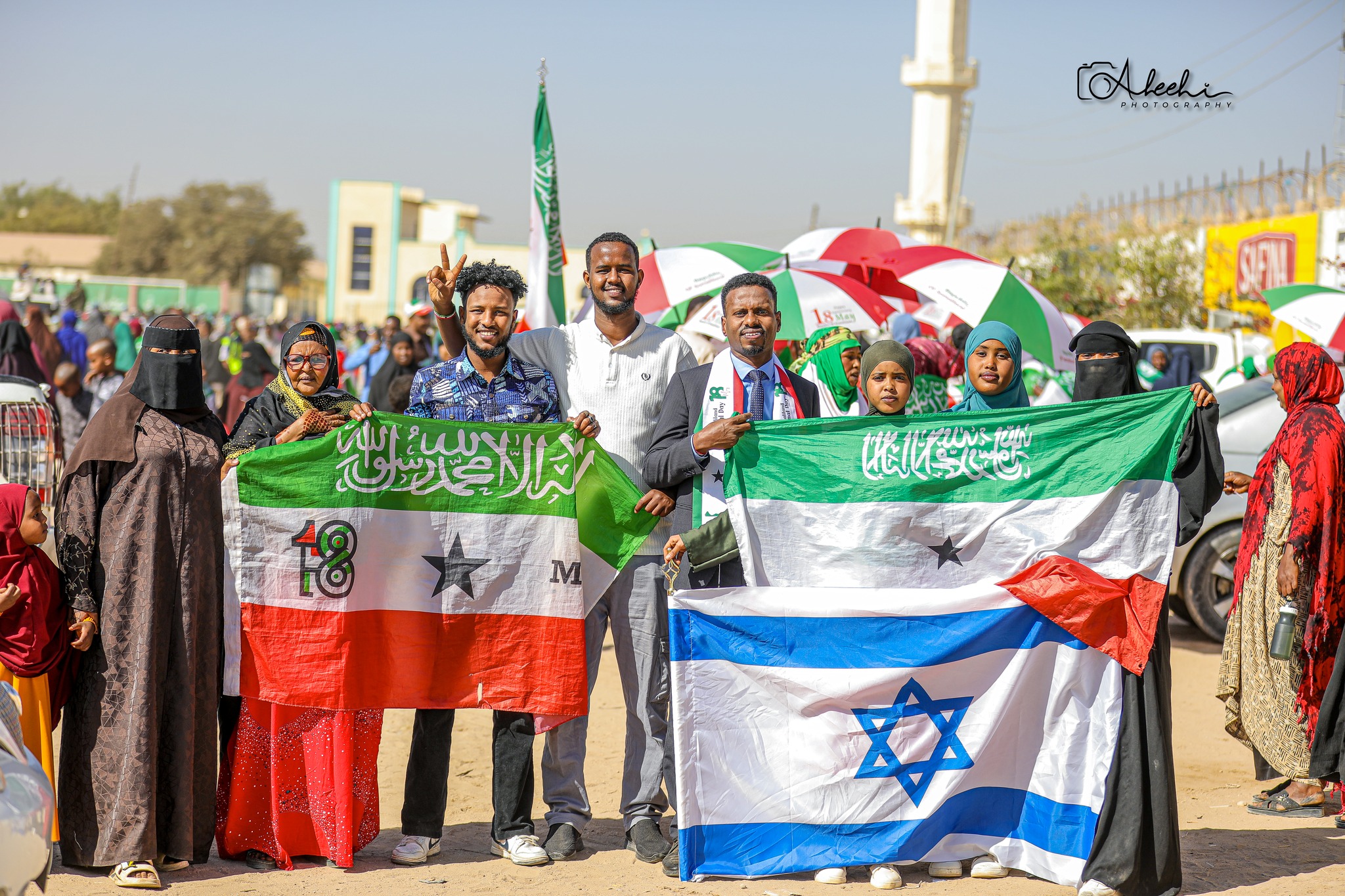
By: Guled Ahmed Hashi
In December 2025, history recorded a long-awaited moment: Israel became the first country to recognize Somaliland as an independent state. For a nation that has walked quietly for more than three decades, building peace with its own hands and democracy from its own soil, this recognition arrived like dawn after a long night. Somalilanders everywhere felt seen, valued, and heard, not as a breakaway story, but as a nation with dignity, patience, and resilience. It was more than a diplomatic decision; it was a message to the world that Somaliland’s calm success deserves to be saluted.
Now that one door has been opened, we stand with hope, speaking confidently that the world will also follow the path of recognition rather than demanding or yelling.
There is a tiny country on the Horn of Africa that seldom yells, demands, or threatens, but maintains its dignity in the face of a world full of headlines about conflict, crises, and unstable governments. Somaliland is that country. Its tale, which is one of self-made peace, democratic culture, and the bravery of a people who refused to let war define them, is quiet but impactful.
Recognition is the international system’s way of saying, “We see you, we acknowledge your sovereignty, and we accept your place among nations.” It is more than just a legal stamp. Somaliland has been waiting for that sentence for over thirty years. It has accomplished stability, elections, and internal peace—things that many acknowledged states still find difficult to sustain—mostly in secret.
A Nation born From Its Own Roots, Not Drawn on Paper
Somaliland emerged from a genuine historical foundation rather than from conference tables or foreign military intervention. After gaining complete independence on June 26, 1960, Somaliland—which had previously been a British Protectorate—was formally recognized by more than 35 countries in a matter of days. However, Somaliland gave up its sovereignty to create the so-called Greater Somali Republic in an act of hope and solidarity. But the unity that was envisioned did not materialize.
For nearly 30 years, Somaliland endured power imbalance, humiliation, massacres, and genocide, leaving scars that history cannot erase.
In 1991, with dignity rather than despair, the people of Somaliland chose to regain theircsovereignty , not through foreign intervention but through the wisdom of elders, community negotiation, and national consensus. While many nations require imported peacekeepers, Somaliland built peace from within, guided by the traditional shir — a grassroots system of dialogue and conflict resolution.
If recognition is truly based on responsibility, stability, and self-governance, then Somaliland stands as proof that it deserves its rightful place among nations
Democracy Practiced, Not Promised
Many governments promise democracy; Somaliland lives it in full daylight. Where others speak of reforms, Somaliland has done the work silently, brick by brick, election by election. Five peaceful presidential elections, parliamentary votes that brought both government and opposition to the table, and a culture where political parties compete, not with bullets, but with elections. In Somaliland, debate is not a threat; it is the oxygen of public life. The parliament argues, journalists publish, citizens criticize freely in tea shops and online, not in whispers, but confidently. Recognition should not be measured by wealth or territory, but by values demonstrated under pressure. And for 35 years, Somaliland has been stress-tested by droughts, international isolation, and economic hardship, yet never traded democracy for dictatorship, nor stability for chaos.
While the neighbors have struggled and fractured, Somaliland has stood its ground. This wasn’t because of some massive foreign bankroll; it happened because the people decided they’d rather have the rule of law than live in fear.
Look at what 35 years of that choice have built. They didn’t import a government; they wrote their own constitution and put it to a public vote. They have a currency that people actually trust and use, even without outside backing. There’s a single national army under one flag, not a mess of competing warlords. They’ve kept the peace without needing foreign soldiers to do it for them.
You observe a genuinely vibrant society—universities, media organizations, and youth clubs all flourishing despite the complete absence of global acknowledgment. Women are claiming their positions in a society that was once entirely male-dominated. The diaspora remits funds to construct hospitals and roads out of true affection for the area, not out of obligation. The Port of Berbera is becoming a significant trade center, connecting this region of Africa with the global market
These are not aspirations outlined in policy documents — they are experienced realities. They are real. They operate. They persevere. If democracy is genuinely the principle the world asserts to uphold, then why is Somaliland honored yet unrecognized? Why is the continent’s longest-standing democratic effort celebrated from a distance, while being left out by nations that accomplished less? Somaliland has responded to the inquiry of “Is it possible for Africa to establish democracy?” Indeed, and we accomplished it with determination, solidarity, and recollection of suffering. Somaliland is not a concept. This is evidence. Not a guarantee. An exhibition. Not a demand. An outcome
Strategic Geography With Responsible Behavior
Adjacent to one of the globe’s most active shipping routes — the sea path connecting Europe, Asia, and Africa — Somaliland neither cries out for recognition nor incites instability. It remains vigilant. While others in the area have faced challenges with piracy, extremism, and external meddling, Somaliland opted for a different path: prioritizing responsibility instead of disorder, and fostering cooperation rather than conflict. Its extensive and strategic shoreline has turned into a barrier for international commerce. Cargo vessels navigate securely beneath its oversight; military allies collaborate silently with its harbors; intelligence agencies share insights for the sake of worldwide safety
Somaliland did not require recognition to function as a state, it has operated as such for 35 years. It has collaborated in counter-terrorism, prevented extremist infiltration, and aided regional stability without seeking recognition. Although instability has driven millions to seek refuge in other lands, Somaliland has welcomed refugees, upheld internal peace, and halted its territory from becoming a base for threats. Every day, the world gains from Somaliland — although many do not recognize the quiet efforts that safeguard the trade routes essential for fuel, food, and resources.
Acknowledgment would not foster a new partner. It would merely recognize one that is already present, dependable, verified, and established
Justice and Recognition: A Matter of Principle
If countries like East Timor, South Sudan, and Kosovo received recognition via self-determination, then one should question: what principle could fairly refuse Somaliland this same opportunity? Somaliland has consistently shown its dedication to peace, democracy, and efficient governance throughout the years. Its situation does not contest international law; instead, it exemplifies that law’s commitment — that recognition is due to fairness, stability, and accountable self-governance
Acknowledgment should be inclusive, not limited to those with prominent narratives or complex challenges. Stability ought to be appreciated, not ignored. Achievements deserve recognition, even when they arrive subtly. Somaliland does not aim to assert itself or request privileges; it seeks the respect earned through consistently, responsibly, and transparently fulfilling statehood obligations. Recognizing Somaliland signifies that the global community appreciates principled leadership and acknowledges those who deserve it
It is not only an act of justice for Somaliland, it is an affirmation of the integrity of the global system itself.
Because Recognition Would Inspire More Than It Rewards
Acknowledgment must be inclusive and not limited to those with prominent narratives or complicated challenges. Stability deserves recognition, not neglect. Accomplishments deserve recognition, even when they arrive silently. Somaliland does not aim to assert itself or request favors; it seeks the respect that arises from consistently, responsibly, and transparently fulfilling the obligations of statehood. Recognizing Somaliland signifies that the global community appreciates principled governance and rewards those who deserve it
Recognition evolves into more than just a political gesture; it transforms into a declaration of worldwide coherence. If the world honors those who ascend through conflict but overlooks those who achieve without it, what message do we convey to future generations? Somaliland opted for voting instead of violence, councils instead of armed groups, and harmony instead of revenge — shouldn’t that decision be honored rather than ignored? A recognized Somaliland would elevate its own citizens and reinforce confidence in a model rarely acknowledged: peace led by Africans, democracy nurtured by Africans, and success in Africa without reliance on others. It could motivate other areas to realize that stability is possible without outside forces, and that statehood can be attained through dedication, perseverance, and solidarity. Recognition would not talk legitimacy to Somaliland — it would simply validate what is already present. The reward would extend well beyond Hargeisa’s limits — resonating throughout the Horn, throughout the continent, throughout history — demonstrating that steady determination can influence nations
A Final Thought: The World Does Not Need to Create Somaliland
A concluding idea. The world doesn’t need to establish Somaliland — it simply needs to recognize it at last. For over thirty years, Somaliland has managed its own affairs with stability, protected its territories with bravery, and nurtured a young generation under a banner they trust. This isn’t a dream looking to emerge — it’s a nation that is already thriving. It does not seek a throne, merely a place at the table of nations. The obligation now transitions.
The responsibility of proof has shifted from Somaliland to the global community that has observed its stability increase while others have faltered. History might eventually reflect and pose a straightforward yet challenging question to the leaders of today: when a tranquil African democracy sought entry, why did you delay in welcoming it? And perhaps, following Israel’s recent acknowledgment and the message it conveys globally, that response will finally change. Recognition is no longer a privilege — it is a long-awaited acknowledgment. Somaliland has demonstrated its resilience, time has challenged it, and optimism has sustained it. The world must now align with reality