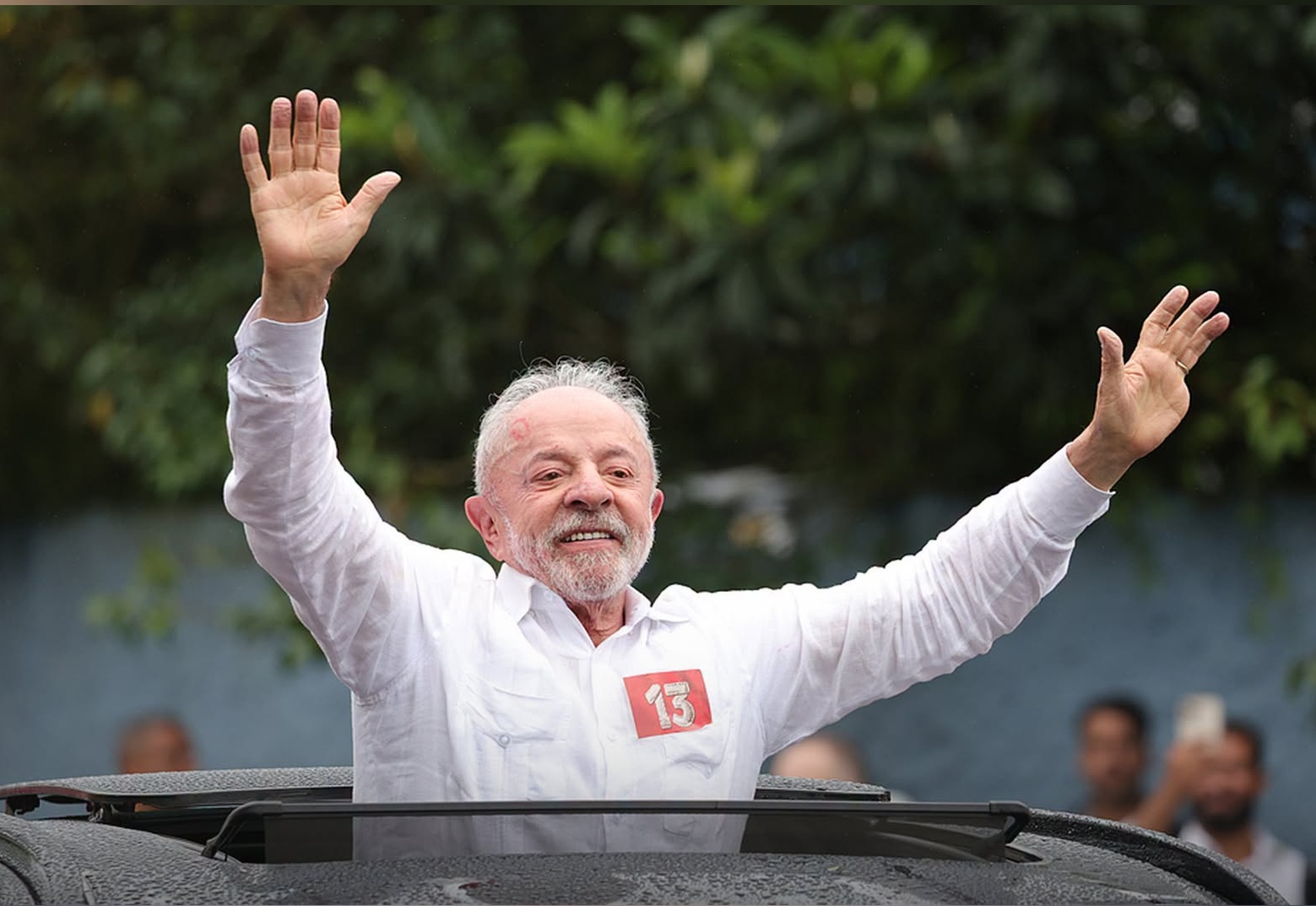
BRASILIA, Brazil, Oct. 26 (Horndiplomat) — Brazilian President Luiz Inácio Lula da Silva has secured a historic fourth nonconsecutive term after defeating right-wing Senator Flávio Bolsonaro in a closely contested presidential runoff, according to official election results released on Sunday.
Lula, the candidate of the left-wing Workers’ Party, received 51.79% of valid votes, compared with 48.21% for Bolsonaro, according to Brazil’s Superior Electoral Court.
The electoral authority said Lula secured 64.25 million votes against Bolsonaro’s 59.82 million, giving the incumbent a victory margin of more than 4.4 million votes.
The result marks another political comeback for Lula, who previously governed Latin America’s largest economy from 2003 to 2010 before returning to the presidency in January 2023.
The election followed a bitter campaign that exposed deep political divisions over economic management, public security, social welfare and Brazil’s international relationships.
Bolsonaro, the son of former President Jair Bolsonaro, had led the first round of voting on October 4, receiving approximately 47% of the vote against Lula’s 45%. However, the incumbent recovered enough support during the runoff campaign to reverse the result.
Flávio Bolsonaro refused to concede defeat and called for the election results to be annulled, raising objections to a decision by electoral authorities to extend voting hours because of disruptions on election day.
Lula’s victory makes him the first Brazilian president to win four presidential elections, extending a political career spanning more than four decades.
Born on October 27, 1945, in northeastern Brazil, Lula rose from a working-class background to become one of the country’s most influential political figures.
He began his career as a metalworker before emerging as a prominent trade union leader during Brazil’s military dictatorship. In 1980, he helped establish the Workers’ Party, which later became a major force in Brazilian politics.
After unsuccessful presidential campaigns in 1989, 1994 and 1998, Lula won his first election in 2002 and secured re-election in 2006. He returned to power after defeating Jair Bolsonaro in the 2022 presidential election.
His latest victory comes as Brazil faces continued pressure to address living costs, economic inequality and public security concerns while maintaining its influence in Latin America and international diplomacy.
Lula is expected to begin his new four-year presidential term on January 5, 2027, extending his leadership of one of the world’s largest democracies.