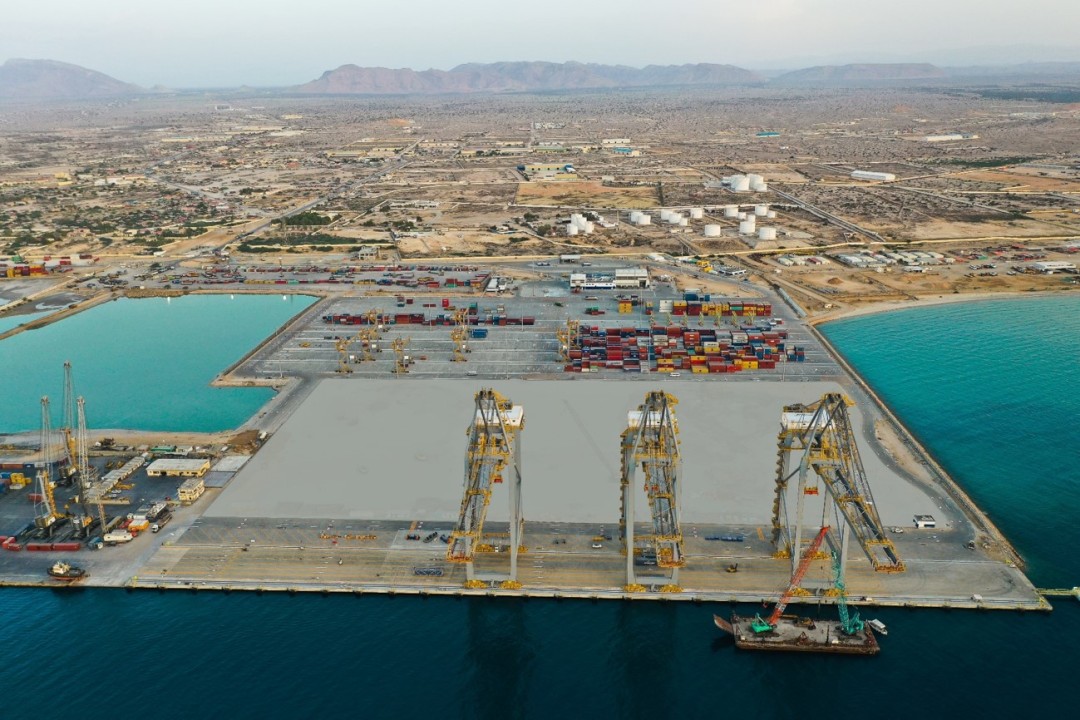
Transforming Berbera into a world-class centre of trade
By:Dr. Mohamed Awil Ali
The Middle East Crisis and the Somaliland case
One of the most critical maritime routes, through which 10-15% of global trade passes, is the Red Sea corridor, which connects Europe and Asia to Africa and is currently facing security challenges and trade barriers. Bab Al Mandab Strait in the Red Sea is a vital artery and checkpoint for shipping lanes and the transit of energy exports between countries.
The ongoing conflict in the Middle East, the disruption of the Hormuz Strait that has globally affected the energy market, maritime transport safety, and, in general, the global supply chain, and the war between the Saudi-backed Yemeni government and the Houthis, which shattered a years-long informal truce in July, escalated sharply in the past few days, when the Houthis struck energy infrastructure deep inside southern Saudi Arabia, hitting facilities near a major refinery at Jazan and reportedly wounding over seventy people and others who have been displaced to Djibouti and the western Red Sea coast.
The Houthis have also declared what they call a maritime blockade against Saudi Arabia, explicitly warning shipping lines against calling at Saudi ports. This all has pushed the international community, oil manufacturing companies in the Middle East, and world leaders to find sustainable solutions not only for the US-Iranian war crisis in the Middle East that moved to the water, but also for the Houthis ‘ recent years’ attacks on the Red Sea corridor and Bab Al Mandab Strait.
The Red Sea’s strategic importance, as outlined above, has also intensified regional competition. Gulf states, Türkiye and other external actors are becoming more involved in the Horn of Africa through investment. A very classic example of this investment and economic development partnership is the UAE and Dubai giant logistics company DP World’s investment to transform Berbera Port in Somaliland into a regional trade hub connecting the world to Africa.
In this regard, many political analysts in the south see the Somaliland case as an ultimate strategic country that the United States and its allies should consider to ease regional geopolitical tensions. Israel takes the ultimate risk and becomes the first country to formally recognise Somaliland on December 26, 2025, a bold diplomatic move between the two countries that is based on mutual interest.
Beyond recognition, Somaliland’s strong internal security record, geographical location, and 850 km coastline on the Gulf of Aden give it strategic value. The country offers emerging investment opportunities in livestock, fisheries, agriculture, and rare minerals, which attract global powers and international investors due to Somaliland’s peace and stability.
Somaliland’s Consistent Role in Global Maritime Trade
Competition for maritime trade and port infrastructure development is intensifying dramatically in the Horn of Africa. This competition is not merely based on economic growth but, most importantly, on geopolitical influence in the region.
While Djibouti is expanding its existing corridor, the DESSU (Djibouti–Ethiopia–South Sudan–Uganda) corridor is designed to connect landlocked countries in the region to the port of Djibouti, and the LAPSSET corridor, which connects Kenya, Ethiopia, and South Sudan through Lamu Port to promote regional economic integration, is underway with an estimated cost of 25 billion US dollars.
Somaliland is not standing by; it is scaling its international engagement, economic development partnerships, and trade facilitation agreements through the Berbera Port, Berbera corridor, and Berbera Economic Zone, a connectivity hub near the Bab-el-Mandeb Strait, a vital maritime checkpoint in the Red Sea corridor with significant geopolitical importance due to external power interests.
The partially recognized nation has consistently maintained its coastline with no piracy or other maritime problems recorded for the past 35 years. Securing the Red Sea corridor from potential maritime conflict and disruption in global shipping lanes requires global efforts and geopolitical realignment. For instance, Israel, leveraging its emerging partnership with Somaliland, can play a pivotal role in coordinating a broader regional security framework across the Horn of Africa, and as President Abdirahman said, Somaliland is a trusted partner in both security and trade.
Somaliland in Washington
President Abdirahman Irro and his delegation are currently on a working visit to Washington to meet diplomatic allies and US officials, including Senator Ted Cruz, the Chairman of the Senate Foreign Relations Subcommittee on Africa and Global Health Policy, a leading advocate for Somaliland recognition, and Congressman Republican Brian Mast, the Chairman of the House Committee on Foreign Affairs. Somaliland’s strategic location for the US stability and mission in the Horn of Africa, particularly securing the Red Sea corridor and the Gulf of Aden coastline, is at the top of the agenda. The visit comes at a time when there are recent security developments in the Red Sea corridor and Bab Al Madab strait; the key shipping route has almost become under the control of Houthis. This will accelerate their already existing attacks on Saudi oil tankers and other fuel facilities, and will put global trade and the Horn of Africa’s stability under threat.
President Irro delivered keynote speech at the Hudson Institute, a very prominent think tank in the US capital, about the strategic role of Somaliland in the Horn of Africa, where he shared deep and clear insights about Somaliland’s past 35 years of state building, democracy in action, and its major role in protecting its borders and 850 Km coastline and territorial waters from any potential piracy and shipping vessel threats, with the aim of consistent maritime global trade even without international recognition and institutional maritime operational training support.
Earlier this month, President Irro attended the Middle East-American Dialogue “MEAD” where he reiterated the importance of Somaliland-US partnerships for regional stability and confronting terrorism. The president reaffirmed that Somaliland has the resources and commitment to turn its partnerships with global allies, including the US, Israel, and Taiwan, into tangible results for the benefit of the wider region.
To sum up, President Irro’s diplomatic engagement with US policymakers and this exceptionally critical time could encourage the US administration to take bold steps and recognise Somaliland, given the fact of its significant location, role in maritime security, investment, and other mutual interests that perfectly align with US foreign policies.
About the Author
Dr. Mohamed is a Chevening alumnus, multilingual veterinarian, and political analyst with over 8 years of professional experience in livestock management, natural resources, trade, ports development, and One Health. He is currently a member of the Waddani opposition party in Somaliland and one of the active scholars working closely with the president of Somaliland.
The views expressed in this article are the author’s own and do not necessarily reflect the Horndiplomat editorial policy.
If you want to submit an opinion piece or an analysis, please email it to Opinion@horndiplomat.com. Horndiplomat reserves the right to edit articles before publication. Please include your full name, relevant personal information, and political affiliations.