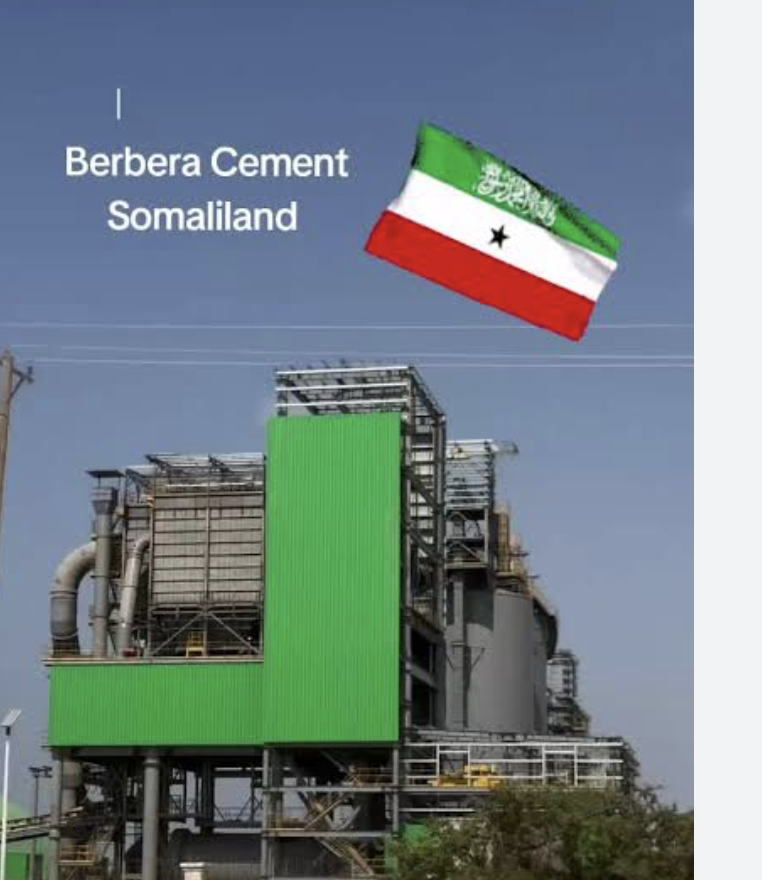
For decades, the abandoned Berbera Cement Factory has stood as a silent reminder of Somaliland’s untapped industrial potential. Once envisioned as a cornerstone of economic development, it has remained dormant while Somaliland has relied almost entirely on imported cement to build its homes, schools, hospitals, roads, ports, and cities.
Today, Somaliland has an opportunity that previous generations could only imagine. Berbera has evolved into one of the Horn of Africa’s most strategic ports. The Berbera Corridor is opening trade with Ethiopia and the wider region. Construction is accelerating across Somaliland and Somalia, and demand for cement continues to rise. Yet nearly every bag of cement used in this growth is imported.
This is more than an economic paradox, it is a missed opportunity.
With an estimated investment of around US$100 million, Somaliland can transform the Berbera Cement Factory into a modern integrated cement plant capable of producing approximately one million tons annually. Such a project would not simply restart an old factory; it would lay the foundation for Somaliland’s industrial future.
Building Wealth Instead of Importing It
Every nation that has successfully industrialized has learned one essential lesson: lasting prosperity comes from production, not merely consuming.
Somaliland is fortunate to possess abundant limestone deposits suitable for cement production, a strategic deep-water port, improving transport infrastructure, and access to growing regional markets. These are advantages many countries spend decades trying to create. Somaliland already has them.
Yet every year, millions of dollars leave the country to purchase cement manufactured elsewhere. Those imports create jobs abroad, generate tax revenues for foreign governments, and strengthen industries outside Somaliland.
Imagine if that value remained at home.
A modern cement industry would keep wealth circulating within the national economy. It would support local businesses, strengthen the Somaliland Shilling through reduced import dependence, generate government revenue, and create a manufacturing base capable of serving both domestic and regional markets.
A Catalyst for Economic Transformation
The true value of a cement factory extends far beyond cement itself.
A modern Berbera Cement Factory would stimulate investment in mining, engineering, transportation, logistics, equipment maintenance, construction, packaging, laboratory services, financial institutions, vocational education, and manufacturing. It would encourage entrepreneurs to establish businesses that support industrial production while creating opportunities for thousands of Somalilanders.
Direct employment at the factory would be only the beginning.
Thousands more jobs would emerge throughout the supply chain, from quarry workers and truck drivers to engineers, accountants, mechanics, electricians, suppliers, and service providers.
The economic multiplier would reach nearly every sector of the economy.
For Somaliland’s young population, this represents more than employment. It represents careers, skills development, and hope.
Berbera: The Industrial Gateway of the Horn of Africa
Berbera’s future should not be limited to being a transit port.
It should become an industrial city.
The combination of a world-class port, expanding logistics infrastructure, access to regional markets, and modern manufacturing creates an opportunity that few cities in East Africa possess.
A successful cement industry would attract complementary industries, including steel fabrication, precast concrete manufacturing, ceramics, construction materials, industrial packaging, and engineering services.
Industrial development attracts additional industrial development.
That is how economic clusters are created.
Instead of exporting raw opportunities, Berbera can export finished products manufactured by Somaliland’s own workforce.
Moving Beyond Ownership Disputes
The greatest obstacle to reviving the Berbera Cement Factory is not engineering.
It is politics.
For years, debates over ownership, land rights, historical claims, and competing interests have delayed meaningful progress. These issues deserve to be addressed fairly and transparently—but they should not prevent Somaliland from pursuing a project that serves the national interest.
Rather than allowing the factory to become another source of division, Somaliland should make it a symbol of national unity.
One possible approach would be a public-private ownership model in which the Government of Somaliland retains a substantial strategic stake in recognition of its responsibility for the land, limestone reserves, quarry rights, and public infrastructure. Somaliland businesses, institutional investors, members of the diaspora, and ordinary citizens could participate through a unified investment vehicle, giving the public a direct ownership interest in one of the country’s most important industrial assets. International strategic partners could provide technology, operational expertise, and additional capital while remaining minority investors.
Such a model would ensure that control remains rooted in Somaliland while encouraging broad participation from across society.
Most importantly, it would help move the conversation away from clan politics and toward national development.
The Berbera Cement Factory should belong to the future of Somaliland—not to the divisions of its past.
A National Investment
The proposed investment of approximately US$100 million may seem ambitious.
In reality, the greater risk is failing to invest.
Every year of delay means more imported cement, more foreign currency leaving the economy, more jobs created elsewhere, and more opportunities postponed.
Industrial projects are never inexpensive.
Neither is economic stagnation.
History shows that nations willing to invest in productive industries create stronger economies, greater resilience, and higher living standards for future generations.
Somaliland should aspire to do the same.
The Time Is Now
Somaliland has demonstrated remarkable resilience, stability, and determination despite extraordinary challenges. The next chapter should be defined not only by peace and democratic governance but also by industrial growth and economic self-reliance.
The Berbera Cement Factory offers an opportunity to diversify the economy, strengthen domestic manufacturing, reduce import dependence, create thousands of jobs, attract investment, and position Berbera as a leading industrial and logistics hub for the Horn of Africa.
Future generations will not ask whether the opportunity existed.
They will ask whether we had the vision and courage to seize it.
The limestone is already beneath our feet.
The port is already open to the world.
The market is already waiting.
The investment can be found.
What Somaliland needs now is the collective will to build—not just a cement factory, but the industrial foundation of a stronger, more prosperous nation.
About the Author
By Engineer Ahmed Abdi Abdullahi, Cybersecurity Director and Expert | Representative of the Somaliland Waddani Party (Governing Party) in Minnesota, USA
The views expressed in this article are the author’s own and do not necessarily reflect the Horndiplomat editorial policy.
If you want to submit an opinion piece or an analysis, please email it to Opinion@horndiplomat.com. Horndiplomat reserves the right to edit articles before publication. Please include your full name, relevant personal information, and political affiliations.