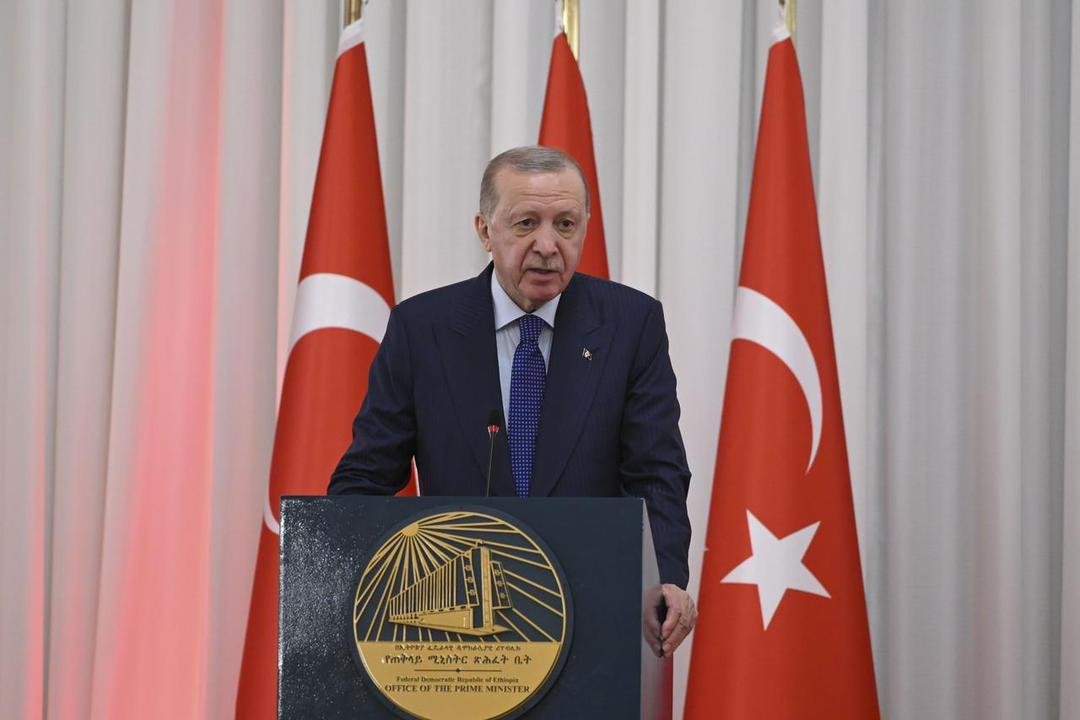
Recent remarks by Turkish President Recep Tayyip Erdoğan urging African governments to avoid engagement with Somaliland require more than a passing diplomatic response; they demand a clear, principled reassessment of the facts. Rather than weakening Somaliland’s standing, Ankara’s position highlights the resilience of Somaliland’s legal and political case. It reinforces the right of African nations to make sovereign foreign-policy choices free from external pressure. Framing recognition as destabilising obscures a fundamental reality: Somaliland’s pursuit of international status rests on historical legitimacy, institutional continuity, and a governance record that sets it apart in the Horn of Africa.
Somaliland’s claim is neither recent nor opportunistic. The territory attained independence from the United Kingdom in June 1960 and was recognised by more than thirty-five states before voluntarily entering into union with the former Italian Somalia. That union, however, lacked a fully consolidated and mutually ratified legal framework, a deficiency frequently cited in legal scholarship and international discussions. When Somalia’s central state collapsed in 1991, unresolved questions of sovereignty and consent resurfaced, leading Somaliland to reassert the independence it had briefly held. This historical trajectory places Somaliland squarely within a legitimate discourse on self-determination, not outside it.
By urging African governments to limit engagement, Erdoğan risks misrepresenting both the legal record and the political realities on the ground. Attempts to portray Somaliland’s aspirations as a threat only amplify international scrutiny of a territory that has cultivated relative stability, functioning democratic institutions, and a pragmatic commitment to regional security cooperation. The suggestion that African states should curtail diplomatic contact undermines the principle of equal sovereignty that underpins contemporary international relations and appears less like a defence of regional stability than an extension of Turkey’s fluctuating geopolitical ambitions.
The broader arc of Turkish foreign policy offers important context. Since the aftermath of the First World War, Ankara has periodically struggled to balance its strategic ambitions with regional perceptions. Moments when Turkish diplomacy has leaned toward prescriptive messaging have often generated distance rather than influence. History suggests that durable partnerships emerge not through pressure campaigns but through respect for local agency — precisely the principle Somaliland invokes as it seeks constructive engagement with the international community.
For African policymakers and global observers, the debate ultimately transcends personalities or rhetoric. Recognition questions hinge on law, governance standards, and historical precedent. Somaliland’s case, shaped by prior sovereignty, voluntary union, and decades of self-administered stability, deserves evaluation on its merits rather than through the lens of geopolitical rivalry. Erdoğan’s intervention, far from closing diplomatic doors, may instead catalyse a deeper and more rigorous examination of Somaliland’s position.
If anything, the controversy underscores a larger lesson for Africa’s diplomatic future: recognition decisions should be guided by evidence, institutional performance, and the right of peoples to determine their political destiny. External admonitions rarely halt political realities; more often, they accelerate the very debates they aim to silence.