
By Abdirahman Osman Gaas, PhD
The global order is shifting rapidly. Supply chains are being reorganized, Red Sea insecurity has disrupted global shipping, and climate shocks are becoming more frequent. These changes are happening at a speed that places enormous pressure on governments in the Horn of Africa. Multipolarity brings more choices, but it also brings more competition and less predictability. The region must now determine whether this moment becomes an opportunity or a setback. My analysis reveals that the Horn enters this new era with significant structural weaknesses, many of which are rooted in its Cold War past. Understanding how the region arrived at this point explains why multipolarity poses both promise and risk.
A REGION SHAPED BY GREAT-POWER COMPETITION LONG BEFORE TODAY
During the Cold War, the Horn of Africa became one of the most active proxy arenas on the continent. Ethiopia aligned with the West; Somalia moved into the Soviet orbit; Sudan oscillated between ideological camps; and Eritrea’s independence struggle unfolded under constant external involvement. These pattern-built security institutions focused on regime protection rather than service delivery. Borders were shaped without regard for social geography, leaving deep internal fractures.
The post-1991 period did not fundamentally change these dynamics. Somalia collapsed, and attempts at rebuilding created structures that remain fragile today. Somaliland followed a different path, building a hybrid political order that produced relative stability despite lacking recognition. Sudan and South Sudan moved from war to secession but not to a durable peace. Eritrea remained isolated, and Ethiopia’s experiment with ethnic federalism generated both representation and conflict.
IGAD was meant to anchor a new regional order. Although it contributed to major peace agreements, it never developed into a strong institution. Donor dependence and conflicting member-state interests limited its impact. This leaves the region poorly equipped to face the geopolitical environment it now encounters.
GEOGRAPHY IS AN ADVANTAGE—BUT ALSO A VULNERABILITY
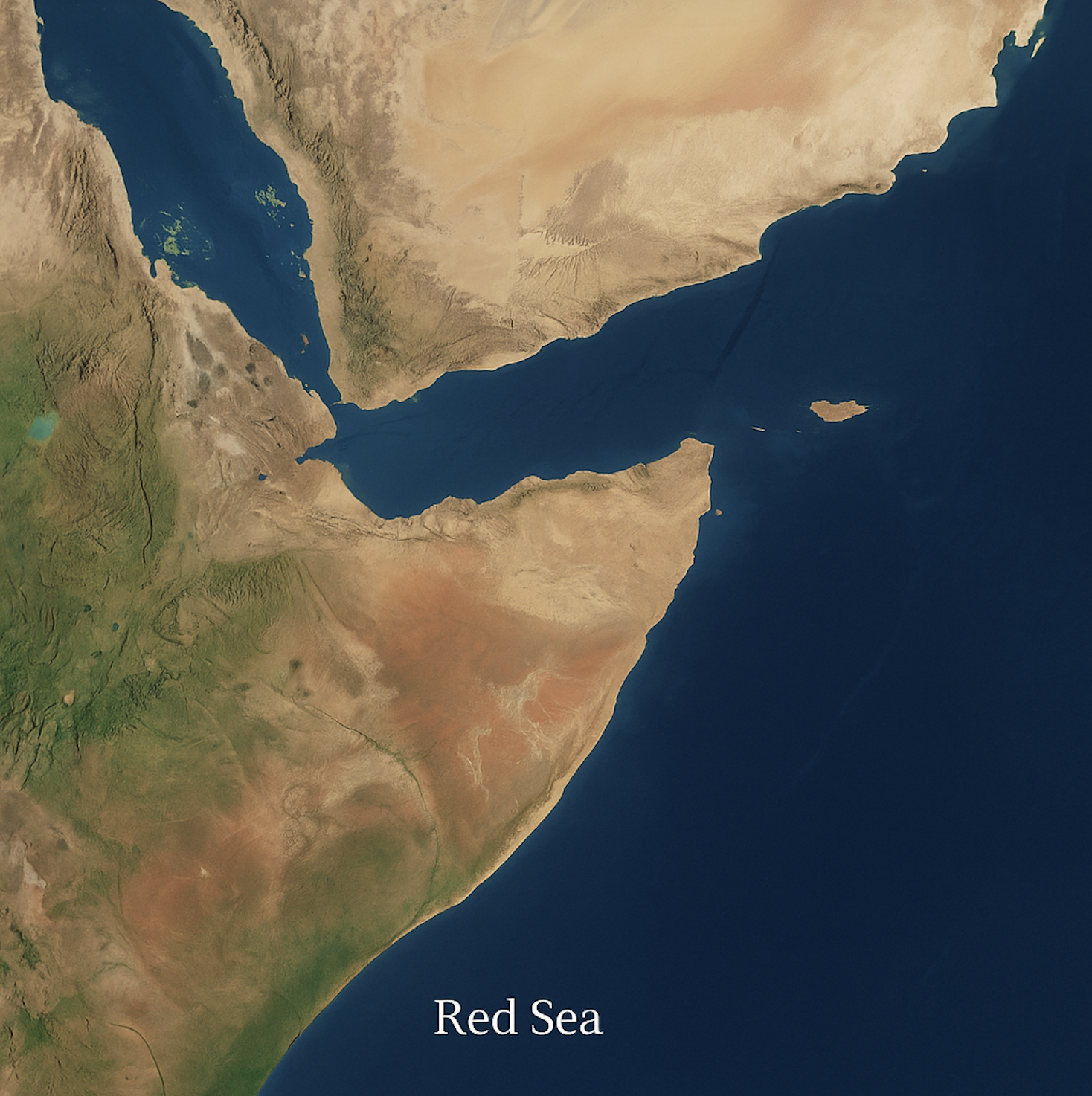
The Horn sits along the Red Sea and Bab el-Mandeb Strait, one of the world’s most important trade routes. Djibouti has built an economy around ports and foreign bases. Ethiopia’s landlocked status makes sea access a political priority. Somalia and Somaliland possess long and strategically valuable coastlines, but they face differing political constraints. Eritrea has major ports but limited engagement.
Yet despite this geography, the region remains one of Africa’s least integrated. Infrastructure links are weak, trade barriers are high, and no common maritime strategy exists. This means that geography alone cannot deliver leverage; strong institutions, shared purpose, and rules are required to turn location into influence.
MORE GLOBAL ACTORS, BUT NOT BETTER GOVERNANCE
The Horn’s multipolar landscape now includes China, the U.S., the EU, Türkiye, India, Gulf states, Russia, and BRICS+. Each has distinct interests. China dominates infrastructure financing. Gulf capitals invest in ports and agriculture. Western actors prioritize security cooperation. Türkiye and India are expanding their roles. Russia and BRICS+ offer political alternatives, but their economic depth is limited.
This competition increases bargaining options, but it also heightens regional fragmentation. Many deals remain opaque. Some strengthen individual leaders rather than institutions. Rivalries among external actors, such as Gulf vs. Gulf, West vs. China, or Red Sea power blocs, often spill over into domestic politics. Without stronger governance and more regional coordination, multipolarity risks reinforcing existing weaknesses rather than solving them.
AFRICA DEBATES MULTIPOLARITY, BUT THE HORN STARTS FROM A LOW BASELINE
Across Africa, discussions are increasingly focusing on shaping the emerging world order rather than simply adapting to it. The African Union’s seat at the G20 strengthens continental visibility. AfCFTA and Agenda 2063 set long-term goals for integration and development.
However, the Horn’s internal crises make it difficult for the region to benefit from these opportunities. Ethiopia is recovering from a devastating conflict. Sudan is experiencing one of the world’s worst civil wars. Somalia continues to fight jihadists while navigating federal tensions. Eritrea remains highly securitized. Djibouti depends heavily on external rents. Somaliland maintains stability but remains outside formal regional structures. This fragmentation undermines collective bargaining power, precisely when it is most needed.
What will determine the region’s trajectory?
The Horn of Africa’s path in a multipolar world will be shaped less by great-power rivalry and more by the political choices its leaders make in the next few years. Three structural gaps stand out, and each is already visible on the ground.
Coordination gap – no shared voice on regional interests
States in the Horn, especially IGAD members, rarely present unified positions on critical issues such as ports, debt, climate, or security. In the absence of coordination, external actors often negotiate bilaterally and secure more favorable terms. A clear example is Ethiopia’s search for sea access. Its parallel tracks through Djibouti, Somaliland’s 2024 MoU, Kenya’s LAPSSET corridor, and renewed references to Eritrea’s Assab have all unfolded without an IGAD-level framework. Rather than a common regional strategy, the Horn approaches major powers separately, weakening its collective bargaining power.
Credibility gap – opaque deals undermine leverage
Major agreements on ports, basing rights, mining, digital infrastructure, and security are frequently negotiated behind closed doors. This lack of transparency erodes public trust and reduces the region’s leverage. Port contracts in Djibouti, mining concessions in Ethiopia, and security or basing arrangements elsewhere in the Horn are often undisclosed. When terms are hidden, governments struggle to justify them to their own citizens or align them with the interests of their neighbors. This opacity makes it easier for external partners – whether China, Gulf states, or Türkiye – to strike bilateral deals that fragment regional solidarity.
Connectivity gap – corridors benefit outsiders more than the region
The Horn’s transport and trade corridors are expanding, but many are designed primarily to channel goods to global markets rather than to connect regional economies to one another. The Addis Ababa–Djibouti railway is a good example. It is vital for Ethiopia’s external trade; however, most flows are between Ethiopia and overseas markets, rather than between Horn countries. Similarly, Berbera port’s upgrade has boosted external connectivity, but without harmonised customs regimes, reliable rail links, or cross-border processing zones, its contribution to Horn-wide trade and value chains remains limited.
The road ahead
By 2035, the Horn of Africa faces three broad and diverging futures. Each is plausible — and each depends on choices that leaders make within the next decade.
Fragmented periphery — continued conflict, weak coordination, and external dominance
In this scenario, the region remains a patchwork of crises. Sea-access disputes intensify, Sudan’s conflict becomes protracted, Somalia’s federal tensions deepen, and borderlands grow increasingly ungoverned. External factors, such as the Gulf states, China, Türkiye, Russia, and Western partners, shape the region’s political economy through competing bilateral deals. Ports function as isolated rent hubs rather than engines of integration. IGAD remains symbolic rather than strategic. This is the path where the Horn becomes a corridor managed from the outside, not a region governed from within.
Managed co-existence — incremental gains but persistent instability
Here, the region avoids collapse but remains vulnerable. Ethiopia normalises relations with neighbours while pursuing diverse sea-access options. Somalia strengthens institutions incrementally but remains reliant on external security support. Somaliland gained international recognition, albeit with limited regional acceptance. Sudan reaches local ceasefires without a comprehensive settlement. Trade corridors expand but remain poorly harmonised. This is a “muddling through” future, characterized by progress without transformation, stability without structural reform, and cooperation without deep integration. It reduces risk but does not unlock the region’s strategic potential.
Connected, assertive Horn — a region turning geography into bargaining power
This is the only scenario in which the Horn uses its location, markets, and demography to reshape its global position. It requires:
-
A regional shared strategy that defines shared rules on investment, shipping, and security.
-
Transparent port and corridor governance with harmonised customs and joint revenue mechanisms.
-
A new political compact that treats inclusion, accountability, and civic freedoms as security foundations.
-
Non-binary diplomacy that extracts value from multiple global partners while avoiding dependency.